
Featured: The Clienti List
Inside Ferrari’s Corse Clienti, Where Legends Keep Running
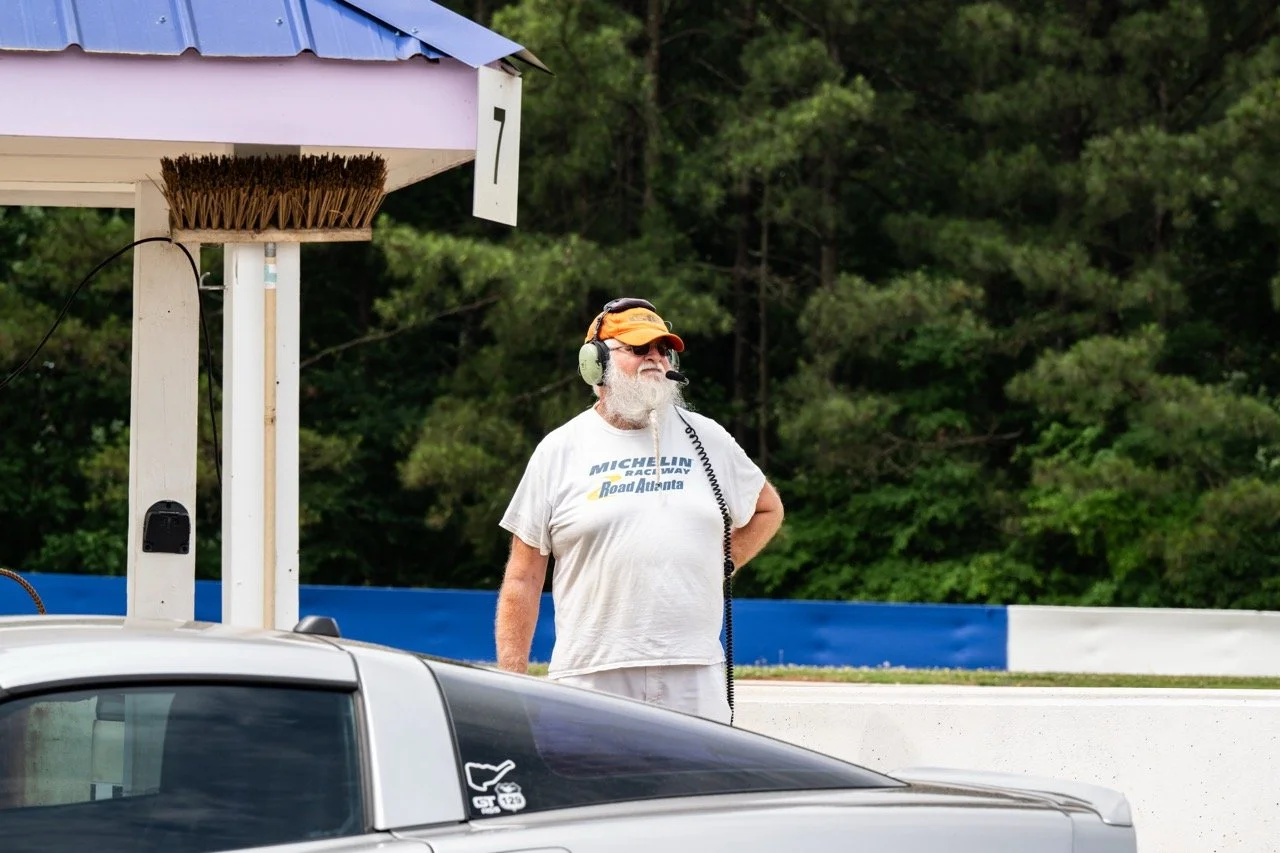
Dawn does not so much arrive at Michelin Road Atlanta as it is poured over it. The air already thick and humid. The light comes slow and low across the empty grandstands, and the first thing you notice is the smell. Espresso from the hospitality unit threading through the heavier perfume of unburned race fuel, a marriage of ritual and intent that no other corner of the automotive world quite manages. The paddock is awake before the sun has fully committed to the day.
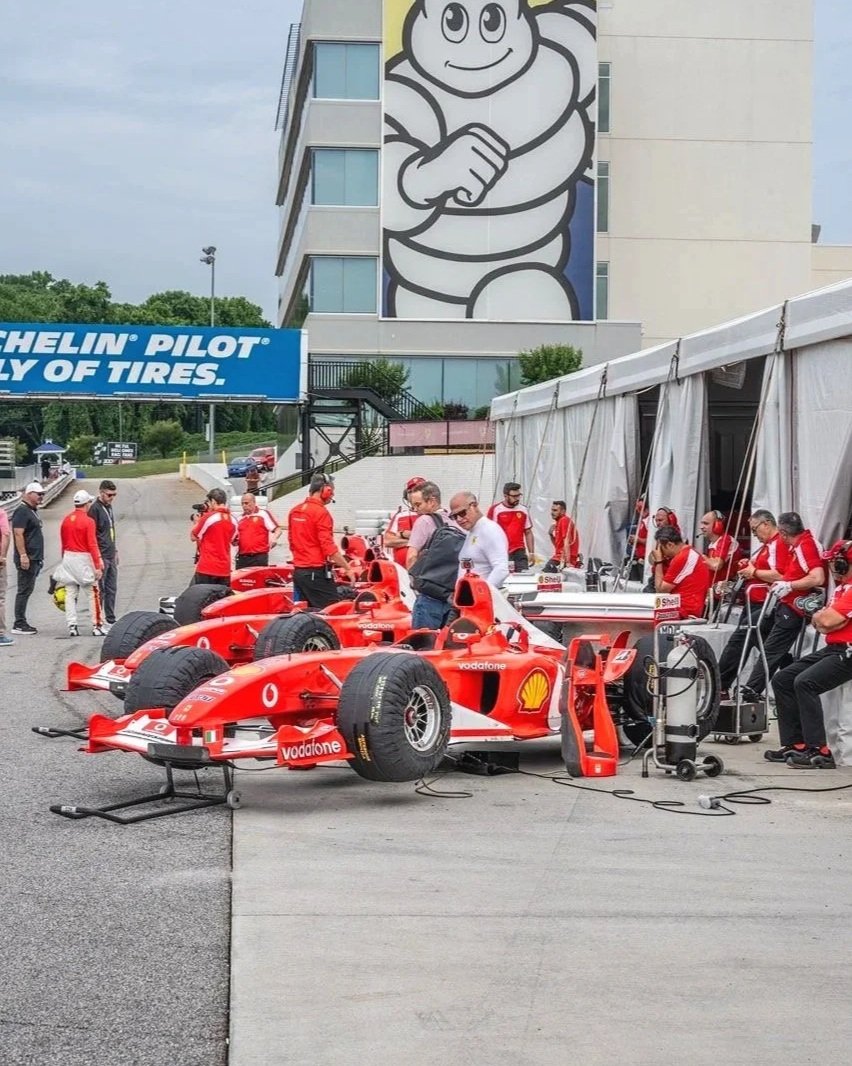
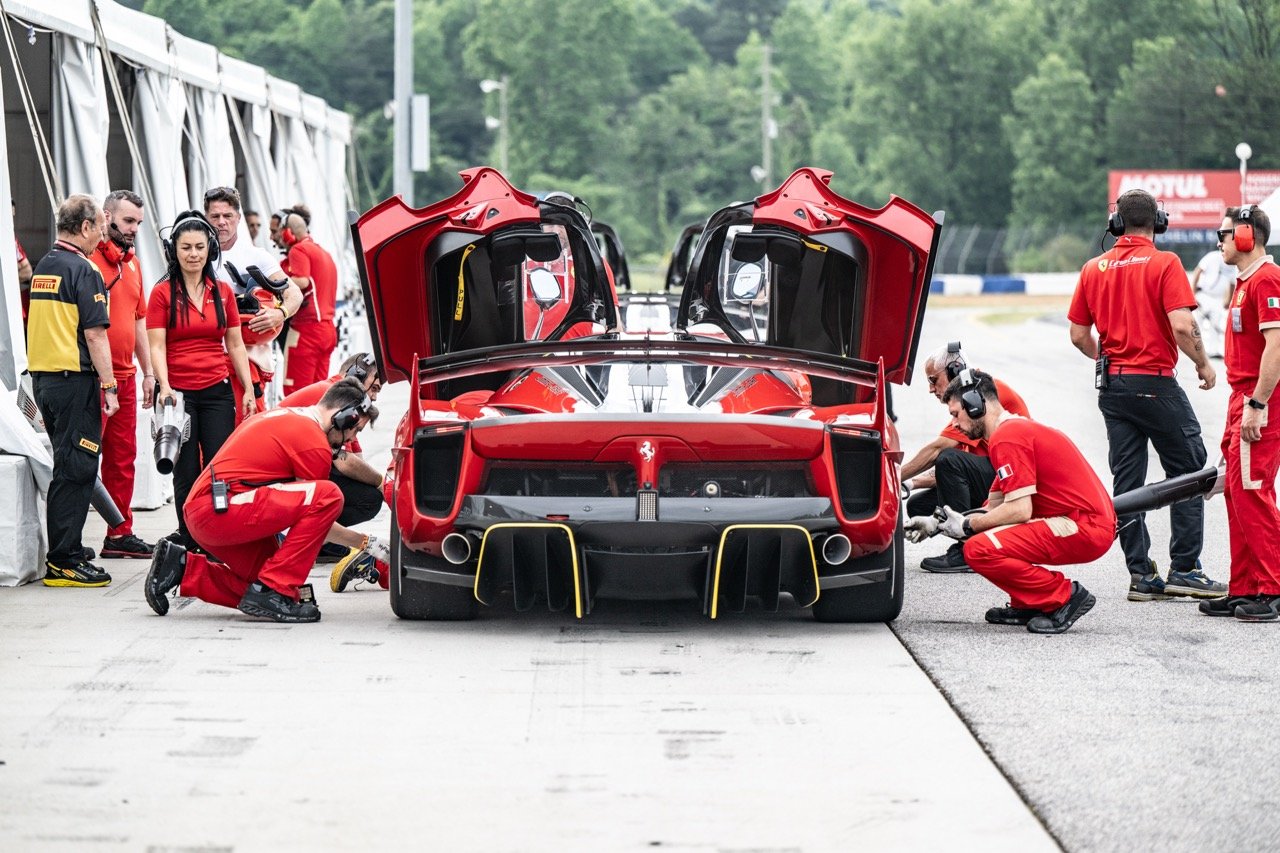
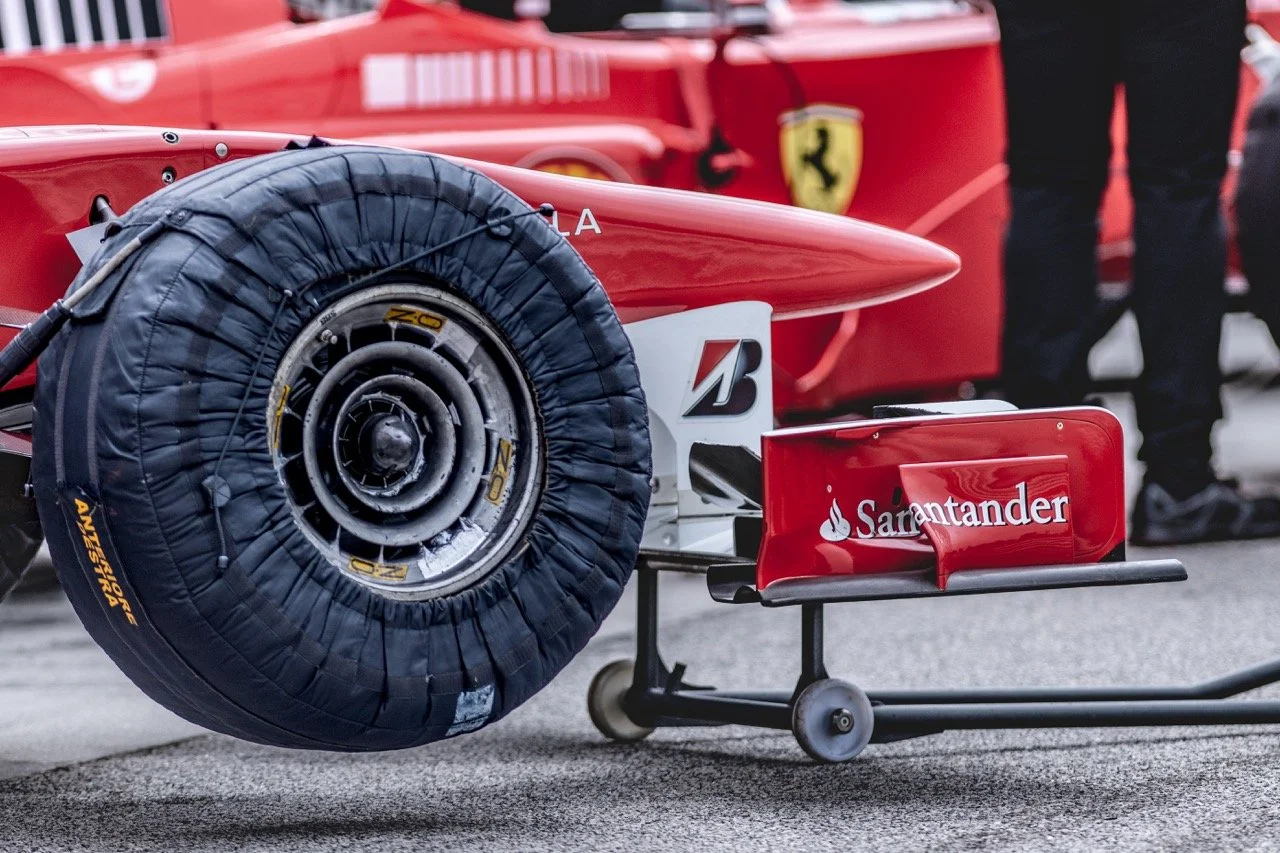
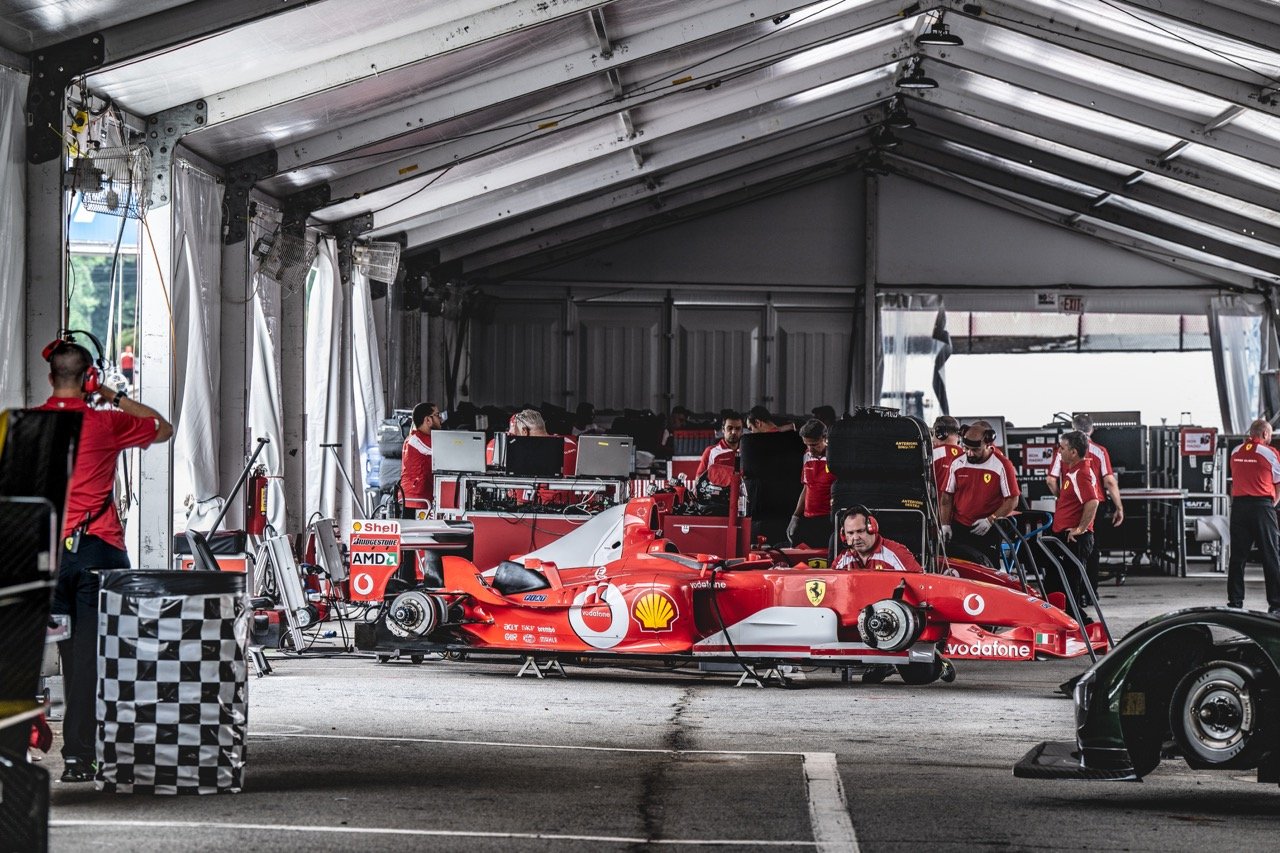
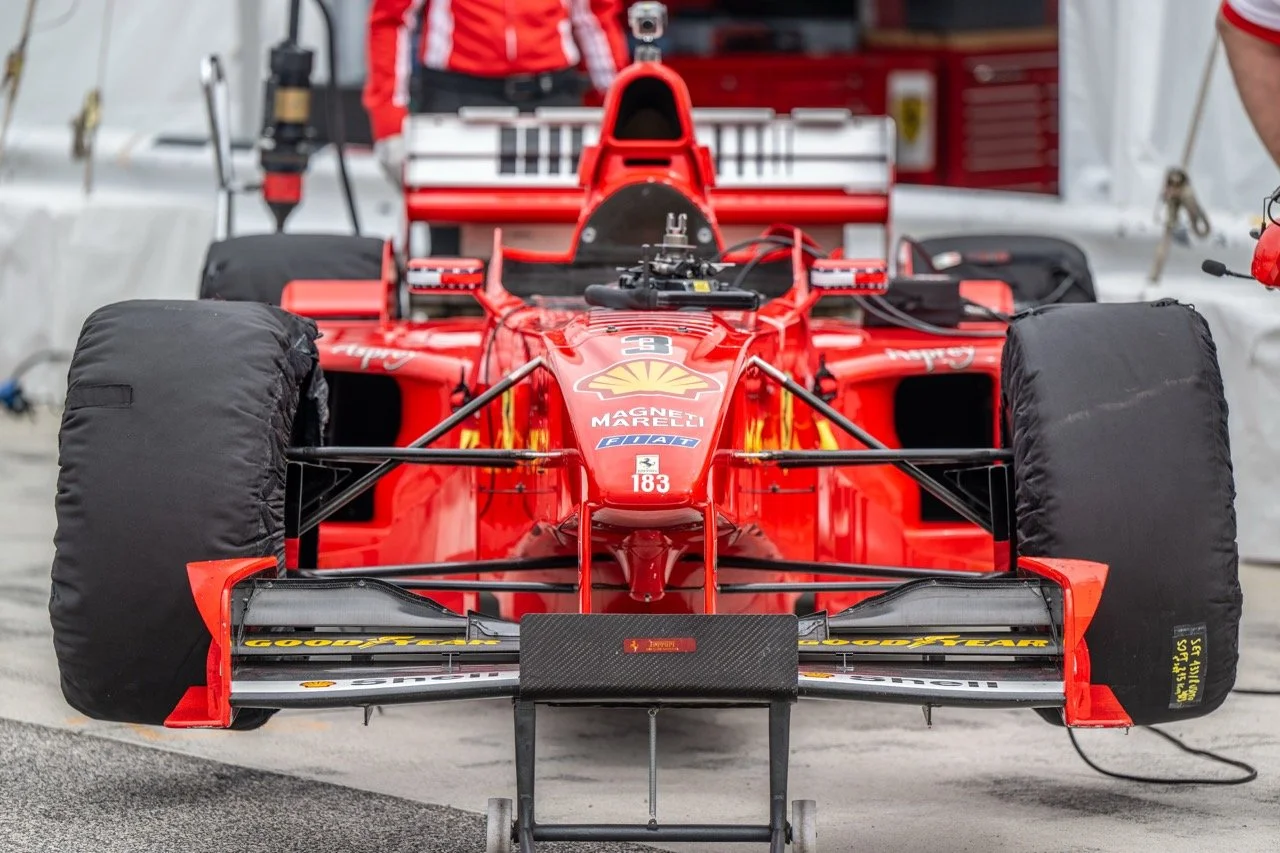
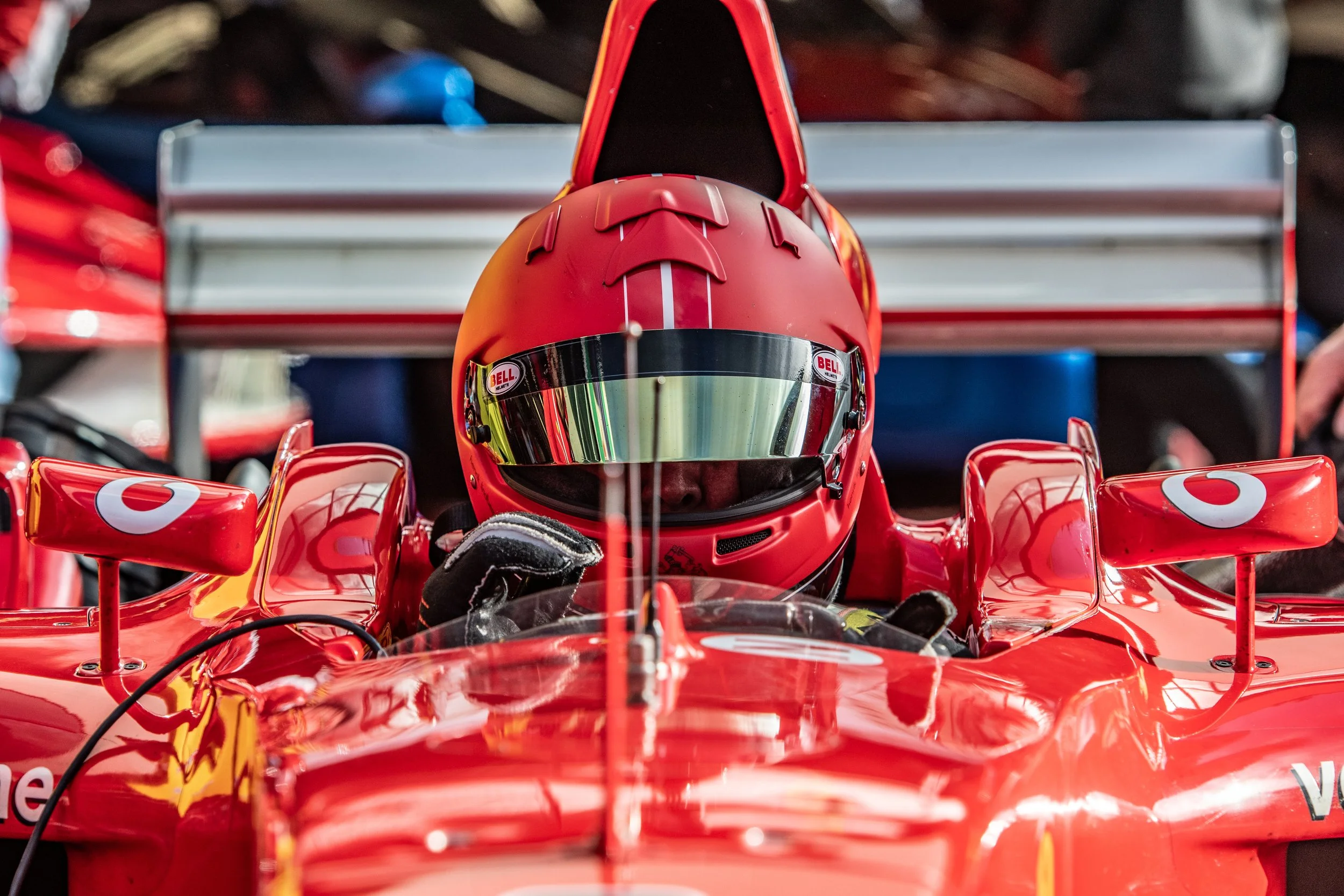
Mechanics in red move with the unhurried precision of people who have done this ten thousand times, peeling tire blankets from slicks that have been brought up to temperature overnight, their hands reading the rubber the way a sommelier reads a cork. Beside them sit the machines. Not behind velvet rope. Not under museum lighting with a placard explaining what you are forbidden to touch. They sit on jack stands with their bodywork off and their secrets exposed, surrounded by engineers hunched over laptops, scrolling through telemetry from the previous session as if it were the morning paper. These are cars that once defined entire eras, that bent the arc of motorsport history around their own gravity.
Here they are, fluids warming, batteries charging, waiting. Then someone fires one up. Beside them sit the machines. Not behind velvet rope. Not under museum lighting with a placard explaining what you are forbidden to touch. They sit on jack stands with their bodywork off and their secrets exposed, surrounded by engineers hunched over laptops, scrolling through telemetry from the previous session as if it were the morning paper. These are cars that once defined entire eras, that bent the arc of motorsport history around their own gravity. Here they are, fluids warming, batteries charging, waiting. Then someone fires one up.
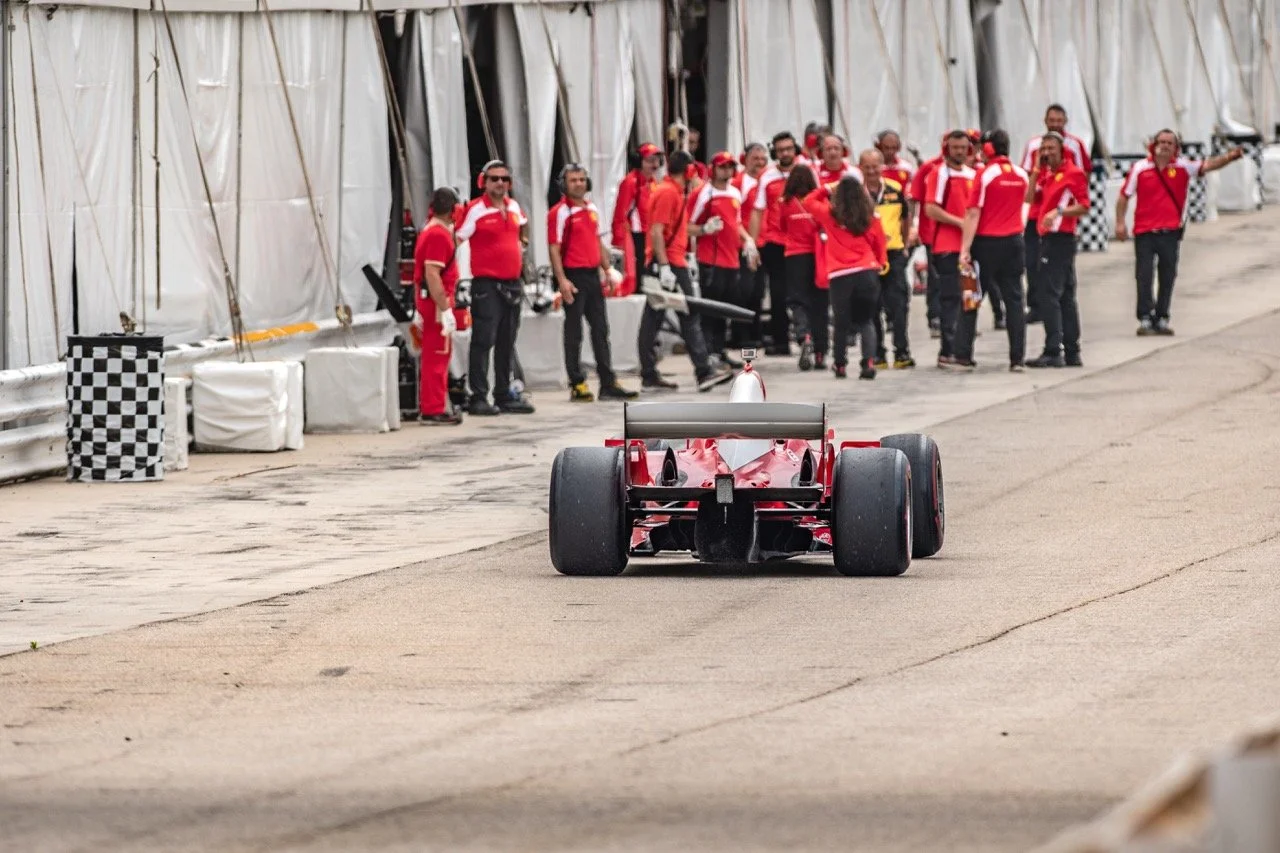
If you’ve never heard a Ferrari Formula One engine wake from cold at close range, no description will prepare you, and every description will fail. It begins as a mechanical clearing of the throat, a churning, and then the ignition catches and the sound detonates outward and upward in a shriek that does not belong to the natural world. It climbs through registers a human ear was never designed to process. Birds leave the trees. Conversations stop mid-syllable. Grown men who have spent fortunes on these very machines still flinch, still grin like children, still feel the noise arrive in their sternum before it reaches their ears. The sound is the entire argument made audible. This is why the cars must not be silenced. This is why they must run. This is Corse Clienti.
It is, at its heart, a refusal. A refusal to accept the premise that a great competition car’s useful life ends the moment it crosses its final finish line. A refusal to let the most extraordinary machines Maranello has ever built decay into static objects, admired but inert, their carbon fiber going brittle and their genius going quiet. Ferrari built these cars to be driven at the absolute limit of what physics permits. Corse Clienti exists to keep them there. The philosophy is almost defiantly simple: legends should not retire to a glass case. Legends should keep running.
• • •
The XX Programme: Owners Become Test Pilots
The story of the modern Corse Clienti era properly begins in 2005, with an idea that sounds, on first hearing, almost reckless. What if Ferrari took its most committed clients, the ones who had bought the halo cars, who had proven their devotion in both passion and purse, and turned them into something close to factory development drivers?
Not customers. Not spectators with expensive hobbies. Development drivers, contributing to the actual advancement of Ferrari’s engineering knowledge.
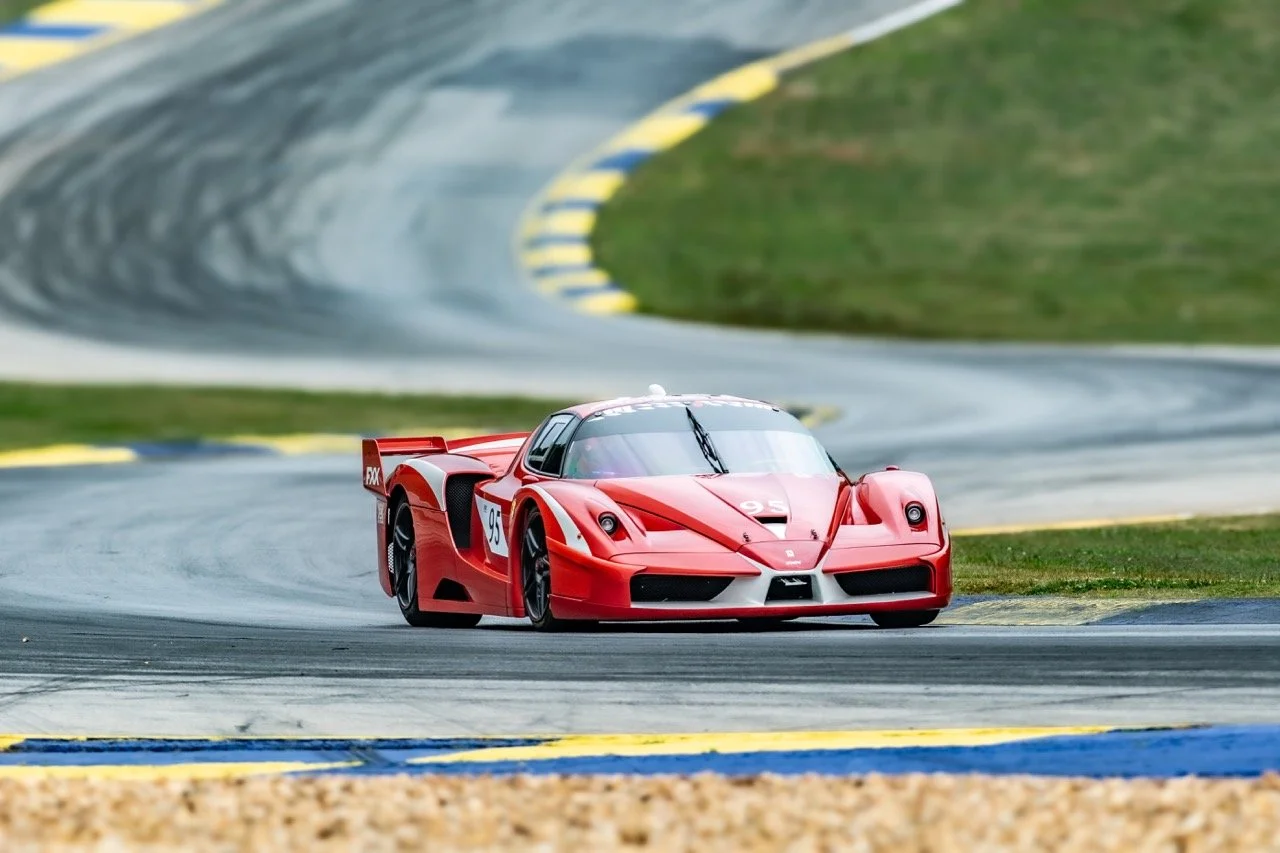
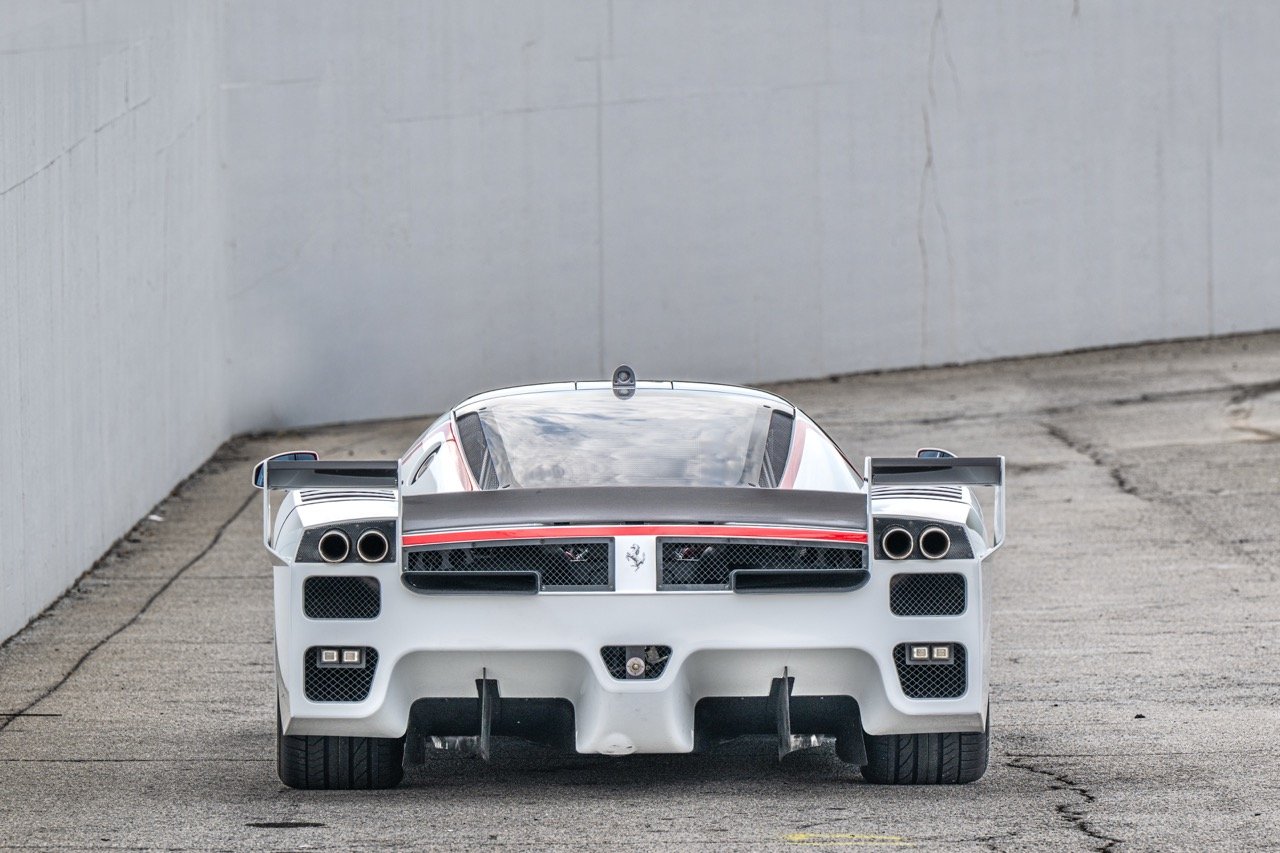
The FXX, launched that year, was the first vessel for the idea, and it was a serious one. Derived from the Enzo, itself a car that had brought Formula One thinking to the road in ways that still feel audacious. The FXX was a V12 experimental laboratory built explicitly to be raced by its owners on track days organized, staffed, and governed entirely by Ferrari. It was never road-legal and was never meant to be.
The point was to drive it past the edge of what was known, gather the data, and feed it back to Maranello.
What made the arrangement genuinely radical was the inversion of the usual relationship. In the ordinary world, you buy a car and it becomes yours to use, abuse, store, or neglect as you see fit. Under the XX Programme, you buy the car, then Ferrari keeps it. The factory stores each machine in climate-controlled conditions, transports it to circuits around the world, maintains it to a standard no private workshop could match, and harvests the data from every session you complete. You arrive, you drive, you debrief with engineers who treat your feedback as input worth having, and then you go home while your car returns to Maranello to be made ready for the next time. Ownership, in the XX Programme, is less a matter of possession than of membership. You have not bought a car so much as bought your way into a relationship with the factory itself.
The bloodline that followed reads like a chronicle of where extreme performance was heading at each moment in time.
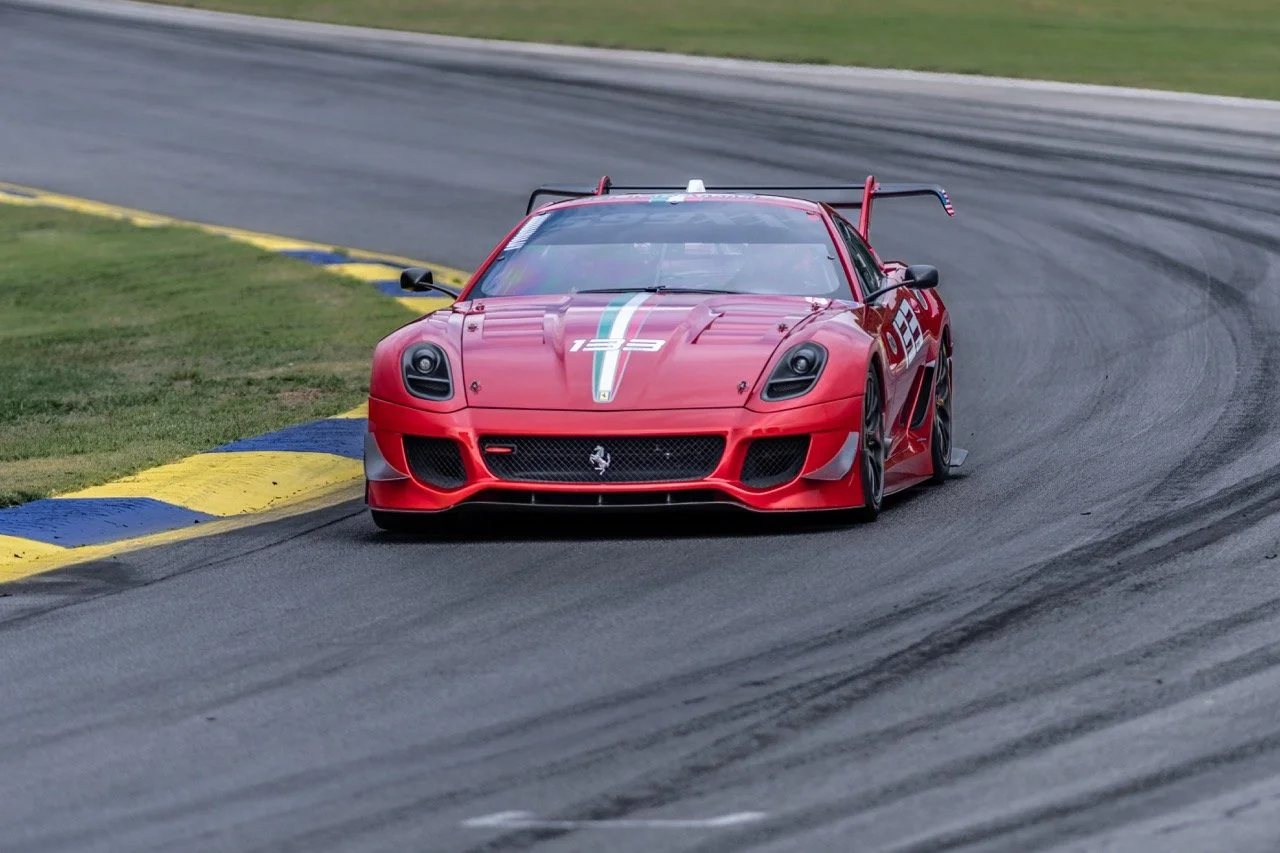
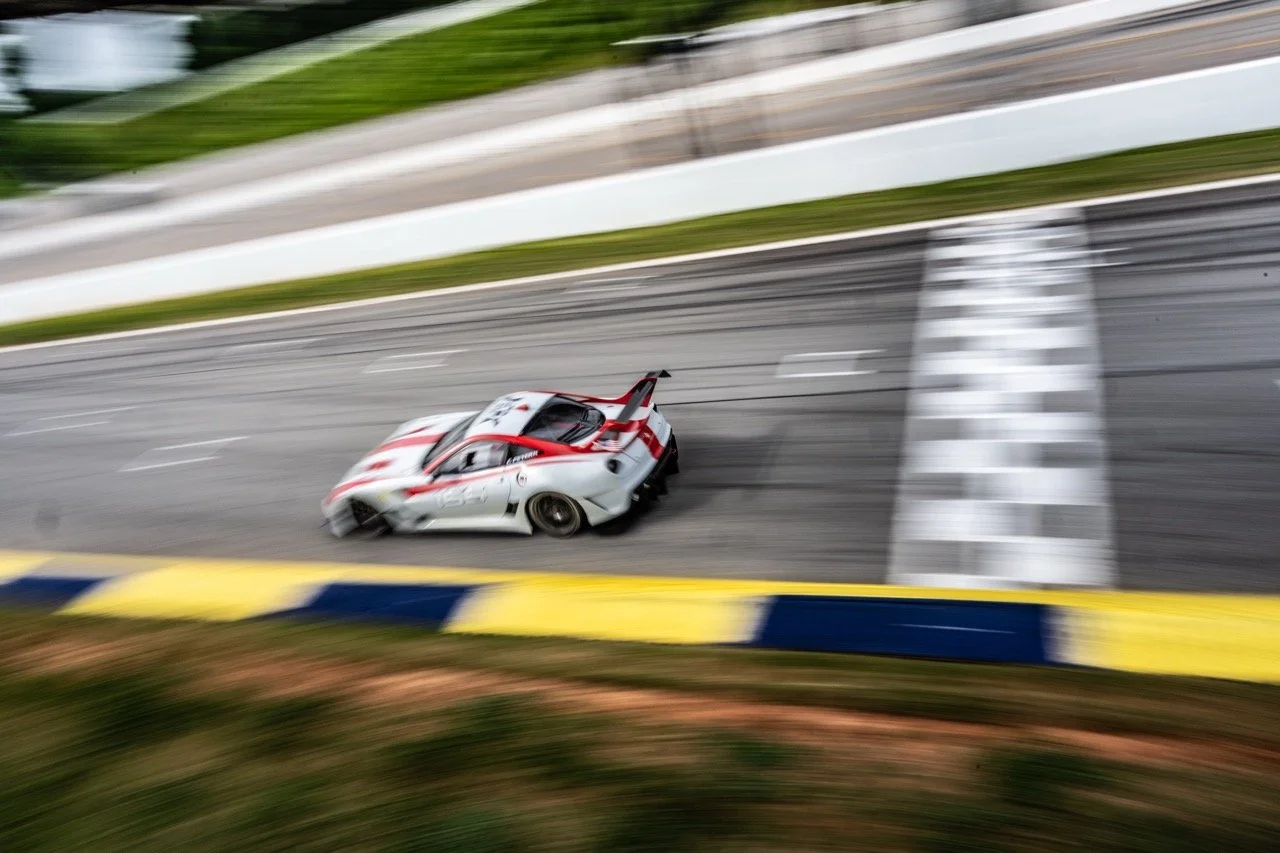
The 599XX arrived in 2009, taking the front-engine V12 architecture of the 599 GTB Fiorano and reimagining it as a research platform bristling with advanced electronics. This was the era when Ferrari was learning to make software a co-driver, when traction and stability systems were evolving from safety nets into performance tools, and the 599XX was where much of that thinking was pressure-tested by clients lapping in anger.
Two years later, the 599XX Evo turned the dial again, and this is where the programme began flirting seriously with the dark arts of aerodynamics. The Evo package introduced revolutionary aero thinking, including an active rear wing system that was movable, intelligent, and responsive. It hinted at how thoroughly downforce would come to dominate the conversation. The car looked like it had been designed by people who had stopped caring whether you found it beautiful and started caring only whether it stuck to the road. It did. Ferociously.
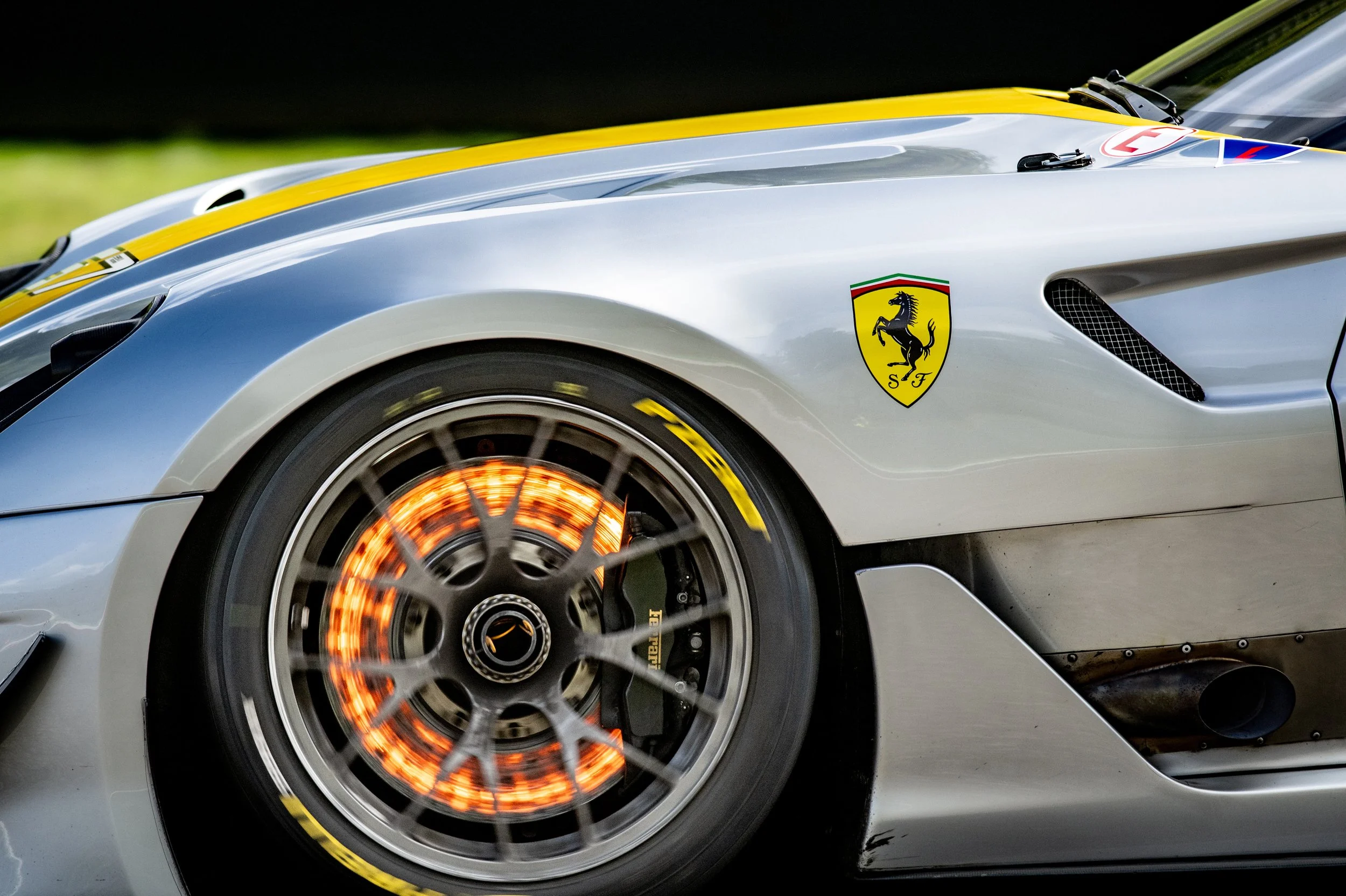
Then, in 2014, came the FXX K—and the K matters. It stood for KERS, the kinetic energy recovery system, and it announced that the hybrid age had arrived not as a compromise but as a weapon. Built on the bones of LaFerrari, the FXX K married a screaming V12 to electric augmentation and produced more than 1,000 horsepower. Let that figure sit for a moment. A four-figure power output, deployed on a track-only car, driven by clients, supported by the factory. The future that Formula One and the road car world were both circling had landed in the hands of private owners, and it was savage.
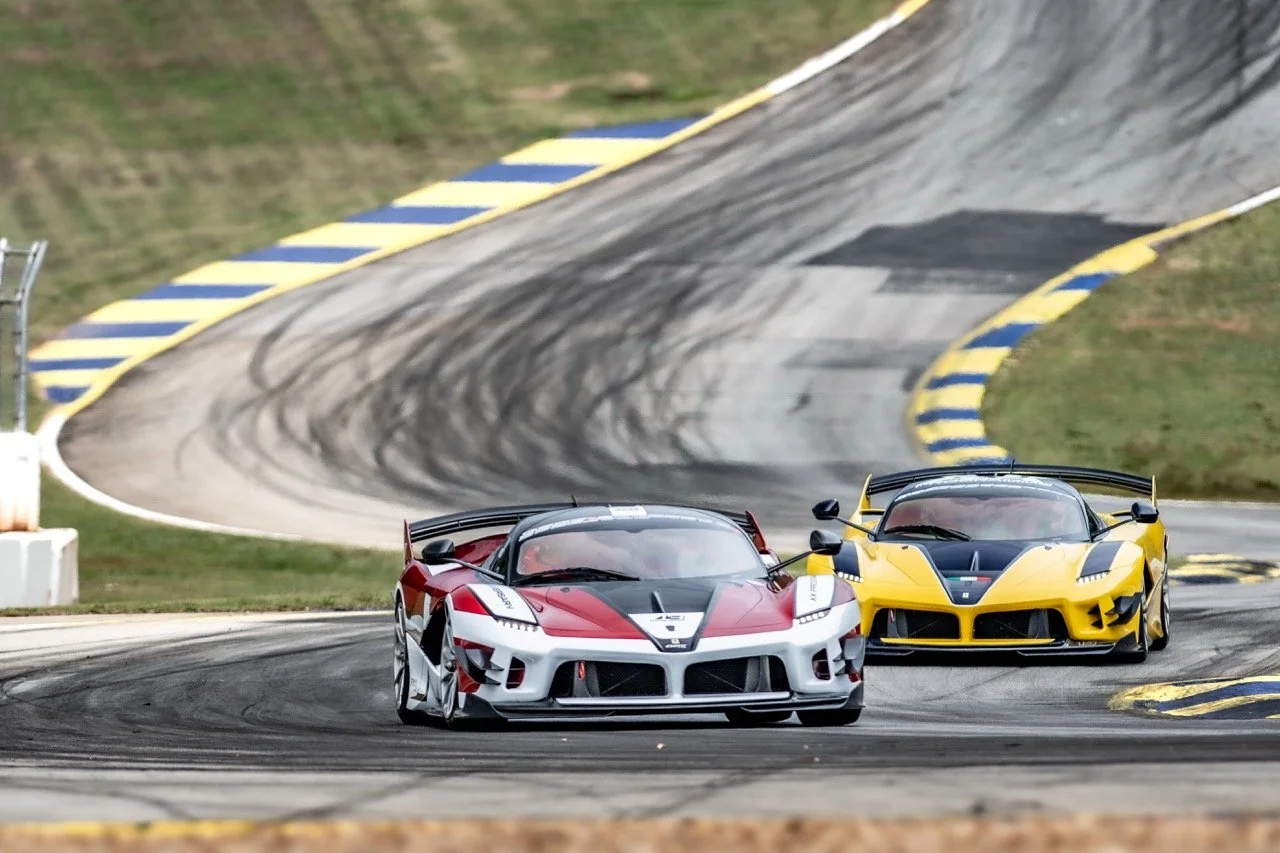
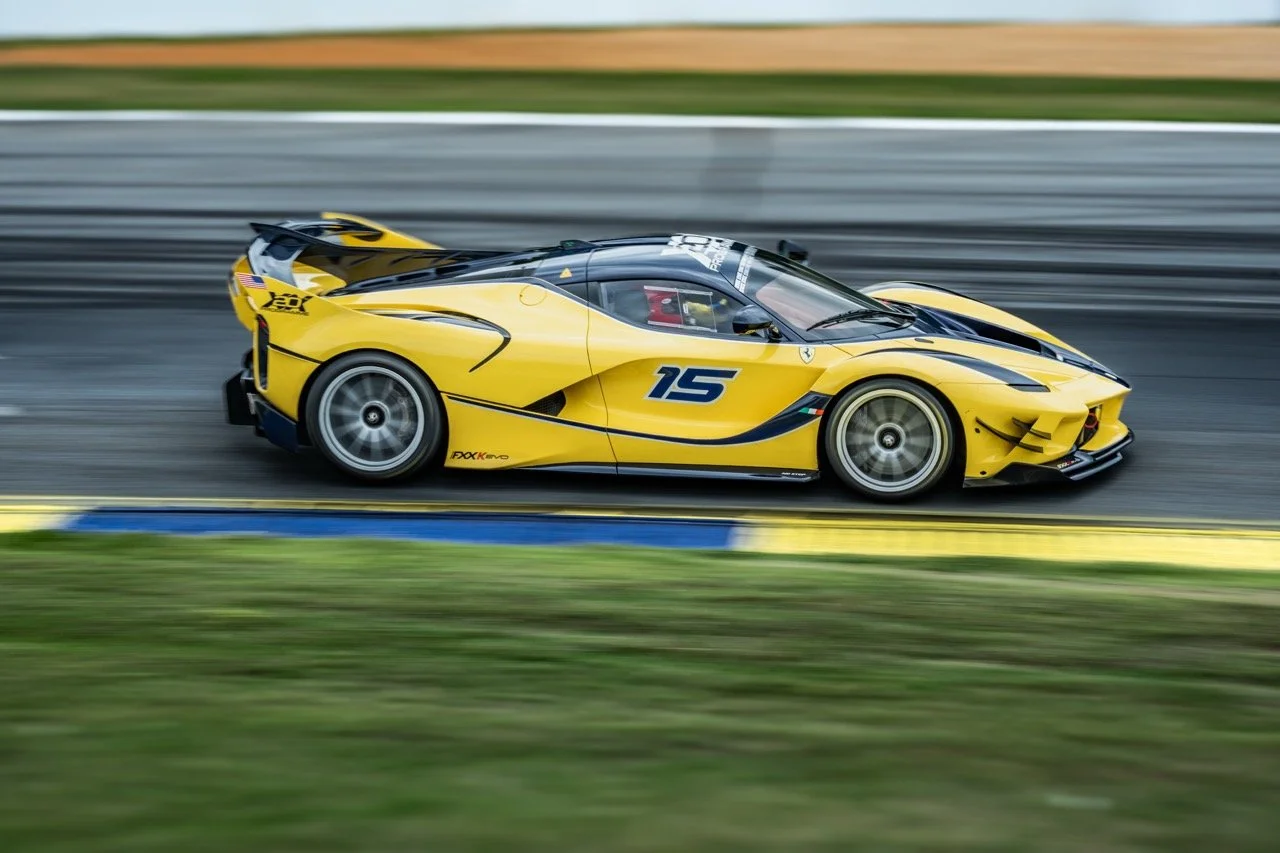
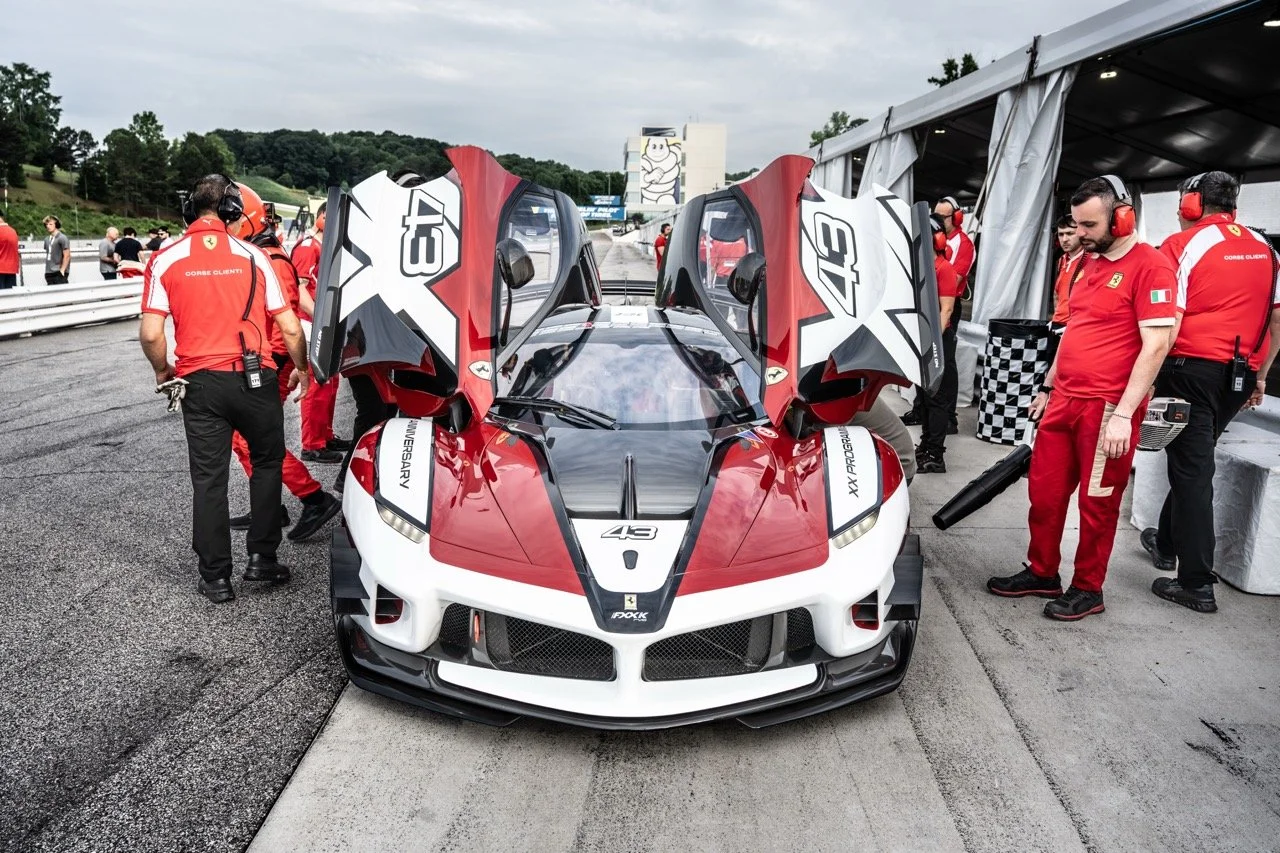
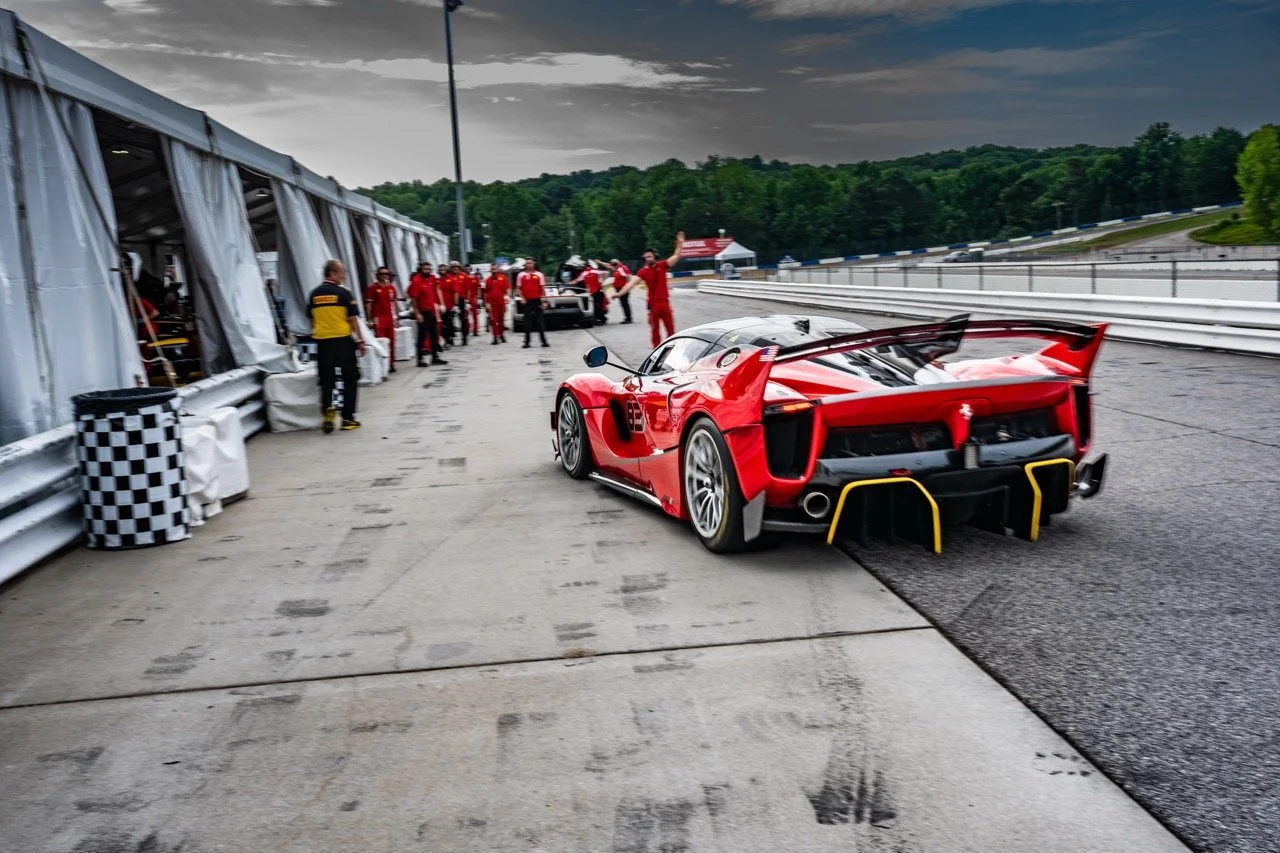
The lineage reached its summit in 2017 with the FXX-K Evo, the ultimate evolution of the entire XX philosophy. Here Ferrari brought Formula One-grade aerodynamic thinking to bear without restraint, draping the car in winglets, fences, and a fixed twin-profile rear wing that generated downforce figures that read more like an aircraft’s specifications than an automobile. It was the most extreme expression of an idea that had spent a dozen years escalating. There were no rules to obey here except the laws of physics, and the FXX-K Evo set out to bend even those.
What unites every car in this remarkable family is the same essential bargain. The owner gives Ferrari a place to develop ideas too extreme for any sanctioned series, and Ferrari gives the owner an experience no amount of money could otherwise buy. It’s symbiosis at 200 miles per hour.
• • •
F1 Clienti: The Real Deal
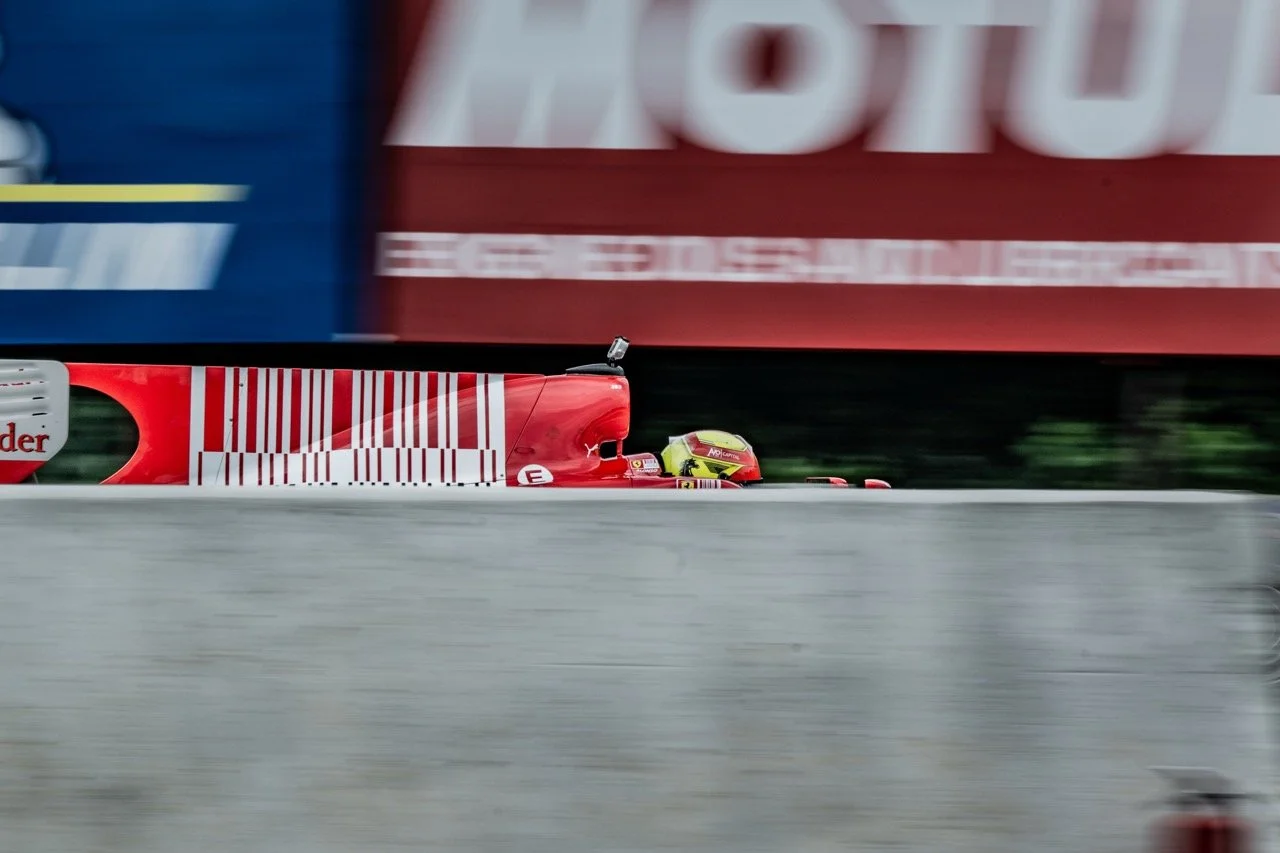
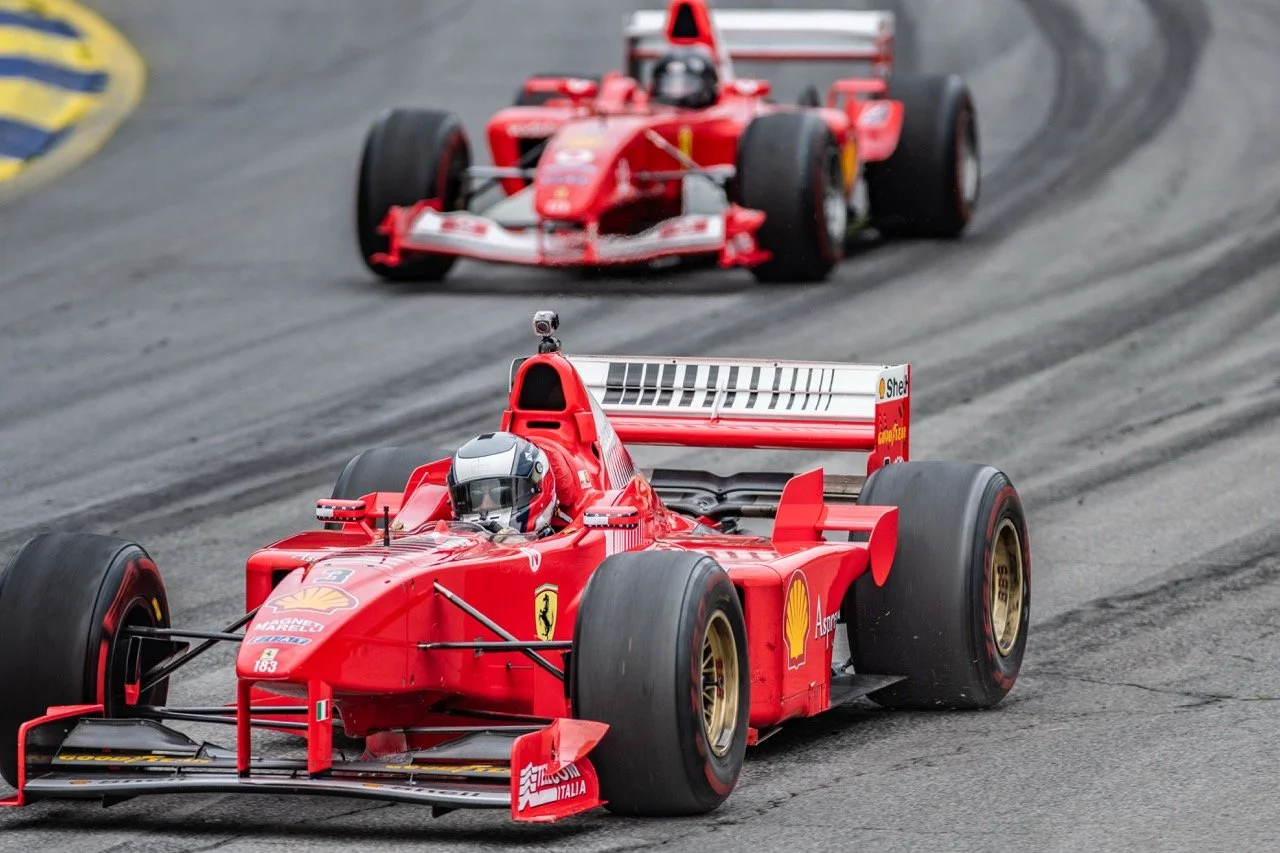
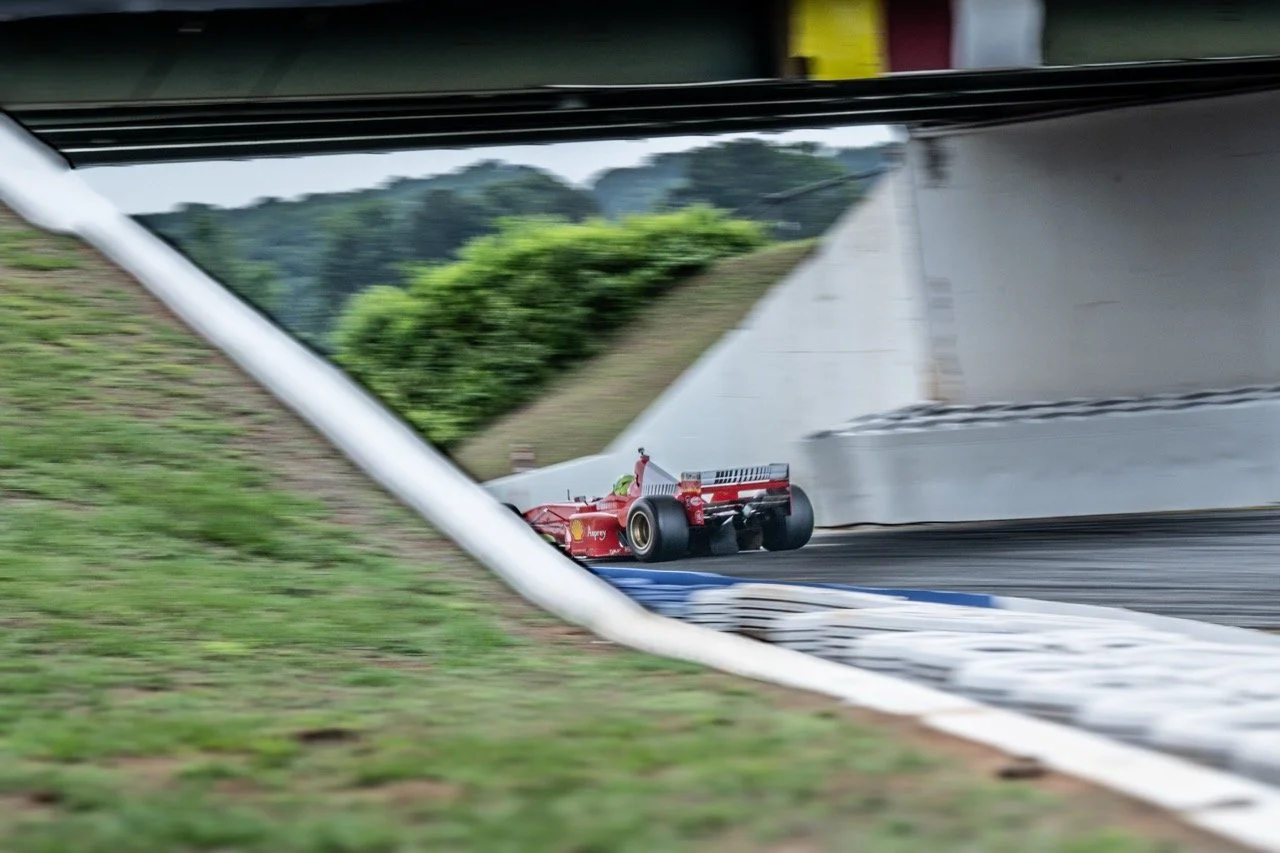
There is a category of automotive fantasy that most enthusiasts know better than to indulge, because it sits so far beyond the reach of reality that to dwell on it is simply to ache. It is the fantasy of driving an actual Ferrari Formula One car. Not a replica. Not a simulator. Not a two-seater demonstration lap with a professional doing all the real work. The genuine article—a car that turned competitive laps in a World Championship Grand Prix, in the hands of the kind of driver whose name gets spoken in reverent tones.
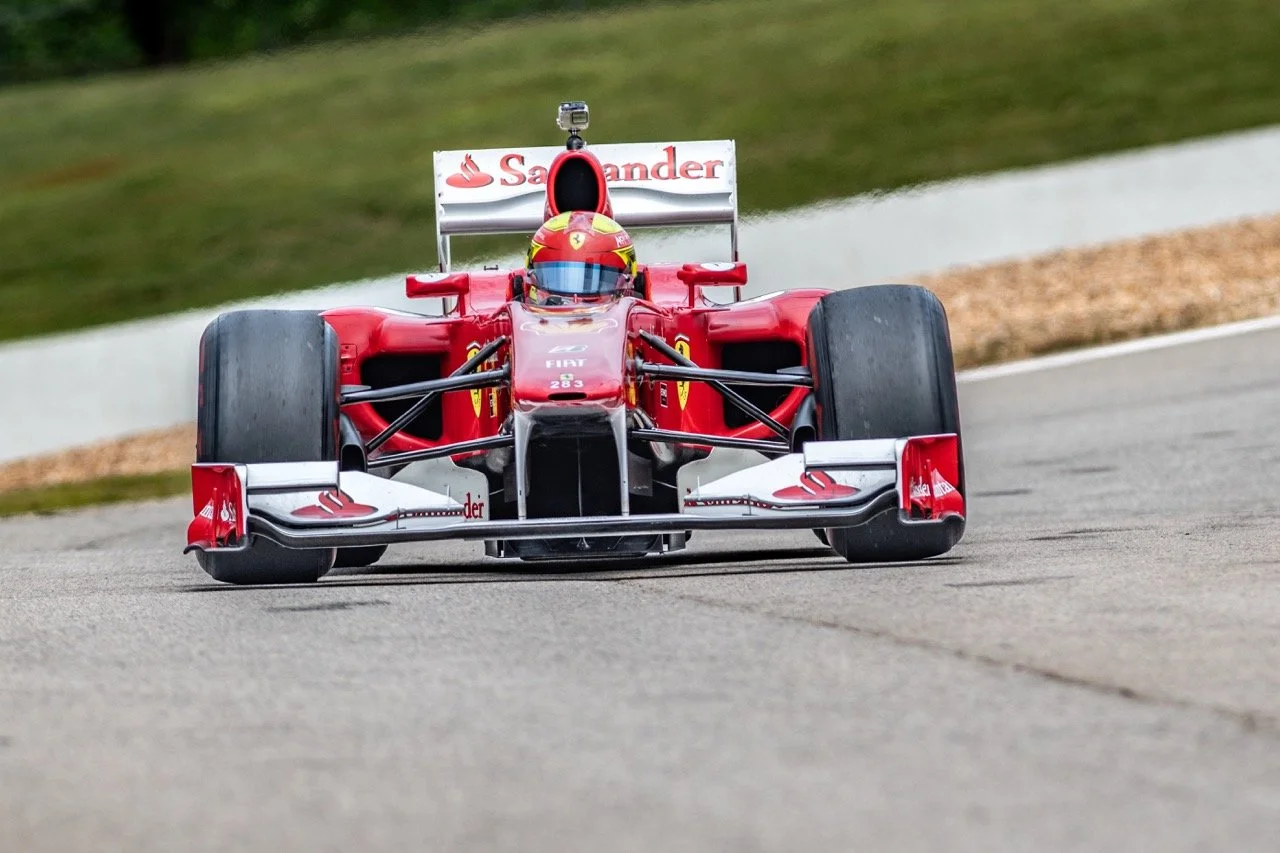
F1 Clienti exists to make that impossible fantasy a standing appointment. Through the programme, owners take possession of authentic Ferrari Formula One machines. Real Grand Prix cars from across multiple eras of the marque’s competition history maintained and run by Ferrari’s own technicians, the people who understand these temperamental, fragile, magnificent things better than anyone alive.
These are not softened or detuned. These are cars driven by the likes of Schumacher, Vettel, Raikkonen, Massa, Alboreto, Prost, and Villeneuve. They are the cars as they were. Preserved in fighting condition, brought to circuits and prepared by specialists, and then handed to the enthusiast for the experience of a lifetime, repeated as often as the calendar and the owner’s nerve allow.
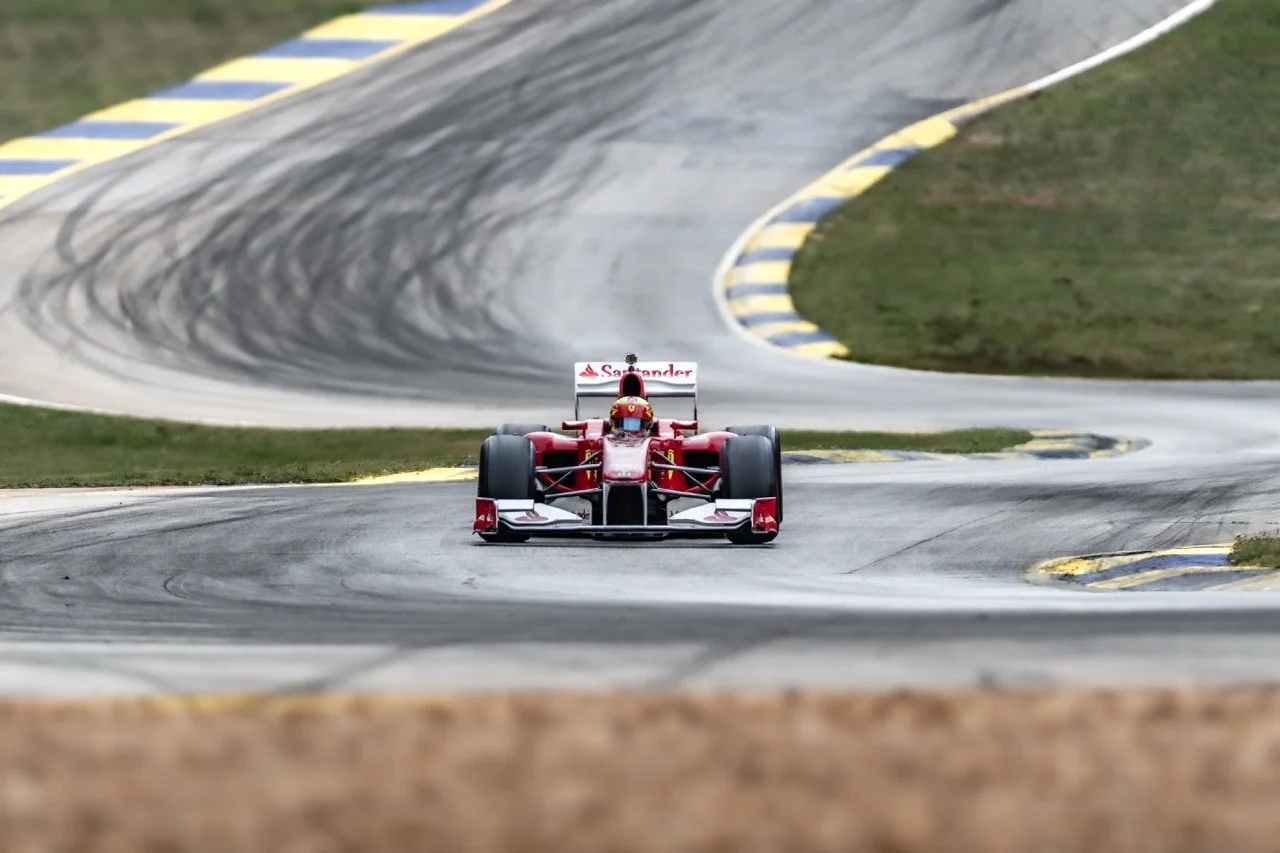
The emotional weight of this is difficult to overstate. To climb into the cockpit of a car that once carried Ferrari’s hopes through a Grand Prix weekend, to feel the engine catch and the entire structure begin to tremble with the violence of combustion, to roll out onto a circuit and experience the sound and the savagery and the sheer improbable speed exactly as it was intended, this is communion with automotive history at a level that no other artifact can offer. A painting can be looked at. A trophy can be held. A Formula One car can be lived, but only if someone keeps it running, and only if someone is brave enough to let it run hard.
That is the gift F1 Clienti makes. It refuses to let the most evocative machines in all of motorsport fall silent. It keeps the championship history of the most storied team in racing alive in motion rather than in memory, and in doing so it preserves something that no archive ever could: the noise, the feel, the terrifying immediacy of what these cars actually were.
• • •
Sport Prototipi Clienti: Le Mans Without the Leash
Every form of professional sports car racing operates under a quiet act of sabotage called Balance of Performance. The intention is noble enough. Equalize wildly different machines so that racing stays close and unpredictable, so that no single manufacturer simply drives away from the field. But BoP achieves its parity by deliberately holding cars back. Adding weight here. Restricting airflow there. Pegging power outputs to a target rather than to the car’s true potential. The result is competition you can sell tickets to, but it is also, by design, a leash. The cars never show you everything they have.
Sport Prototipi Clienti takes the leash off.
The centerpiece is the 499P Modificata. To understand what that means you have to understand what the 499P is. It is the prototype with which Ferrari returned to the very top class of endurance racing and won at Le Mans. A triumphant homecoming to the most demanding race on earth, a Hypercar built to beat the world over twenty-four merciless hours. The 499P is the real expression of Ferrari’s modern endurance ambitions, and the world watched it succeed against the best that everyone else could field.
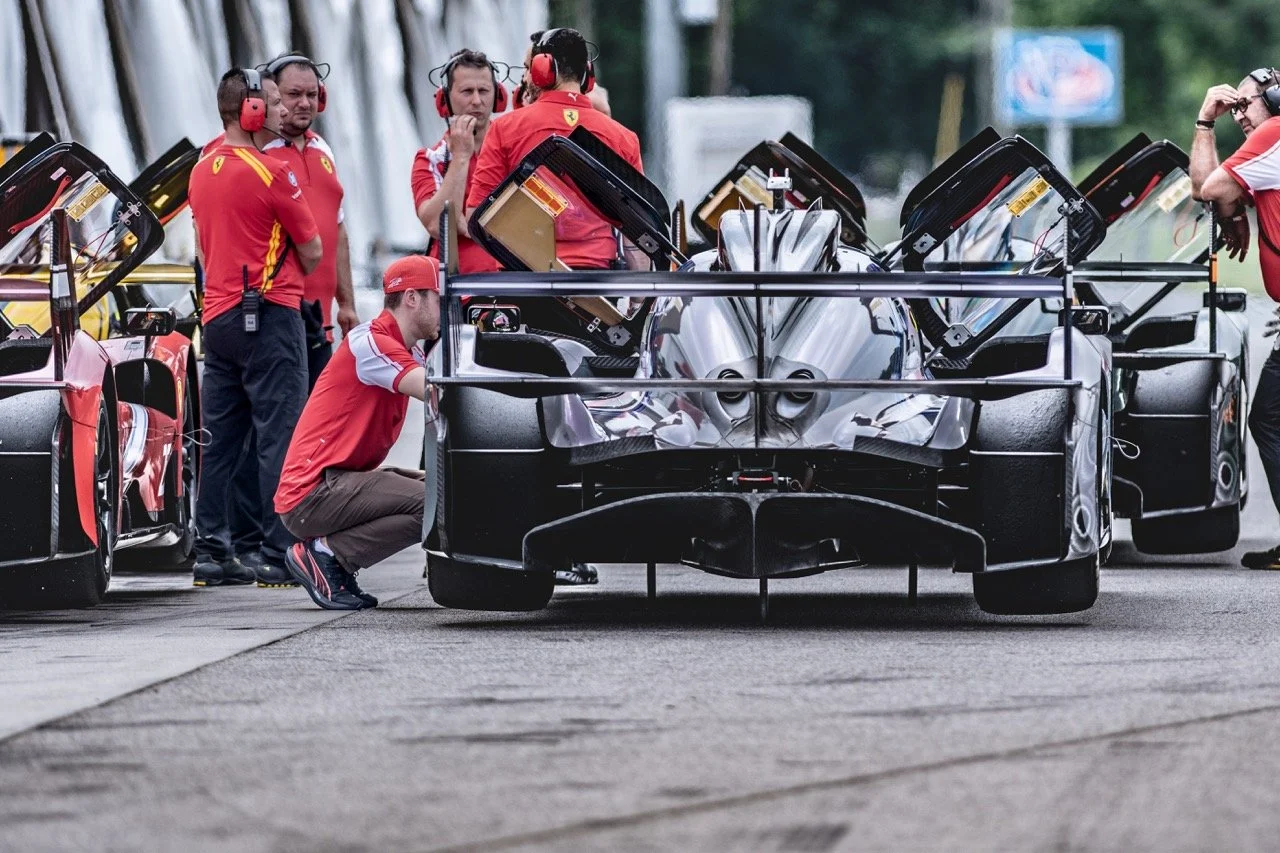
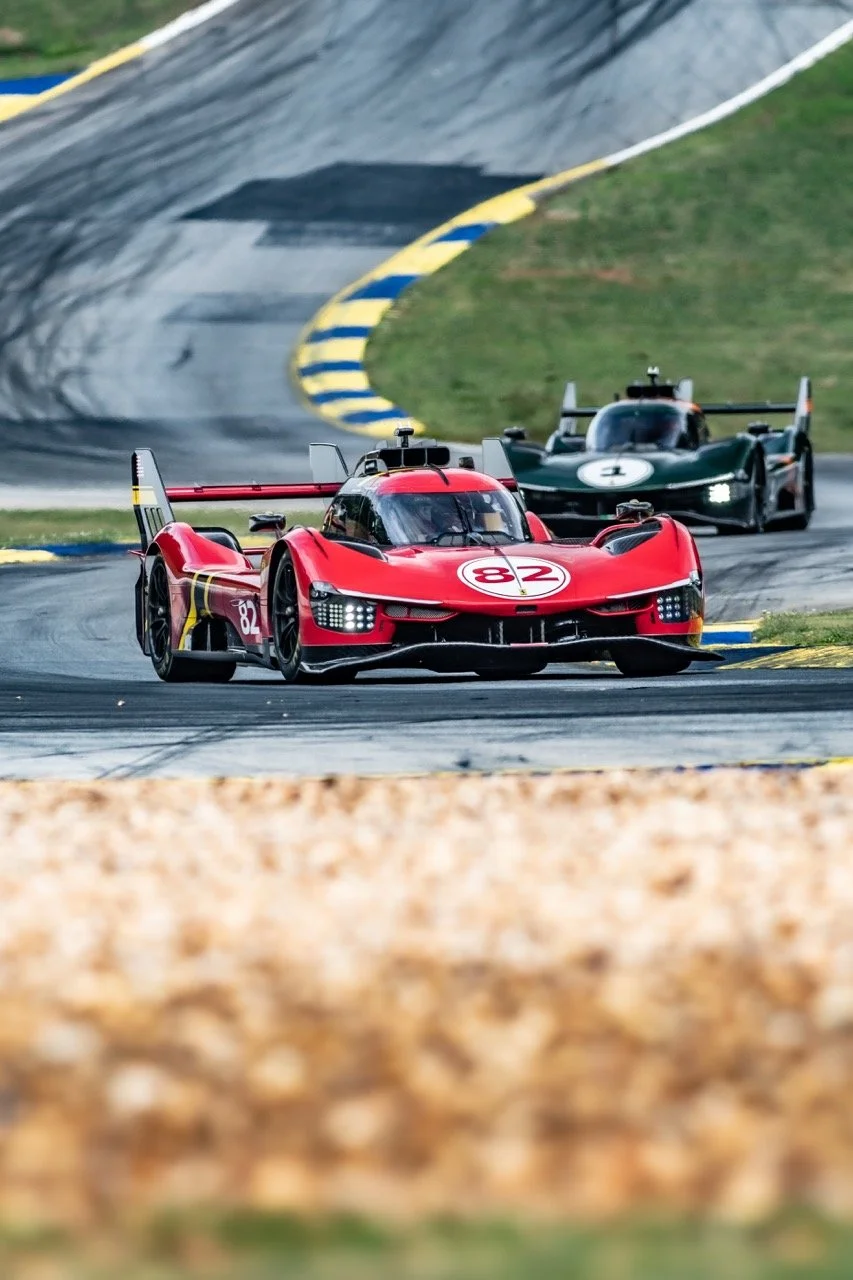
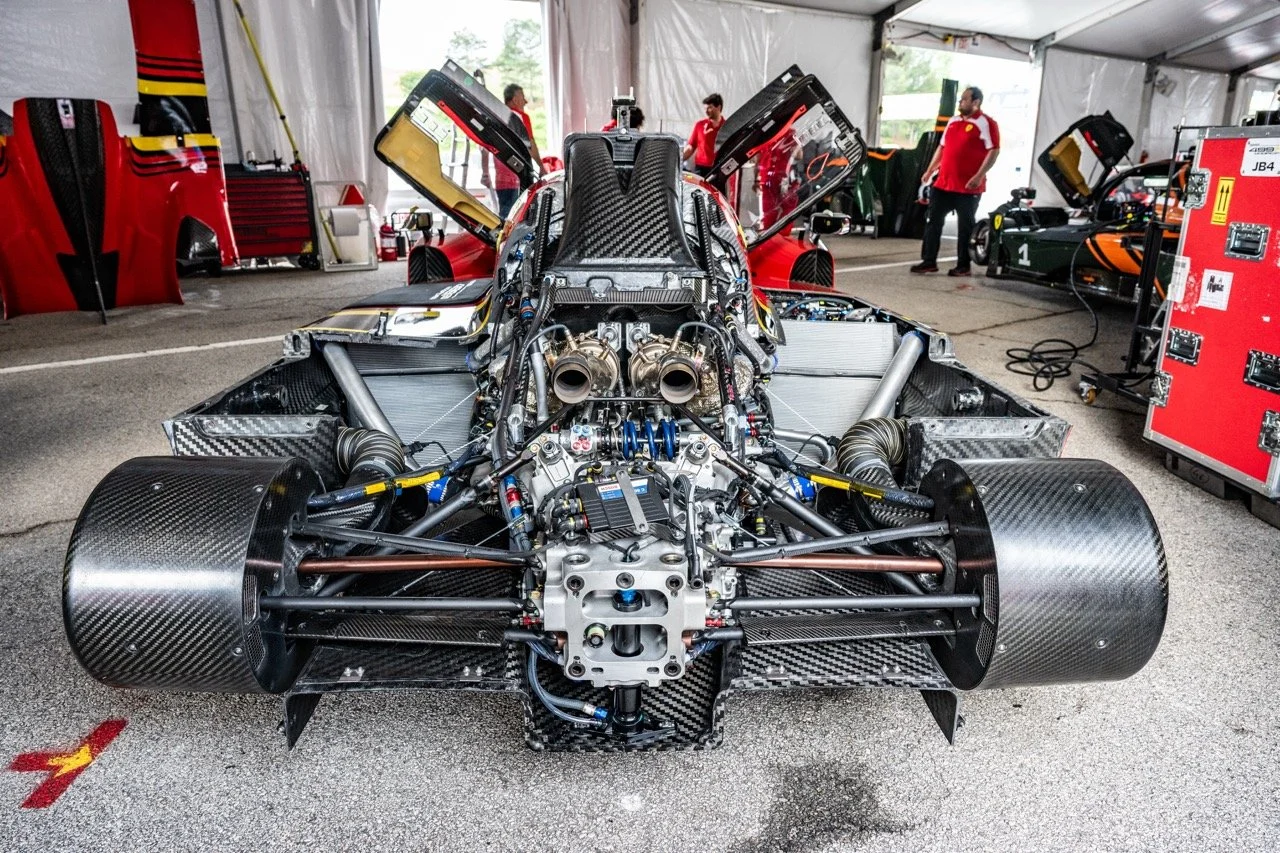
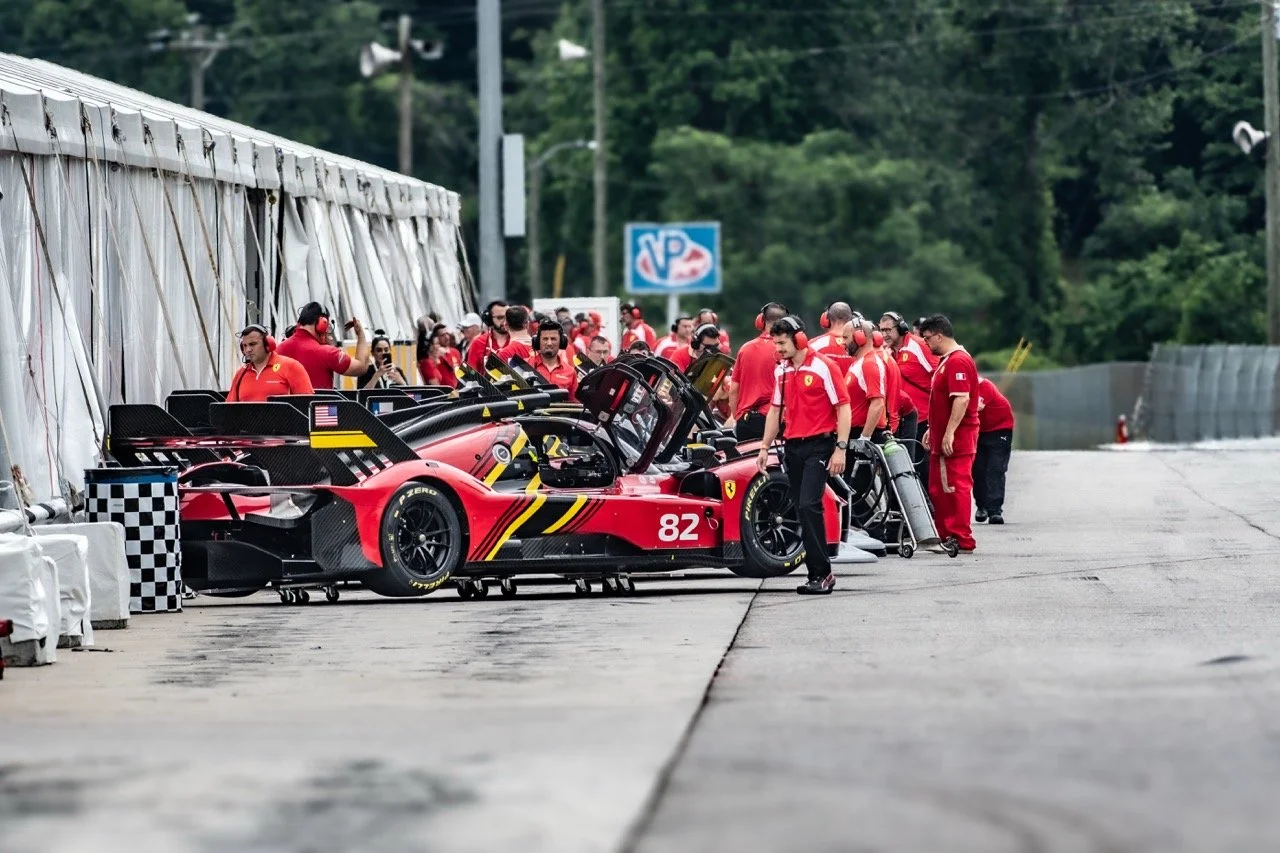
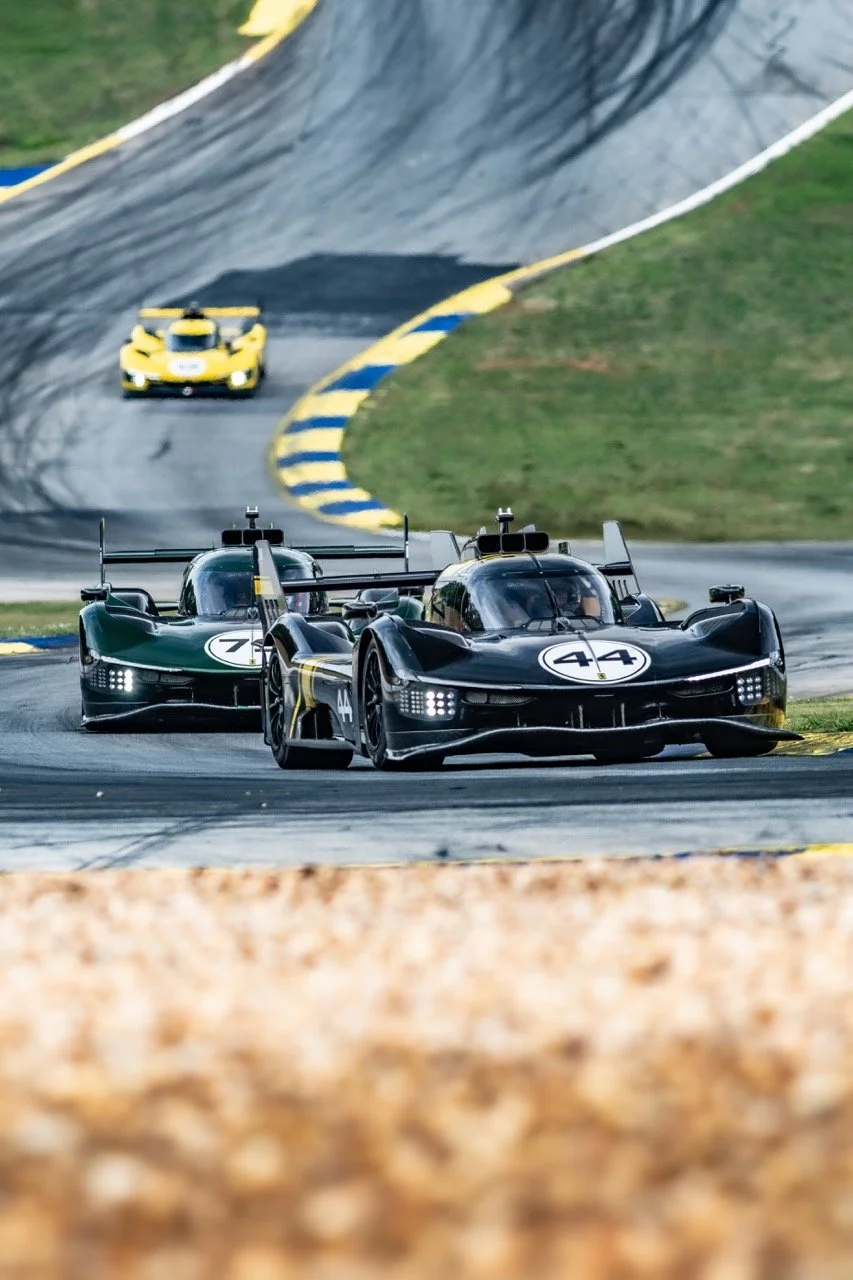
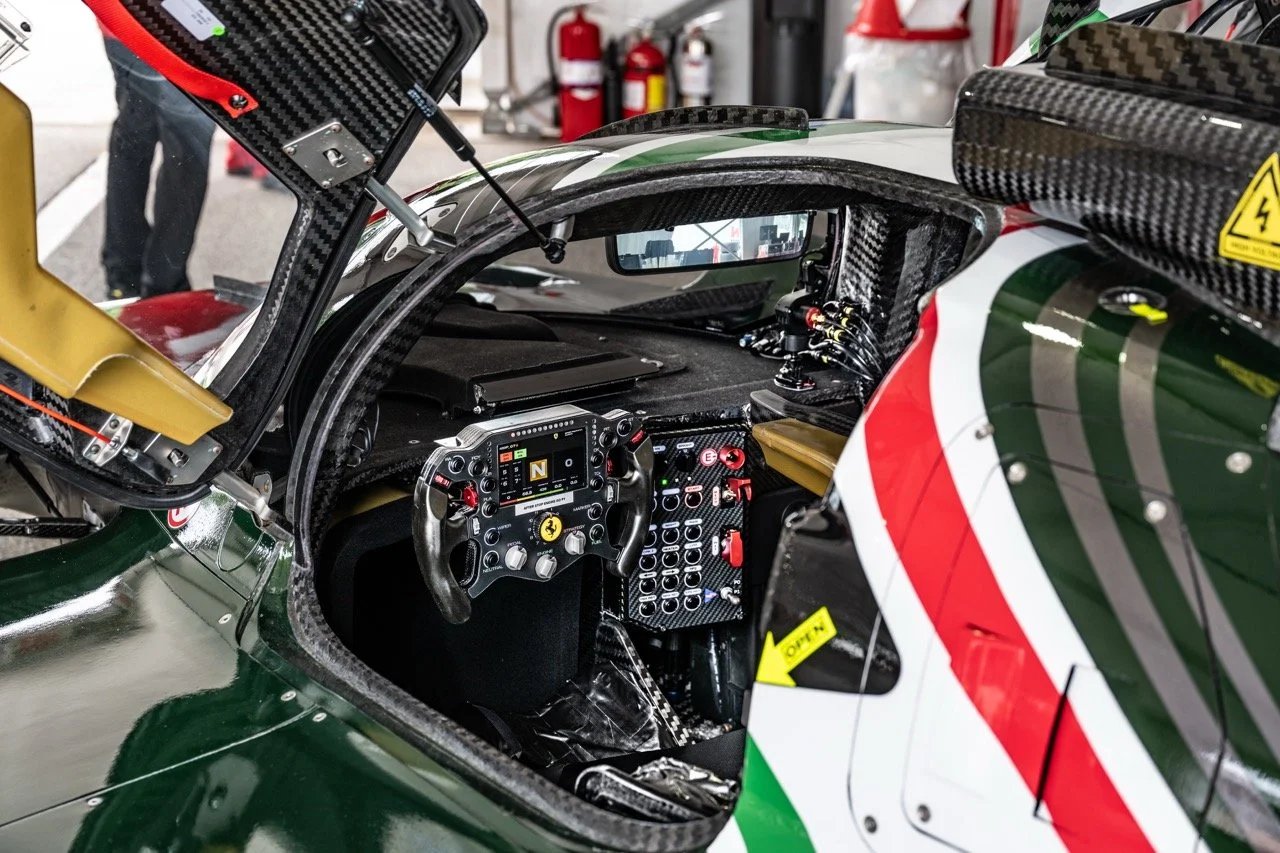
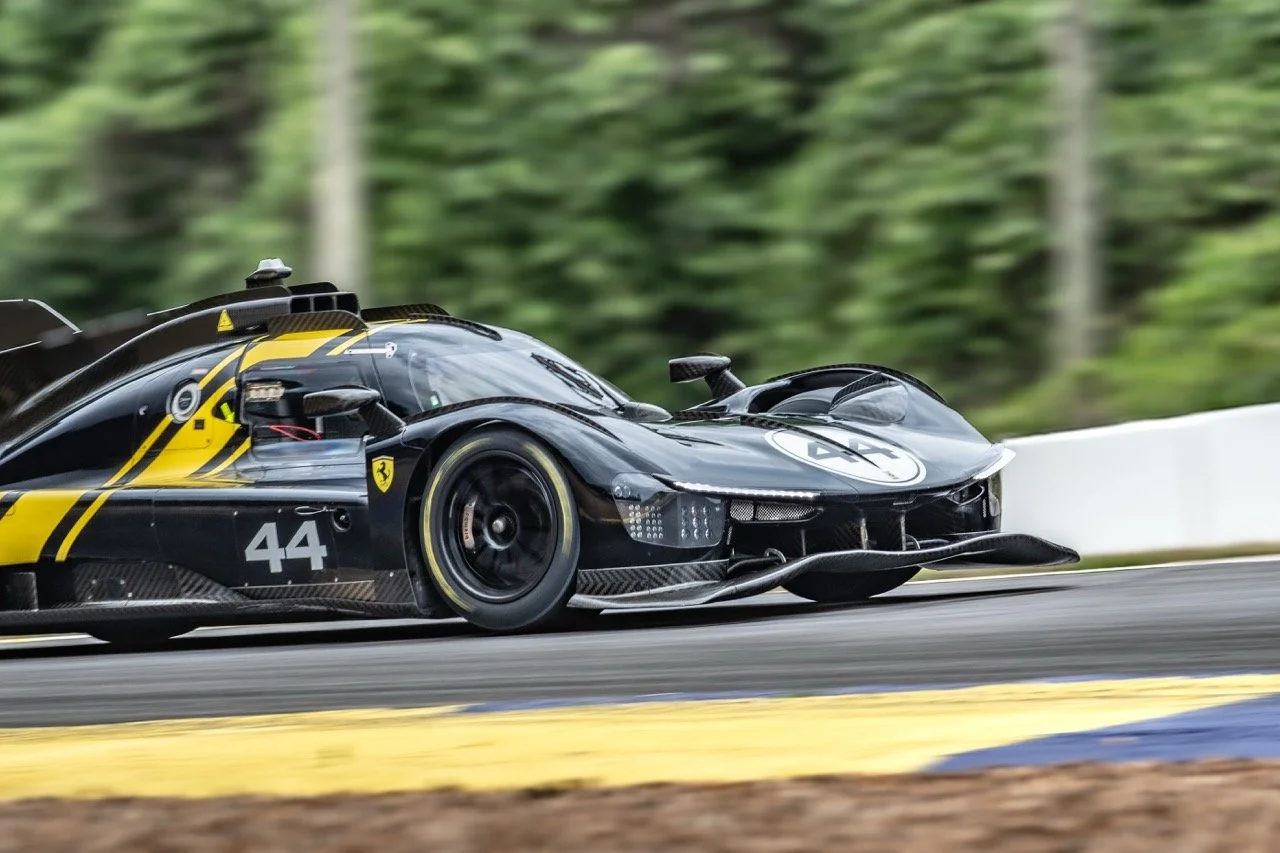
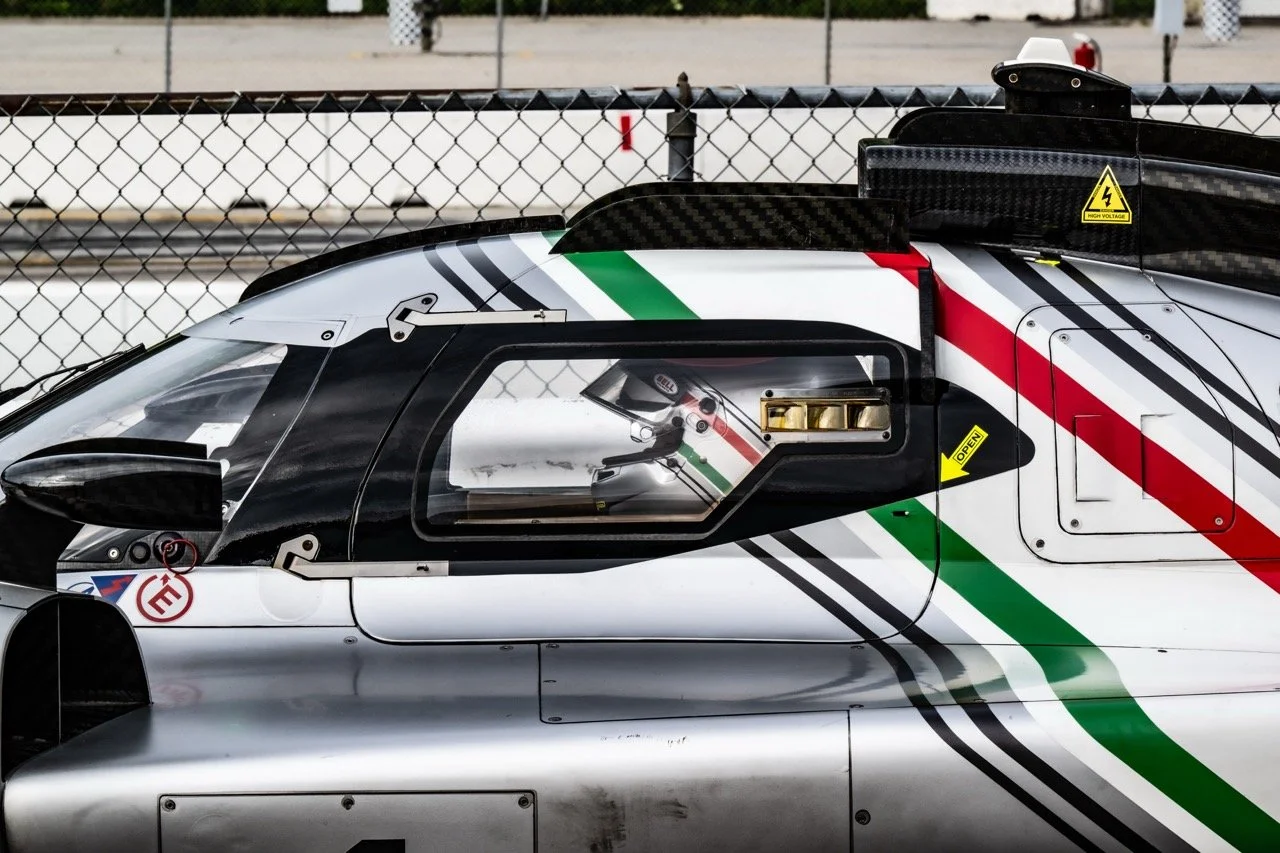
The Modificata is that car. Freed, stripped of the Balance of Performance constraints that governed it in competition, it is permitted to deliver its capability in full, to be everything the engineers intended before the rulebook intervened. For the client, this is the closest experience that exists to driving a current factory prototype at its genuine limit, with nothing dialed back to keep the racing fair, because there is no racing to keep fair. There is only the car and the circuit and the truth of what a Le Mans-winning Hypercar can do when no one is holding it back.
It is, in a sense, the purest proposition in all of Corse Clienti. Most of the world only ever sees these prototypes operating below their ceiling, throttled into the service of a spectacle. Sport Prototipi Clienti lets a handful of people find out what lies above that ceiling. It is racing technology unbound, offered to those few prepared to meet it on its own terms.
• • •
Club Competizioni GT: The Banned Generation
There is a particular tragedy in the life cycle of a GT racing car. It is developed at enormous expense, campaigned for a few seasons at the front of grids around the world, and then, the moment the regulations move on, it becomes ineligible. Overnight, a machine that was competitive at the highest level becomes a car with nowhere to race. It has not gotten slower. The powers that be simply decided to stop letting it run. Garages around the world are full of these orphans. Superb cars, beautifully engineered, suddenly homeless.
Club Competizioni GT, introduced in 2020, was created precisely to give Ferrari’s competition GTs a home for the rest of their lives.
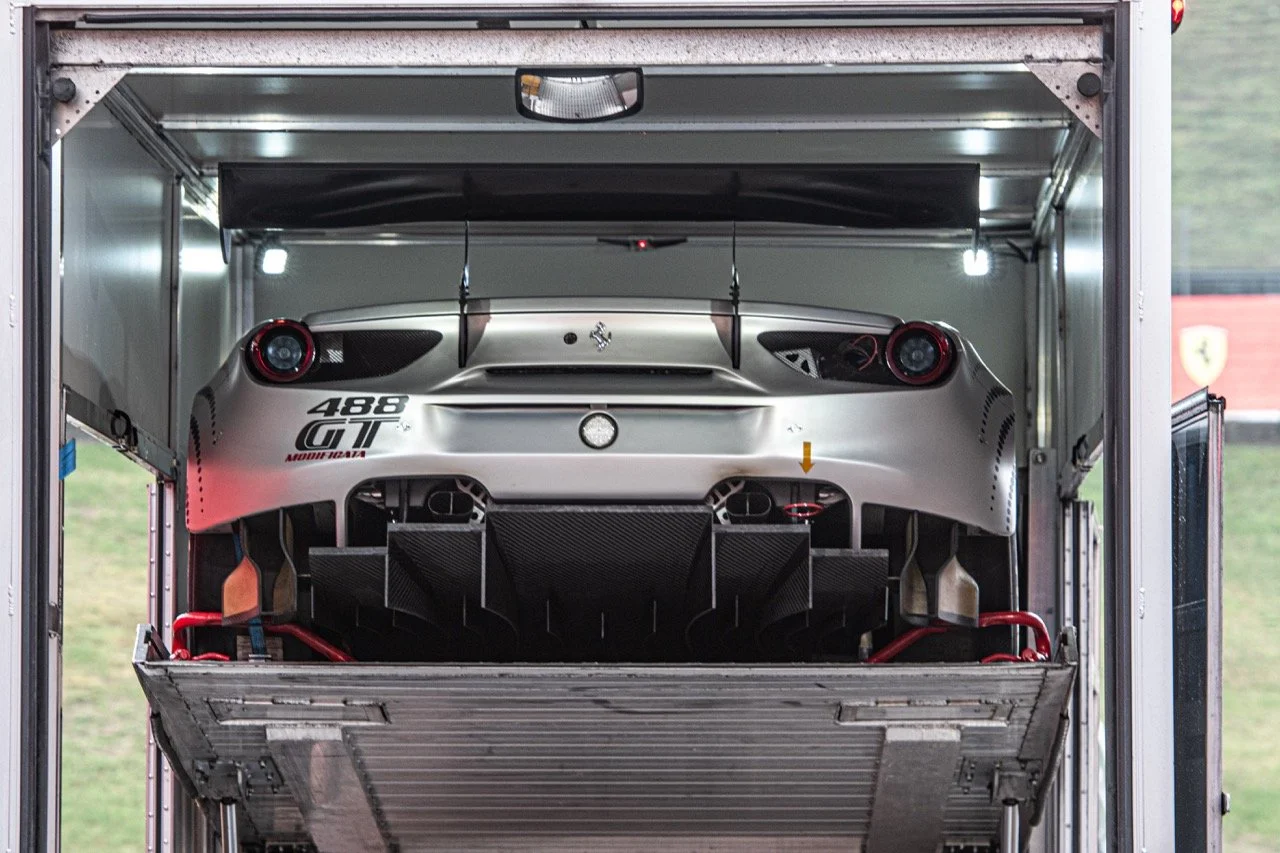
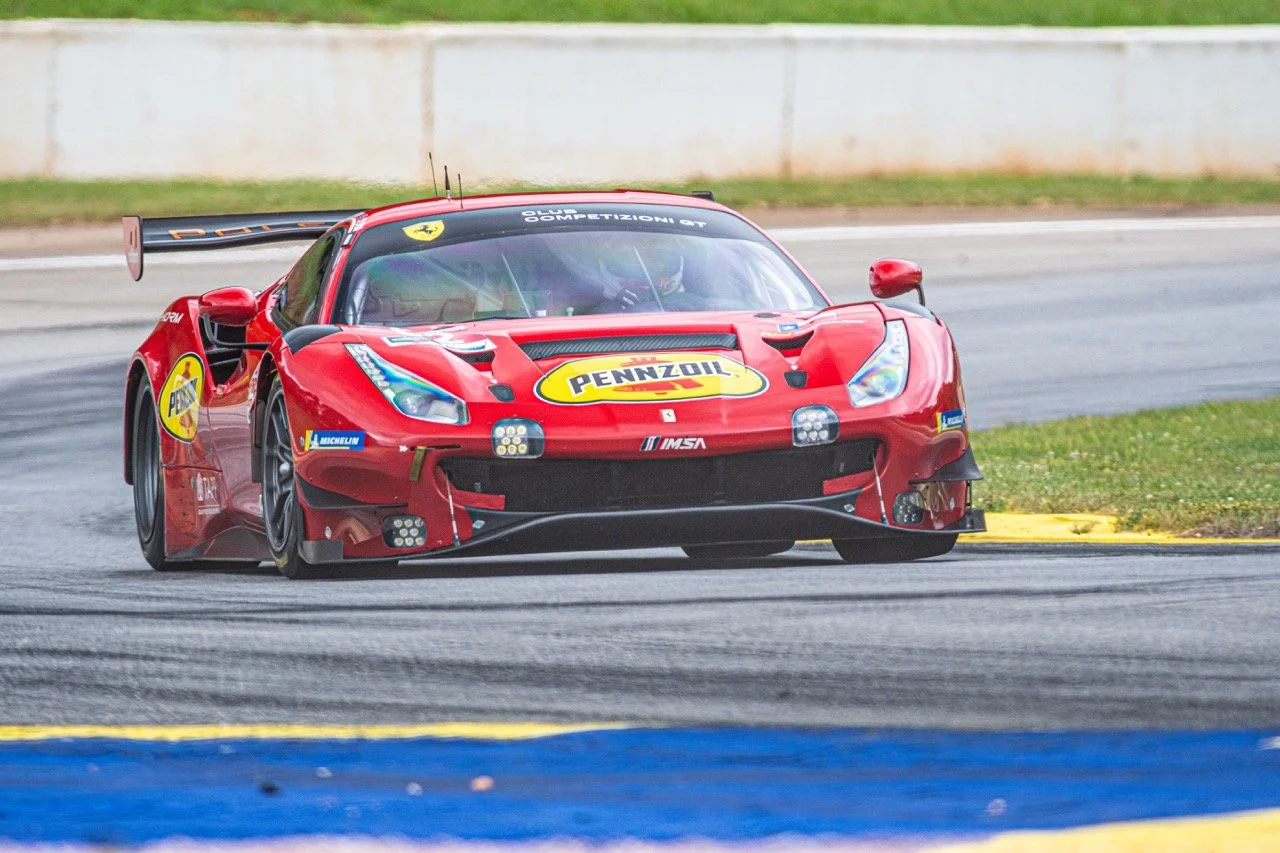
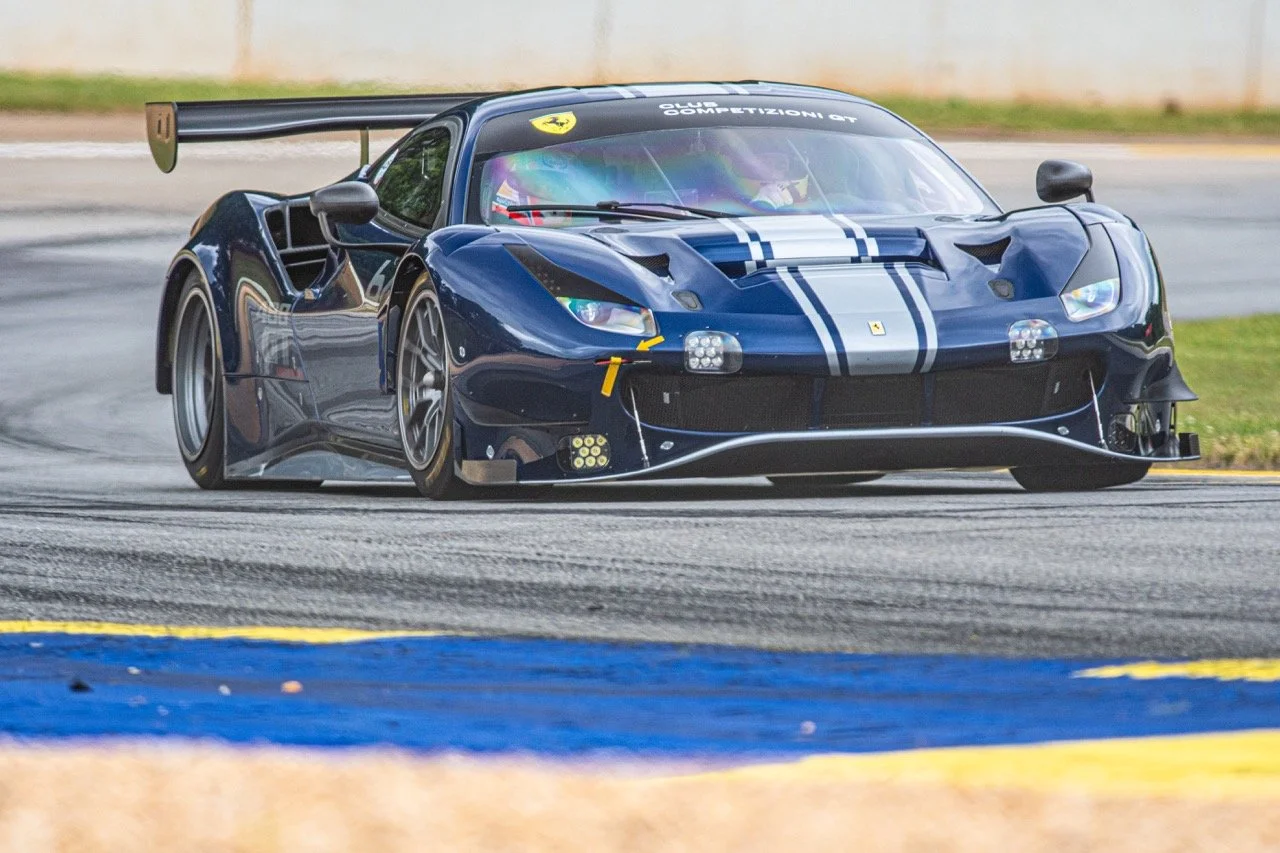
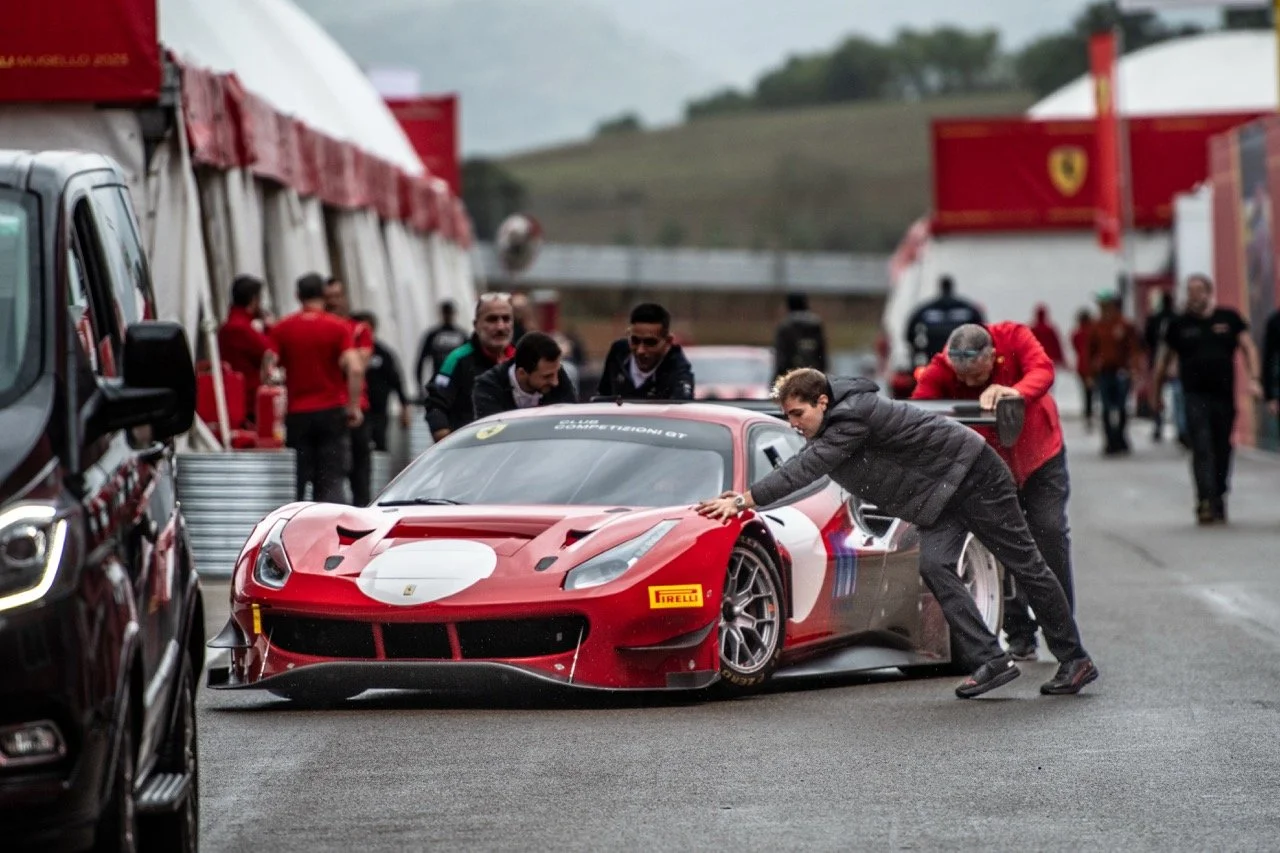
Its star is the 488 GT Modificata. The car is a fascinating act of engineering synthesis. The 488 competed in two distinct championship-winning forms. The GTE, built to the regulations of the world’s premier endurance categories, and the GT3, the workhorse of GT racing across the globe. Each was developed under its own restrictive rulebook, each compromised in its own way to satisfy a particular set of governing-body demands. The 488 GT Modificata takes the best of both and fuses them into a single track-only machine answerable to no FIA regulations.
The result is a car that is better than either of the championship-winning versions it descends from. It carries the strengths of both without the restrictions that hobbled each. It is what the 488-racing programme might have produced if the engineers had simply been told to build the fastest possible car and ignore the rulebooks entirely. Free from balance-of-performance adjustments, free from the regulatory ceilings that defined its competitive life, it exists in a state of mechanical honesty that sanctioned racing never permits.
For the owner, Club Competizioni GT offers the rare chance to run a genuine, championship-bred Ferrari GT car with full factory support, on great circuits, alongside others who share the affliction. It is preservation through use. The conviction that a great racing car deserves to keep racing, even after the sport has closed its doors, and that the closing of those doors is no reason at all to let the car go quiet.
• • •
Ferrari Challenge Weekends: When Every Era Shares a Paddock
For most of the year, the four programmes operate as distinct worlds, at circuits around the world, each with its own machinery, its own clients, its own rhythm. But on selected occasions, something extraordinary happens. The walls between them come down, and a Ferrari Challenge race weekend transforms into a kind of festival of the entire competition lineage with Ferrari Race Days.
Picture this In one garage, an FXX-K Evo sits with its bodywork off, hybrid system charging, looking like something escaped from the near future. A few doors down, a Formula One car from a championship-defining season is being warmed by technicians who know it intimately. Across the way, the 499P Modificata waits to get on track. Beside it, a 488 GT Modificata, the banned generation given new life. And threaded among all of them, the Challenge cars themselves, the production-based racers whose championship is the weekend’s nominal centerpiece.
Every era of Ferrari competition, running together, in the same place, on the same day.
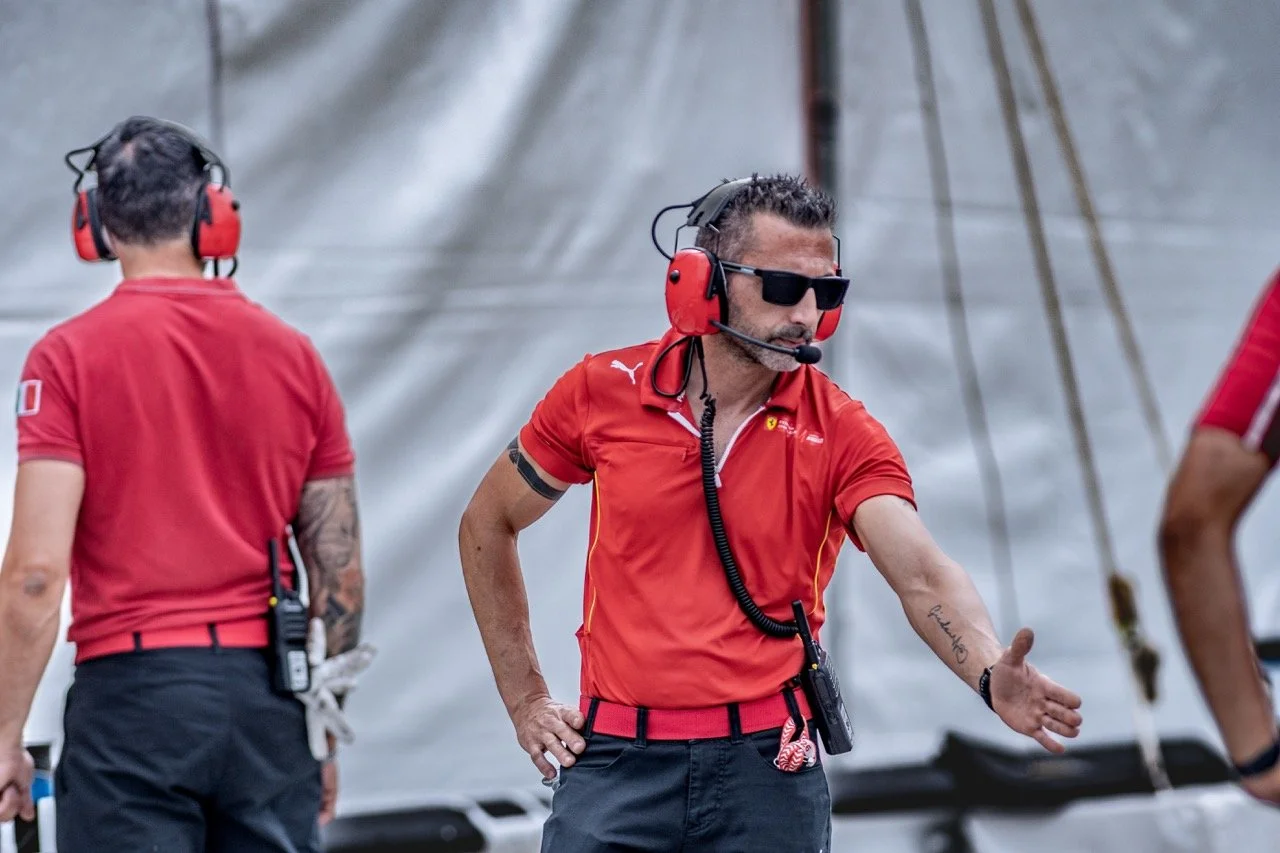

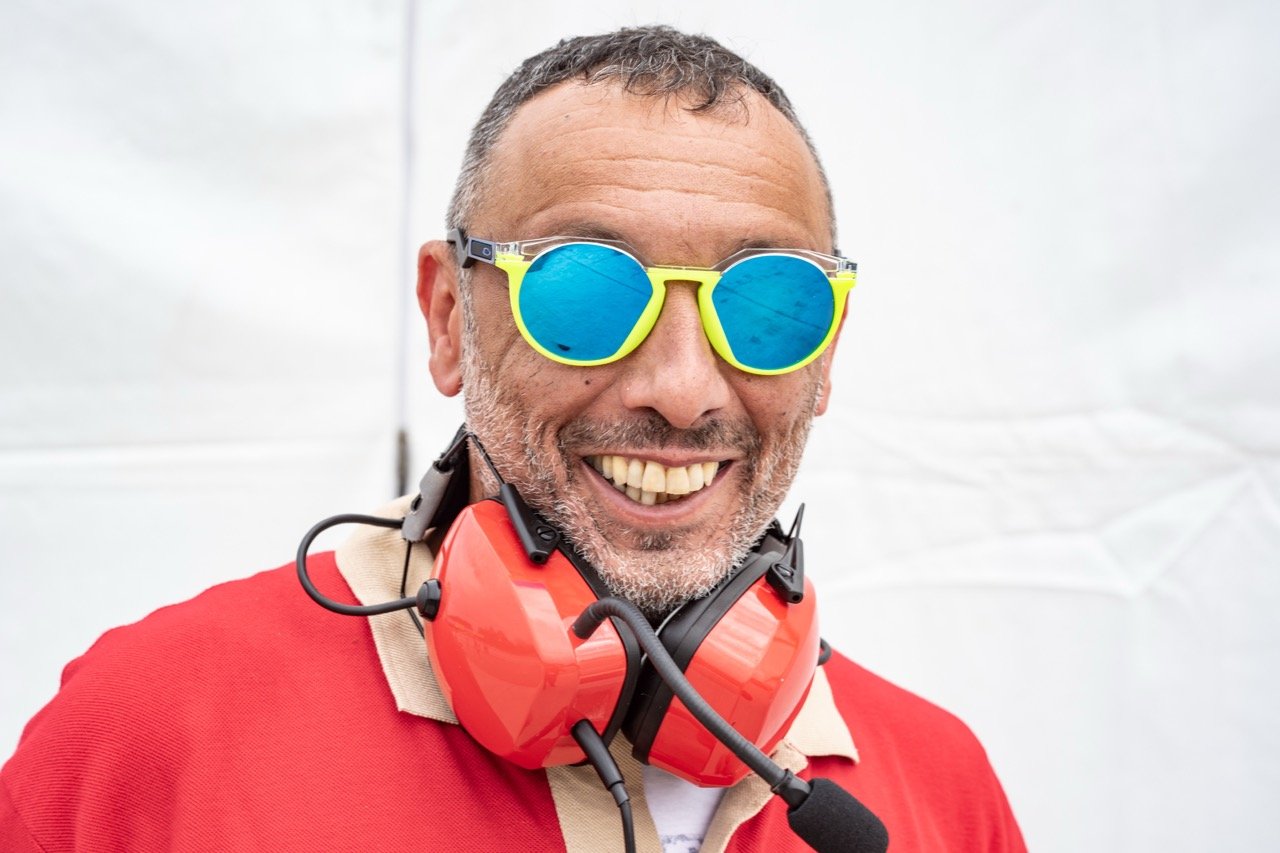
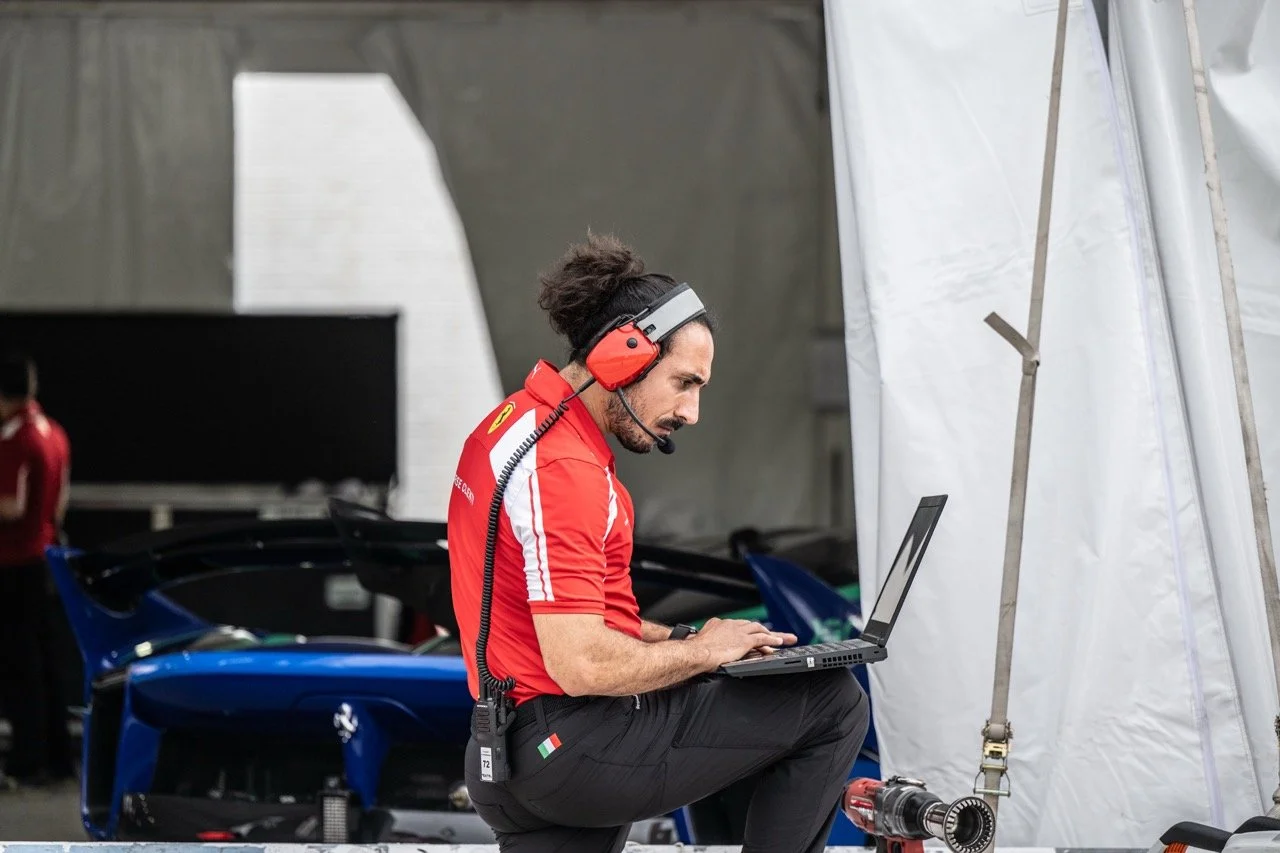

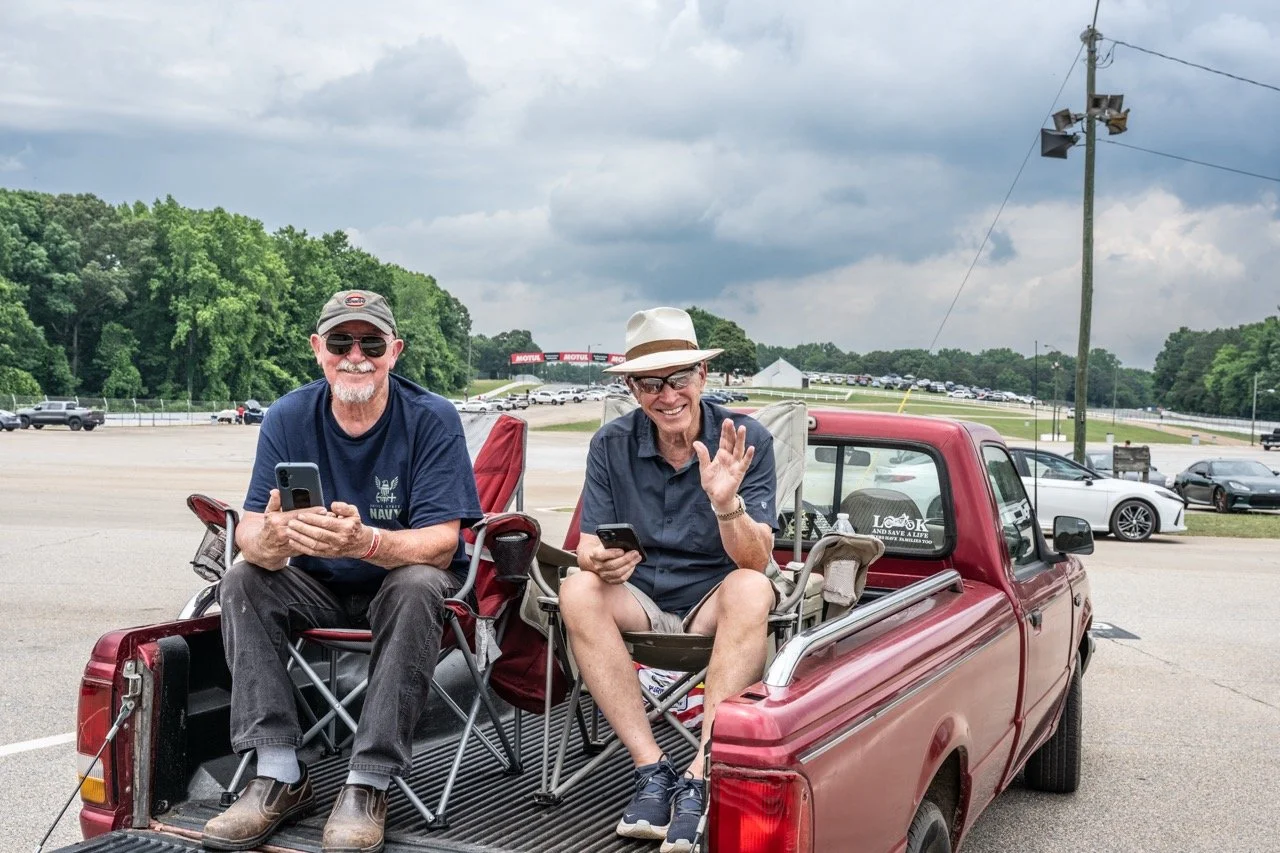
This is not something money can simply purchase a ticket to in the ordinary sense, and it is not something that exists anywhere else in motorsport. No other manufacturer has the depth of competition history to fill a paddock this way, and few would have the institutional will to keep all of it running if they did. For the spectator fortunate enough to be present, the experience is overwhelming in the best way. A sensory archive of decades of racing, not preserved behind glass but alive, loud, hot, and moving. The shriek of the Formula One V10’s and V12’s layered over the hybrid wail of the FXX-K, the bark of the prototypes, and the chorus of the Challenge field. It is the sound of an entire history refusing to stay in the past.
For the owners, these weekends offer something subtler and perhaps more valuable. Community. The people who participate in Corse Clienti are, almost by definition, among the most committed enthusiasts on earth, and these gatherings bring them together in a shared celebration of the thing they love most. The cars are the headline. But the people, the friendships, the rivalries, and shared understanding of what it means to be part of this particular and very small world, are a great deal of why they keep coming back.
• • •
Finali Mondiali: The Family Reunion at Full Throttle
At the end of every season, it all converges at Finali Mondiali, Ferrari’s World Finals. This is where the year’s loose threads are gathered into a single, enormous celebration of everything the marque does on a racetrack. In Italy. The Ferrari Challenge championships, contested across multiple global series throughout the season, reach their climax here, with titles decided and trophies awarded. But the Challenge racing is only the spine of the event. Wrapped around it is something closer to a pilgrimage.
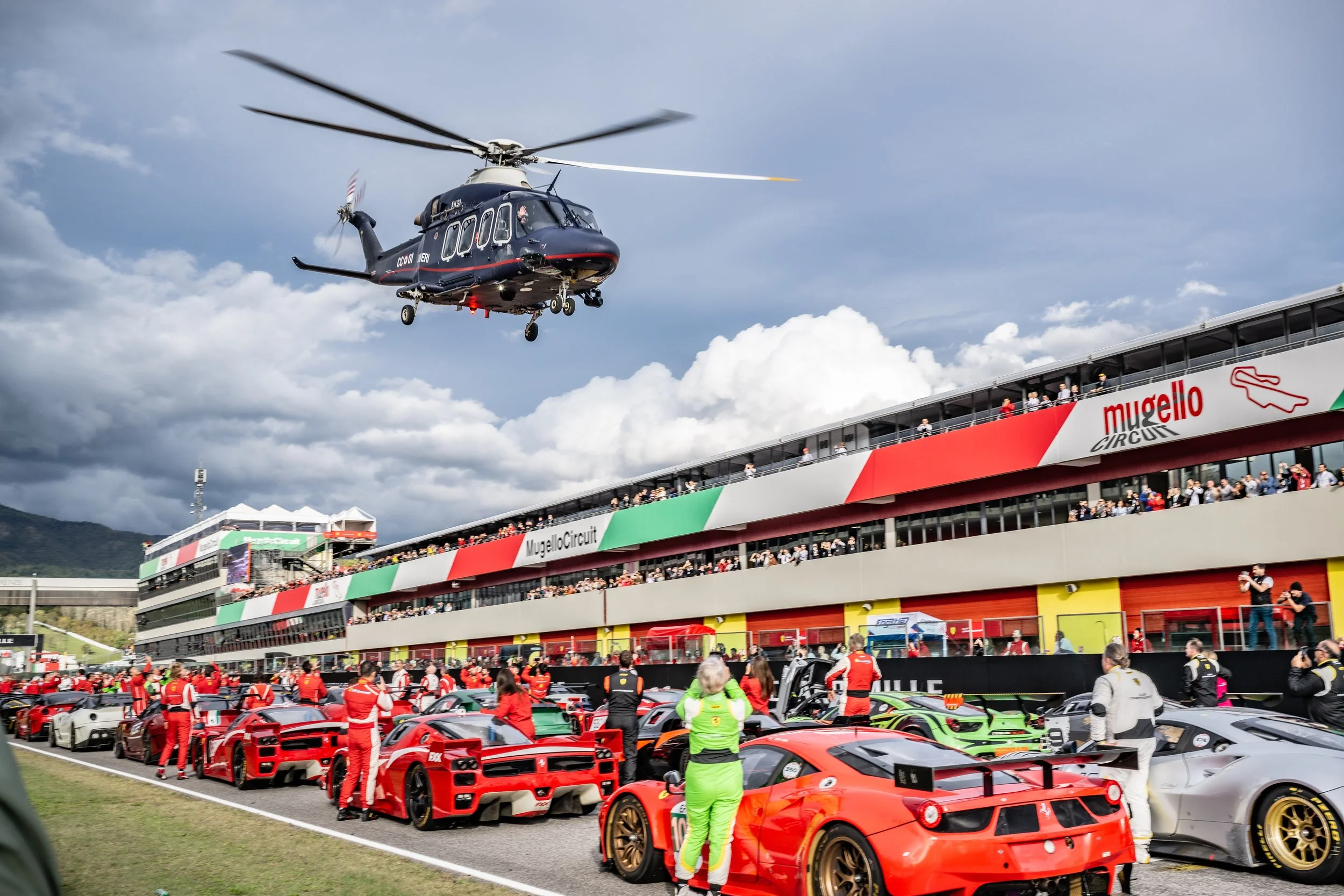
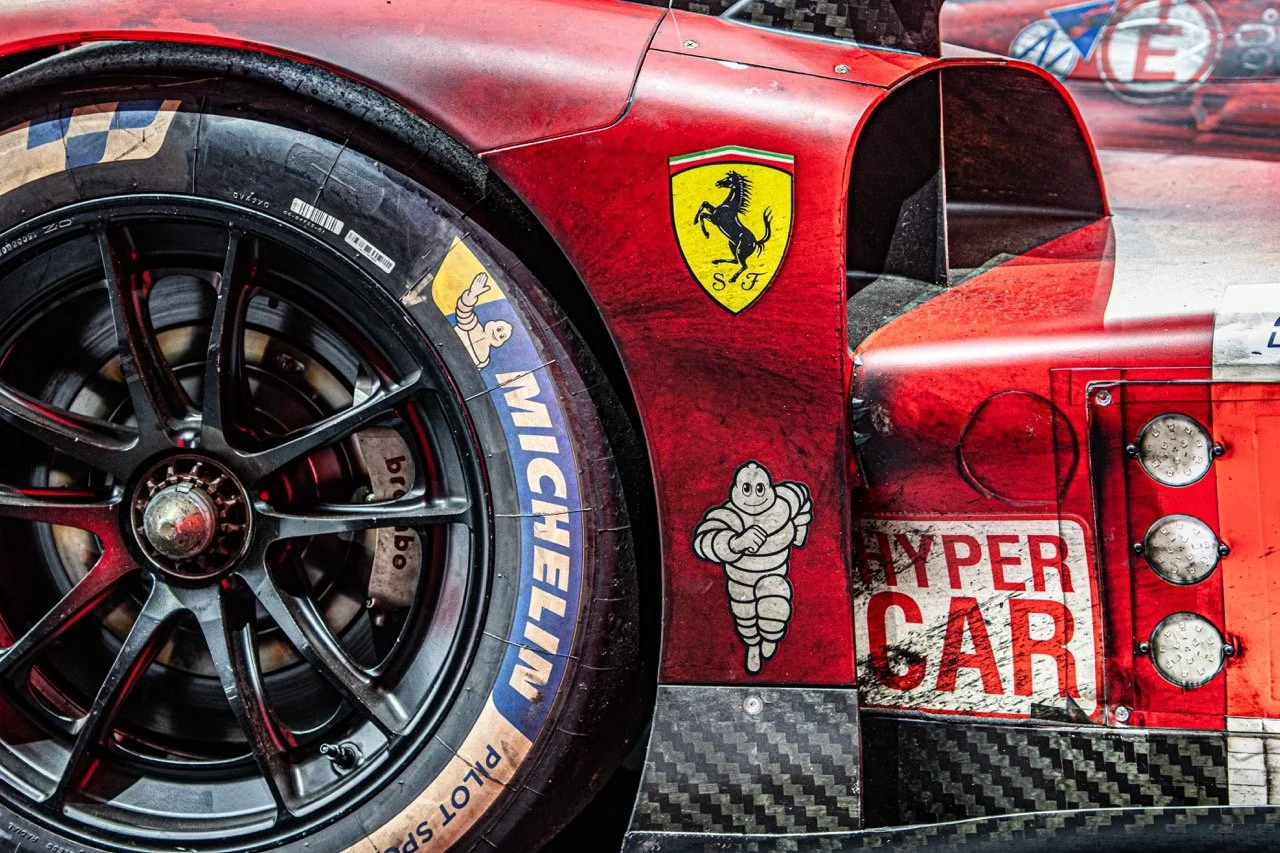
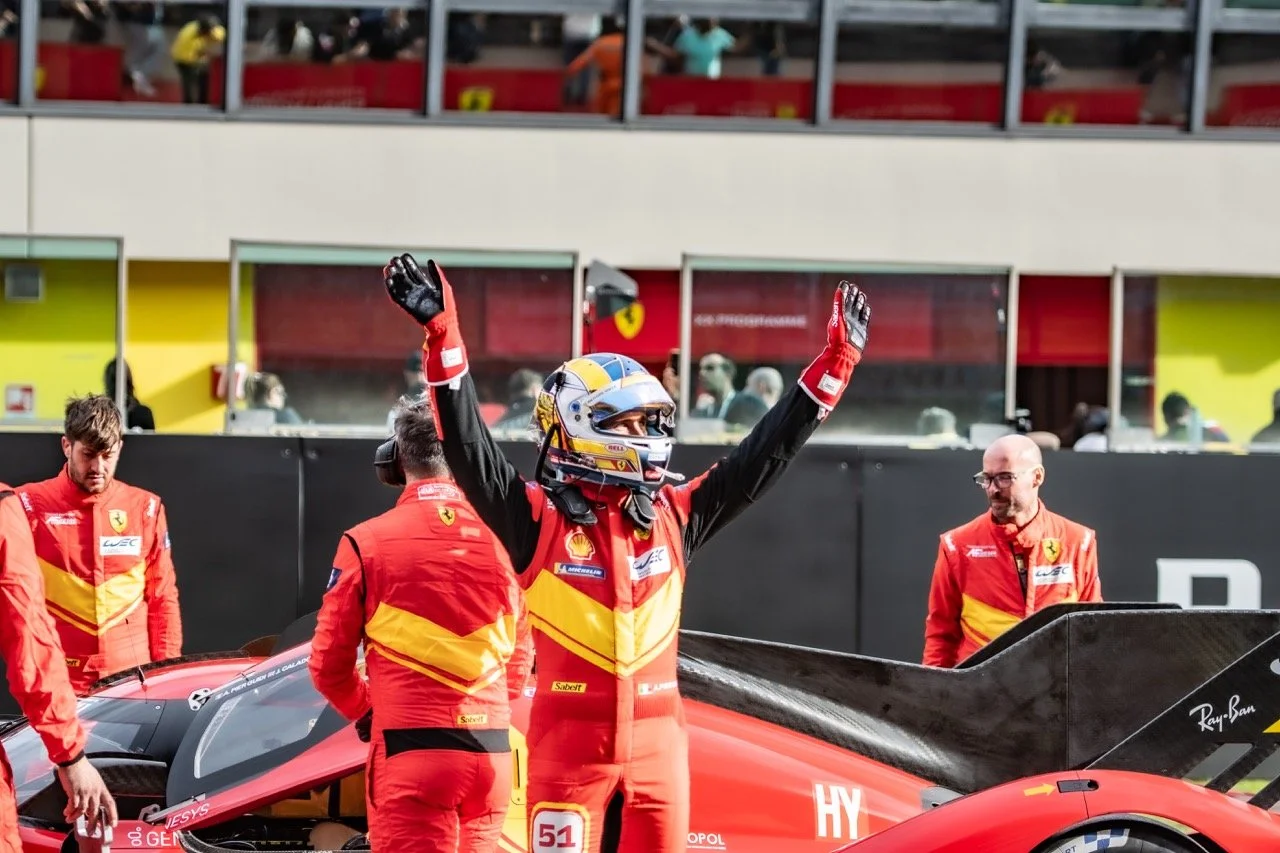
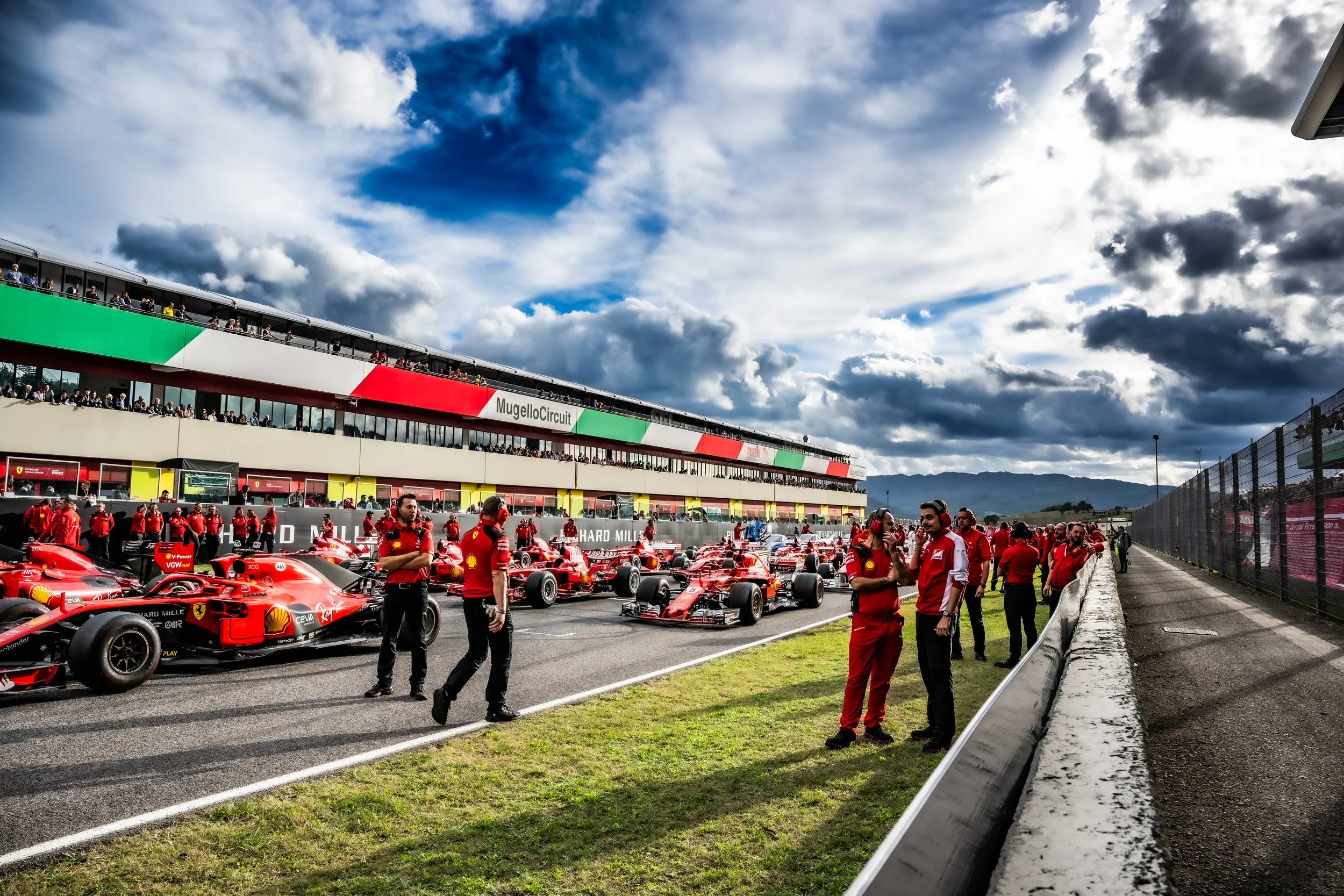
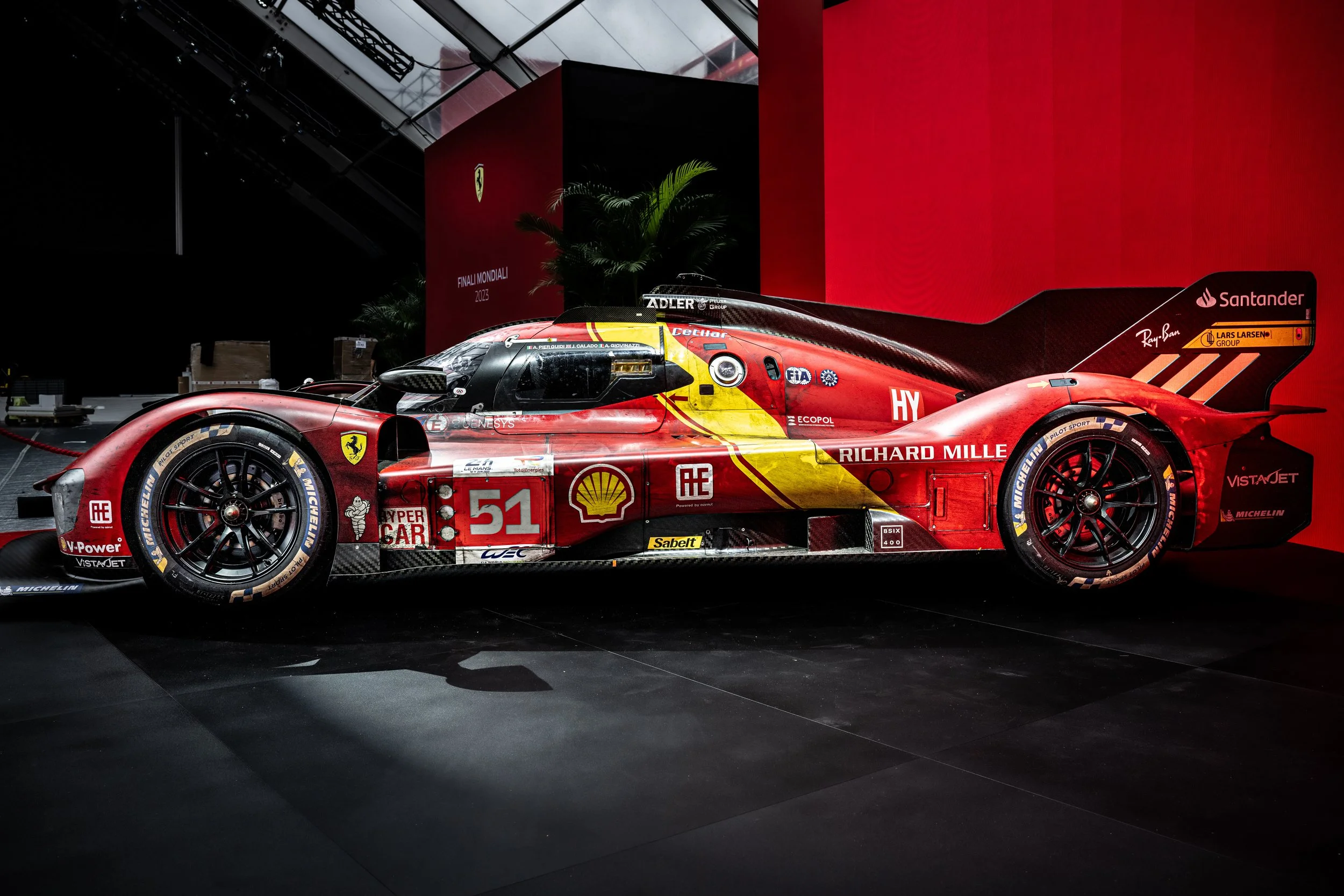
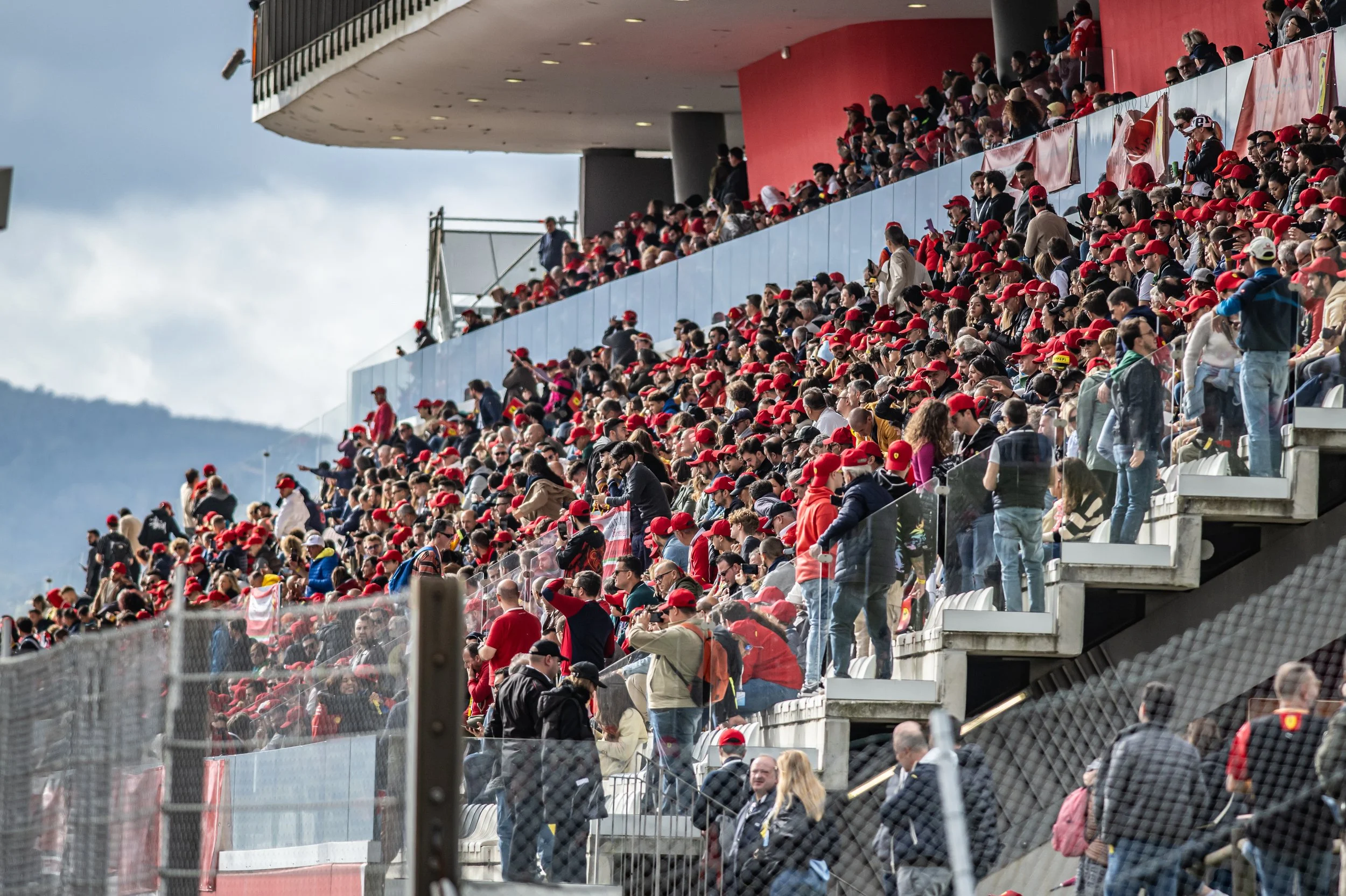
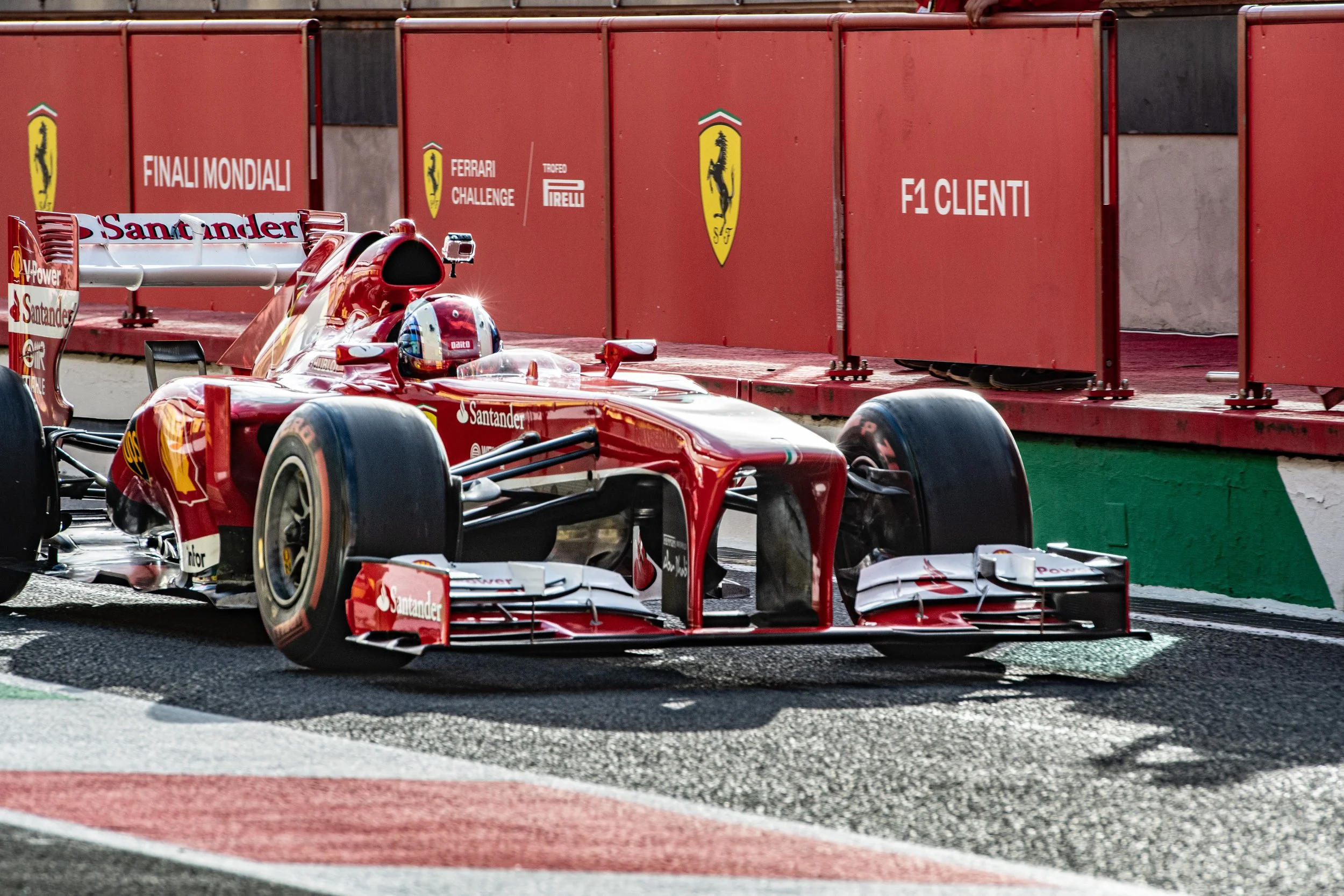
Every Corse Clienti programme comes to the Finali Mondiali. The demonstrations roll out across the weekend in a procession of competition history that no other event on the calendar can rival. To stand trackside at the Finali is to watch the entire philosophy of Corse Clienti made manifest at once. It is the conviction that none of this should ever fall silent, demonstrated at full volume by every era simultaneously.
It’s equal parts three things, and it is impossible to say which dominates. It is a championship, with real stakes and real winners decided on the track. It is a family reunion, drawing together the clients, the engineers, the technicians, and the wider Ferrari community in a gathering that is as much social as sporting. And it is a celebration of heritage. A deliberate, joyous, deafening assertion that Ferrari’s racing past is not a closed chapter to be studied but a living thing to be experienced, every single year, by anyone willing to come and listen.
• • •
Why It Matters
It would be easy to dismiss all of this as merely the most extravagant hobby on earth. The playground of the very wealthy, indulging fantasies the rest of us can only read about. And it is, undeniably, expensive in ways that defy ordinary comprehension. But to leave the assessment there is to miss the larger and more interesting truth.
Corse Clienti is, in the end, an act of preservation unlike any other in the automotive world. It works precisely because it rejects the usual methods of preservation. The conventional approach to a historic racing car is to stop it, drain it, stabilize it, and place it under controlled conditions where time can do it no further harm. Corse Clienti does the opposite. It preserves these machines by using them, by keeping them in fighting trim, by accepting the wear and the risk that come with running a competition car the way it was meant to be run. It treats the cars not as artifacts to be protected from the world but as instruments meant to be played.
There is a kind of courage in that philosophy, and a kind of faith. Every time one of these irreplaceable machines turns a lap at speed, something could go wrong. The conservative choice would always be to leave them parked. Ferrari, and the clients who share its conviction, choose instead to let the legends run. To accept that a Formula One car silenced forever is a sadder thing than a Formula One car worn by honest use.
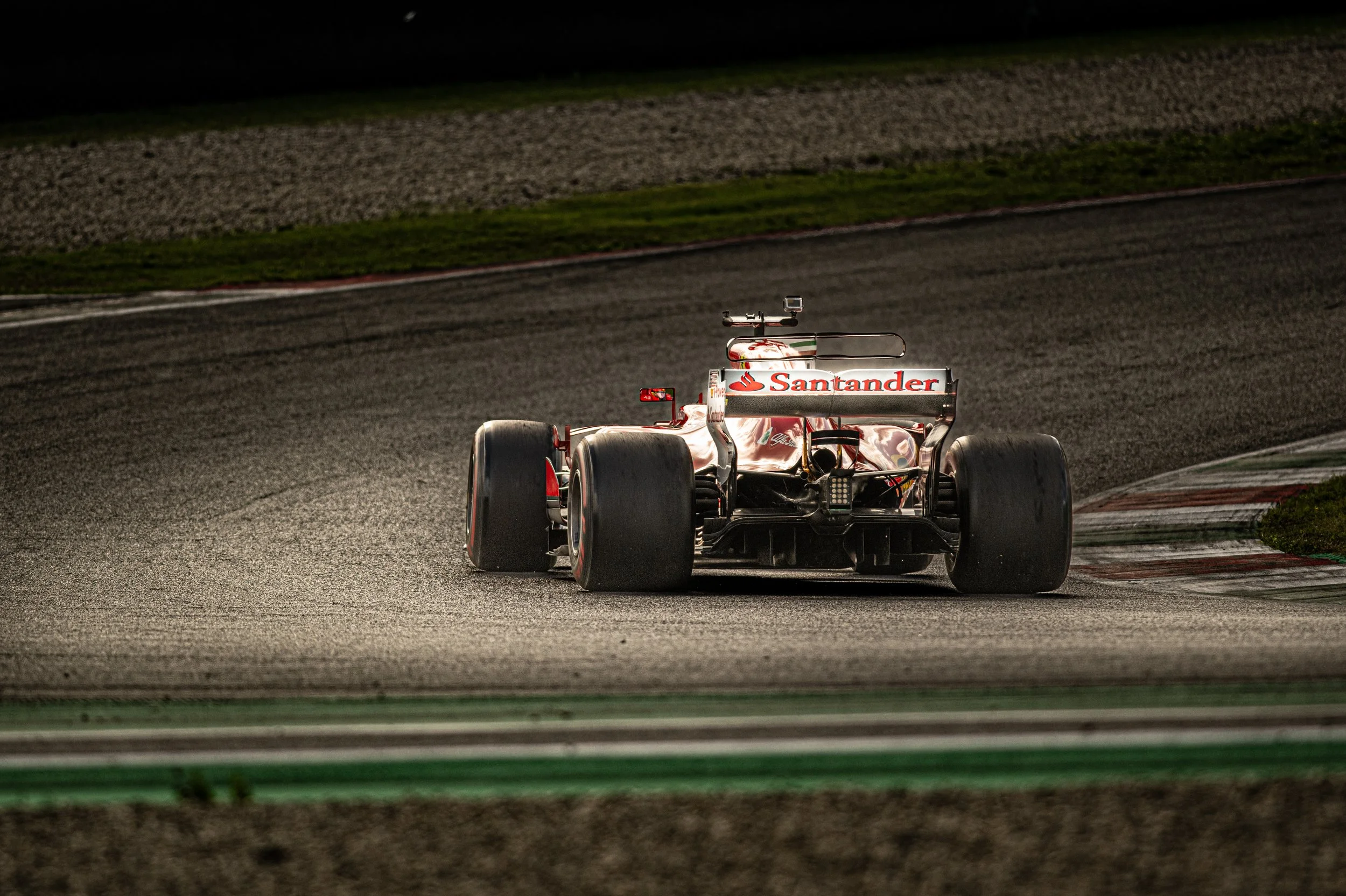
Dawn will break over another circuit soon. The espresso will brew. The tire blankets will come off, and the engineers will lean over their telemetry, and somewhere a V12 will clear its throat and then tear the morning apart with a sound that has no business existing in the modern world. The machines that defined the eras will run again, exactly as they were built to. And the legend, refusing to retire, will keep on living. Loud, fast, and gloriously alive.
That is the Clienti List. That is Corse Clienti. There has never been anything else quite like it.