
Featured: 75 Years on the 18th Fairway
Pebble Beach has spent three-quarters of a century defining how we celebrate the automobile.
There are places in the automotive world inseparable from the machines that made them famous. Le Mans has the Mulsanne Straight. Monaco has the harbor. Indianapolis has the Yard of Bricks. Pebble Beach has the 18th fairway.
For one Sunday each August, a strip of immaculately manicured grass along California’s Monterey Peninsula becomes arguably the most important parking lot in the world. Calling it a parking lot, of course, is automotive heresy.
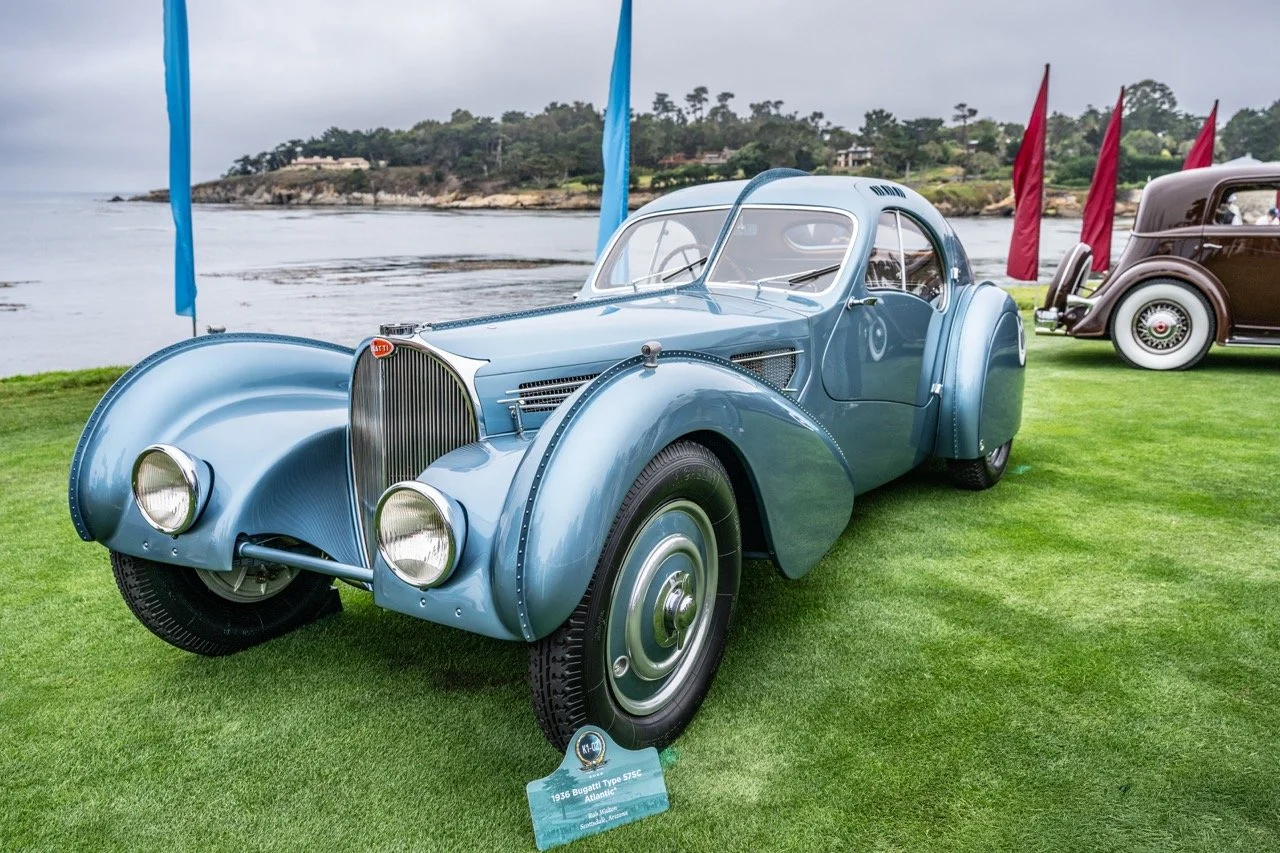
The cars arranged beside the Pacific are more likely to have been shaped by Figoni, Vignale, Pinin Farina or Touring than by the practical necessity of getting groceries home. They arrive carrying Le Mans victories, Grand Prix histories, royal provenance, Hollywood ownership and occasionally price tags better discussed with one’s banker than one’s spouse.
They come from collections around the world. They come for Pebble Beach.
Two weeks ago, the Pebble Beach Concours d’Elegance celebrated its 75th competition, three-quarters of a century after an event that began almost as an afterthought. The remarkable part of the Pebble Beach story isn’t simply that it survived. It’s that the automotive world eventually organized itself around it.
IT STARTED WITH A RACE
The story begins not with polished coachwork sitting quietly on grass, but with sports cars being driven very quickly through a forest.
On November 5, 1950, the first Pebble Beach Road Races were held on a temporary course through Del Monte Forest. The race was the main attraction. The Concours d’Elegance was almost a social companion. A little elegance, if you would, to accompany the noise, speed and danger of postwar sports-car racing.
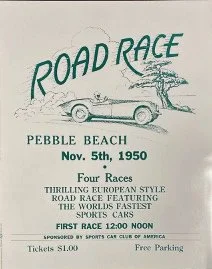
First Pebble Beach Road Race Poster, 1950; Credit Archives
Enthusiast and amateur racer Sterling Edwards helped make it happen, encouraging the Del Monte Properties Company, predecessor of today’s Pebble Beach Company, to host one of the West Coast’s first major postwar road races.
The Concours cars gathered near the tennis courts, were judged, then paraded past spectators along the racecourse. This was not yet the Pebble Beach we know. It was smaller, less formal and, importantly, not primarily about old cars.
Like the European concours that inspired it, early Pebble Beach celebrated contemporary automobiles. A new car won Best of Show in each of the first five years. Edwards took the inaugural prize with his Edwards R-26 Special Sport Roadster.
He hadn’t come primarily to win a concours. He came to race.
That seems wonderfully appropriate 75 competitions later. Pebble Beach has always lived somewhere between two ideas of the automobile: the car as an object of beauty and the car as a machine meant to be driven.
That tension has defined it ever since.
WHEN OLD CARS BECAME IMPORTANT
The transformation began in earnest in 1955, when American racing driver Phil Hill presented a 1931 Pierce-Arrow 41 LeBaron Convertible Town Cabriolet. It became the first prewar automobile to win Best of Show.
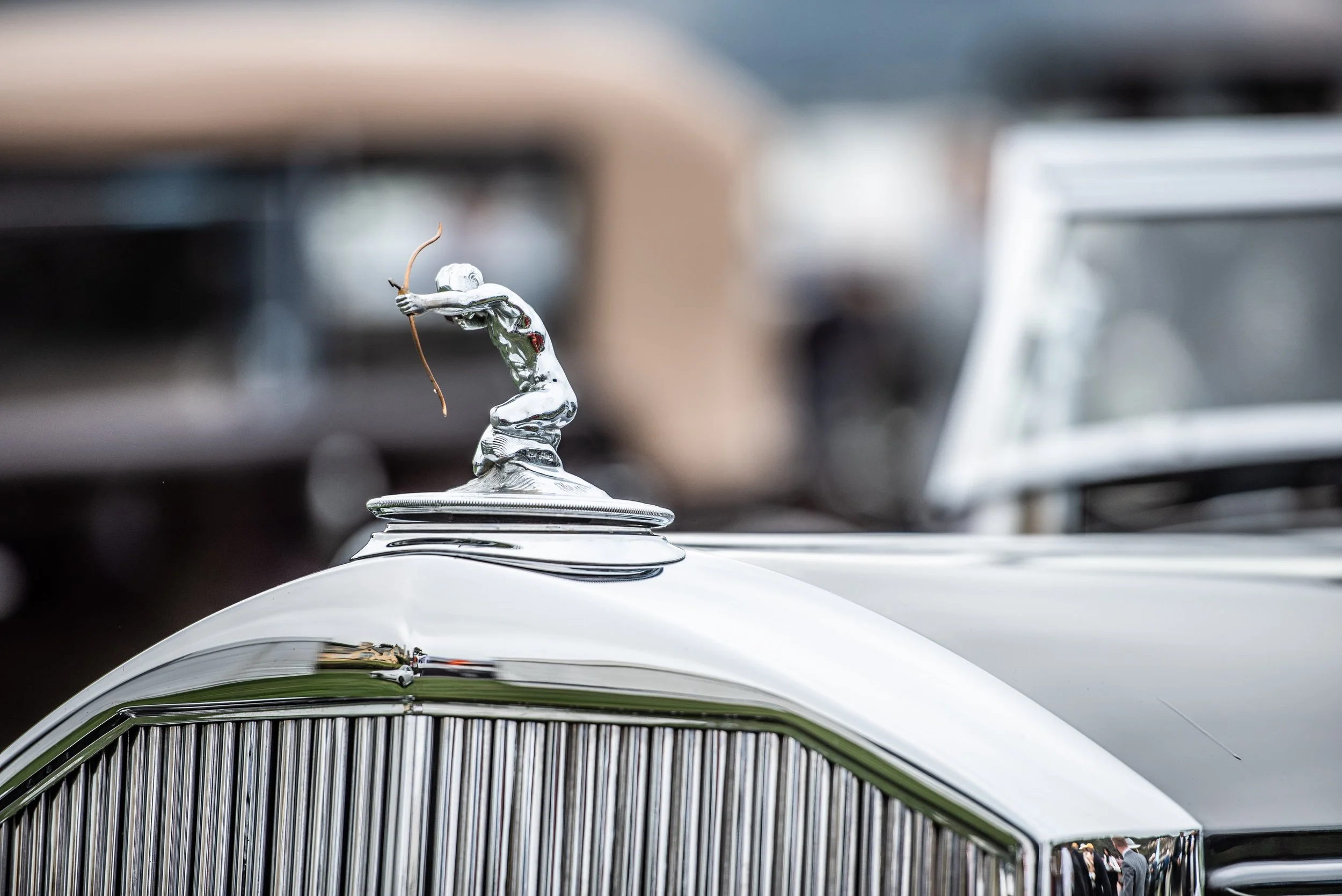
Pierce-Arrow’s distinctive archer hood ornament—bow drawn, arrow ready—turns a radiator cap into sculpture and remains one of motoring’s most recognizable signatures. Photo by D. Paul Graham/imageGRAHAM, llc
The significance went beyond one trophy. Pebble Beach was changing its definition of automotive importance. The question was no longer simply, “What is beautiful now?” It became, “What deserves to be remembered?”
That distinction helped create the modern collector-car concours.
Restoration became more serious. Provenance mattered. Originality mattered. Coachbuilders and mechanical authenticity mattered. The automobile increasingly came to be treated not merely as transportation, but as industrial design, sculpture, engineering and cultural history.
The standards rose accordingly. J.B. Nethercutt’s painstakingly restored 1930 duPont Model G won Best of Show in 1958, the first of what would become a record six Pebble Beach Best of Show victories for Nethercutt.
Winning at Pebble Beach was becoming something different. It wasn’t simply another trophy. It was validation.
FROM ROAD RACING TO LAGUNA SECA
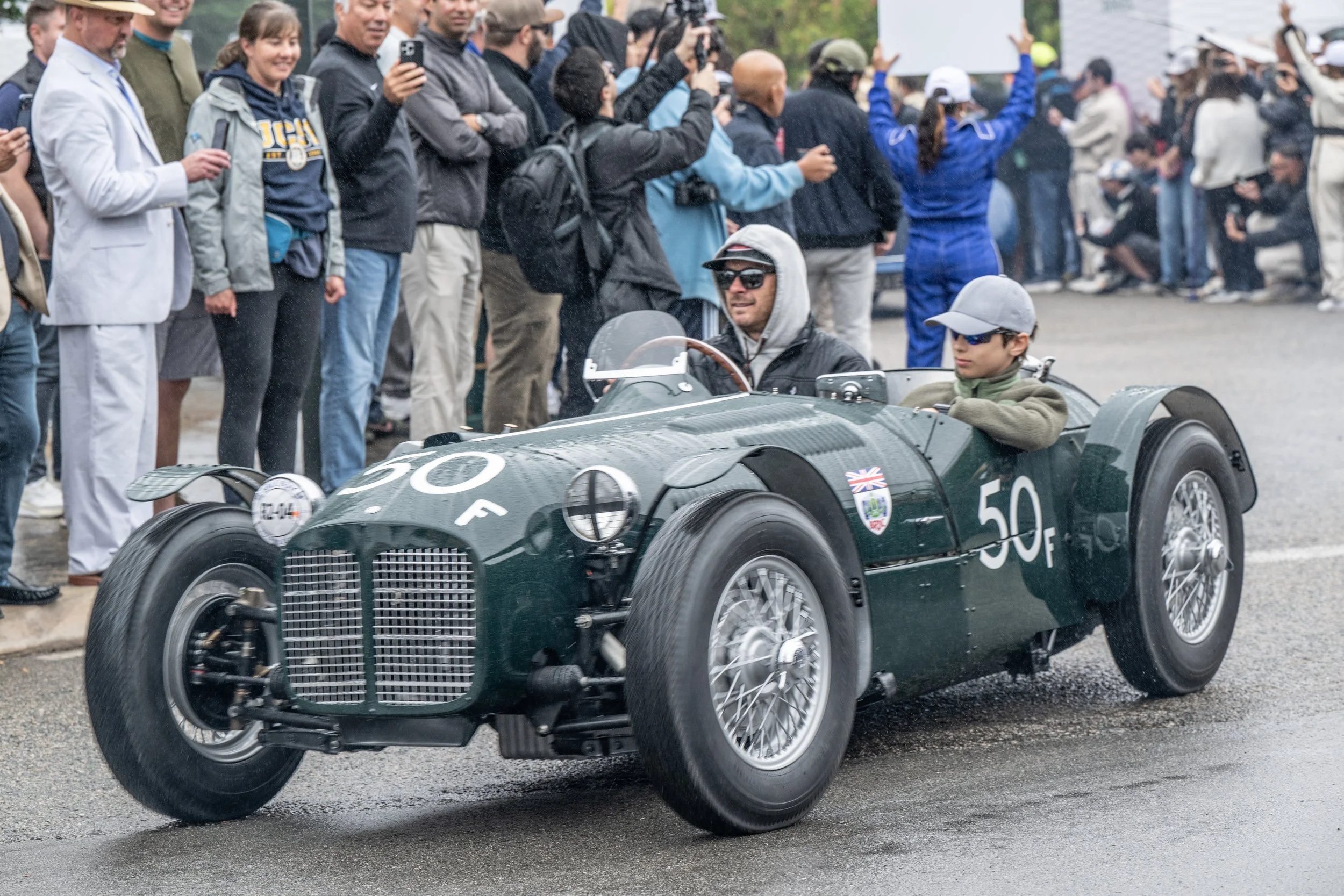
1952 MG R1 Ken Miles Special. Photo by D. Paul Graham/imageGRAHAM, llc
The early Concours remained intertwined with the Pebble Beach Road Races. Phil Hill, Carroll Shelby, Richie Ginther and Ken Miles competed through Del Monte Forest in an era when hay bales and courage constituted a significant portion of motorsport safety equipment.
But Pebble Beach’s racing chapter would be short. Following Ernie McAfee’s fatal accident during the 1956 race, the need for a permanent racing facility became impossible to ignore. Laguna Seca Raceway opened in 1957, and the competition cars moved inland.
The Concours stayed. At Pebble. It proved one of the most consequential separations in automotive culture. Laguna Seca became one of America’s great racing circuits. Pebble Beach became something else entirely: a place where the automobile’s past was not simply displayed, but interpreted.
SETTING THE STANDARD
By the 1960s and 1970s, Pebble Beach had become a serious destination for collectors. Rolls-Royce, Bugatti, Packard, Mercedes-Benz, Duesenberg, Alfa Romeo, Bentley and other great marques became fixtures on the field.
Judging grew increasingly rigorous. Cars are evaluated for authenticity, history, technical correctness, preservation or restoration, and ultimately elegance. Judges scrutinize details most spectators would never notice.
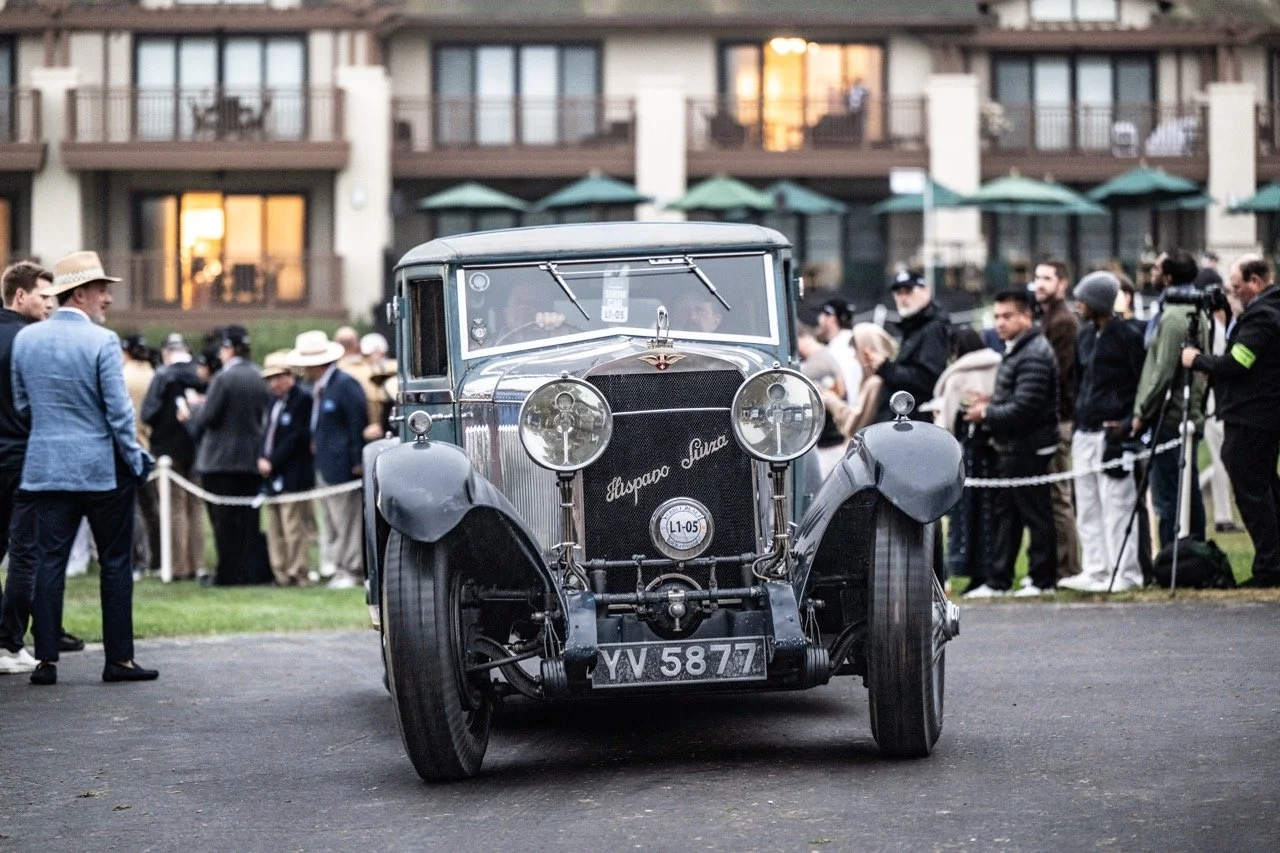
A 1927 Hispano -Suiza H6C Gurney Nutting Sports Saloon enters the show field on Concours Sunday. Photo by D. Paul Graham/imageGRAHAM, llc
At this level, history is measured in millimeters. Yet perfection alone isn’t enough. To win Best of Show, a car must first win its class. From there, judges consider something harder to quantify. Presence and elegance. That moment when engineering becomes art.
Pebble Beach doesn’t merely reward expensive cars. It rewards important ones.
THE BUTTON ERA
In the mid-1980s Sandra Button became involved with the Concours. Over the next four decades, she would become one of the defining figures in Pebble Beach history, helping transform an elite American concours into an international institution.
The field became more global. Special classes more ambitious. Designers, collectors, restorers, historians and manufacturers came to regard an invitation to Pebble Beach as one of the most important recognitions an automobile could receive.
The event also became extraordinarily selective. In a typical year, roughly a thousand automobiles may be considered, with only around 200 invited. There are many places to display a valuable automobile. Pebble Beach asks a different question. Why this car?
THE CARS HAD TO MOVE AGAIN
By the 1990s, concours restoration had become so exacting, and the cars so valuable, that critics increasingly dismissed them as “trailer queens,” transported from climate-controlled garages to show fields without experiencing the road.
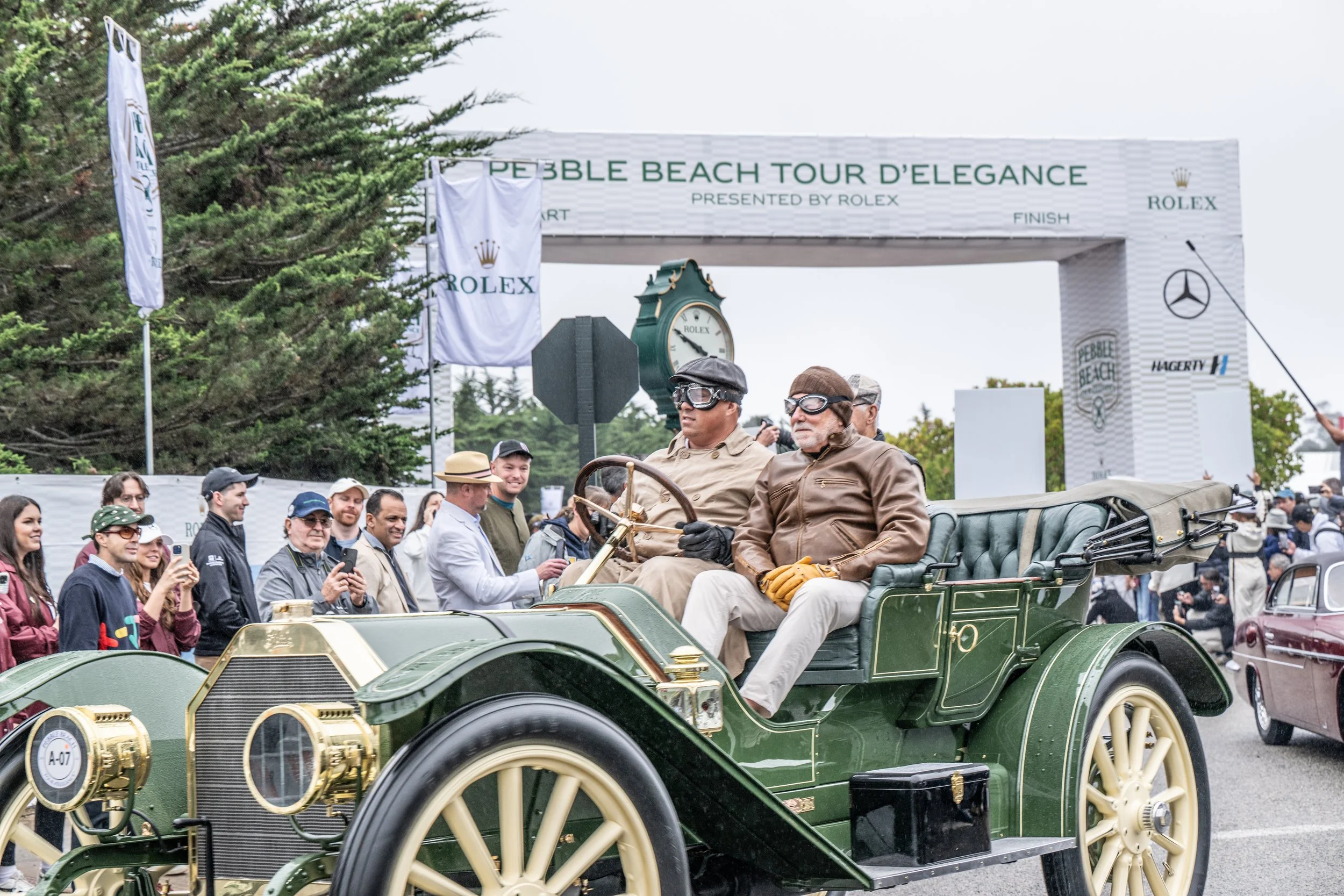
1910 Glide 45 HP Scout Touring leaves the start line of The Tour d’Elegance. Photo by D. Paul Graham/imageGRAHAM, llc
Pebble Beach answered in 1998 with the Tour d’Elegance. The idea was beautifully simple. Drive them. Entrants took many of the same priceless machines destined for Sunday’s lawn along 17-Mile Drive and the California coast. Suddenly spectators could see and hear them doing what their creators intended. Straight-eights turning. V12s breathing. Prewar gearboxes reminding drivers that elegance and synchronization were not always delivered together.
The Tour became one of Pebble Beach Automotive Week’s great spectacles and reaffirmed something essential, that these are artifacts, but they are also automobiles, and automobiles are supposed to move.
PEBBLE BEACH BECOMES A WEEK
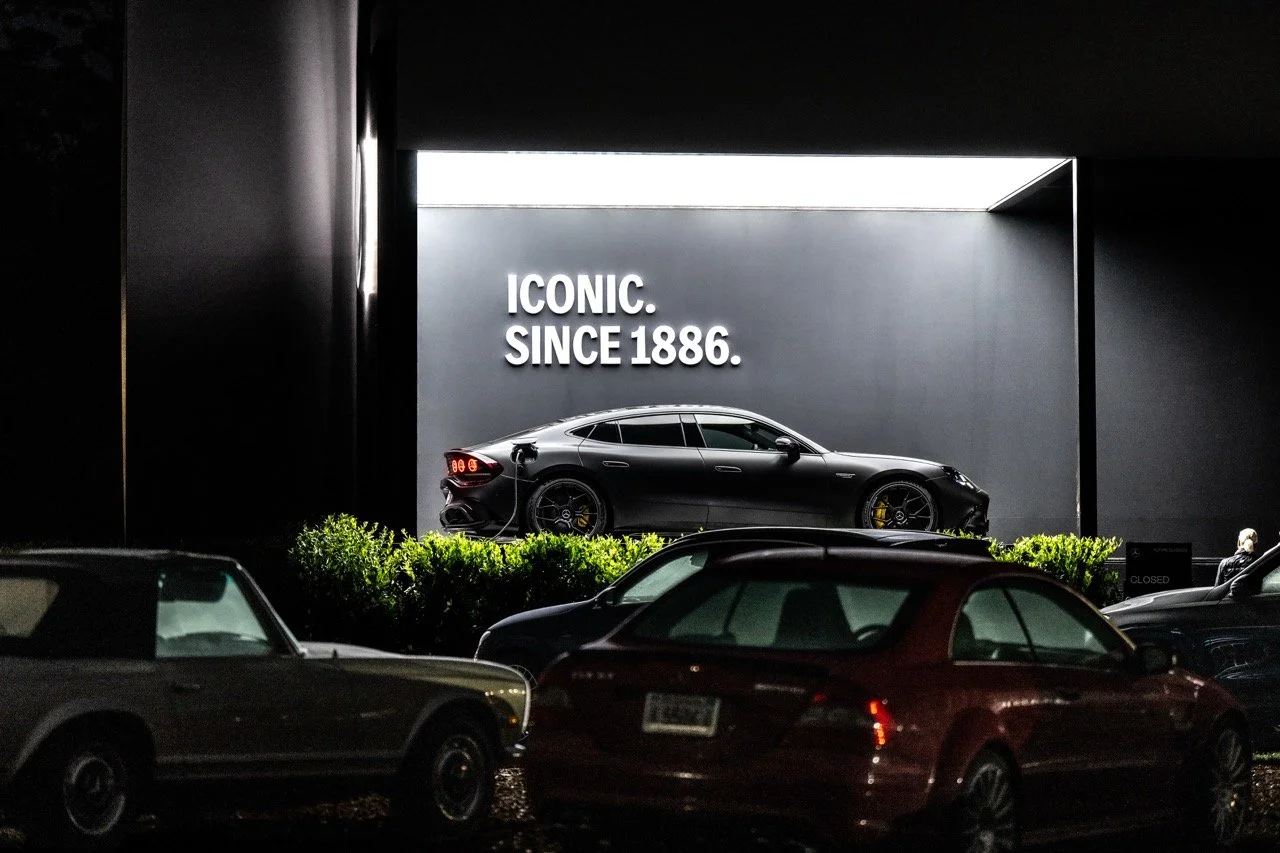
As the Concours grew, an entire automotive ecosystem developed around it. What was once a Sunday event had become the anchor of Monterey Car Week. Historic racing. Auctions. Manufacturer unveilings. Private gatherings. Concept cars. Collector dinners. New-car launches. Parties where the parking lot is often more interesting than the guest list.
The Rolex Monterey Motorsports Reunion carries forward the region’s racing heritage at Laguna Seca. Auction houses bring some of the world’s most significant automobiles to Monterey. Manufacturers reveal new models and concepts. Collectors arrive from around the world.
For several days each August, the Monterey Peninsula becomes the capital of the automotive world. Sunday on the 18th fairway remains the crescendo.
MORE THAN RESTORATION
Pebble Beach also helped change how the collector world thinks about preservation.
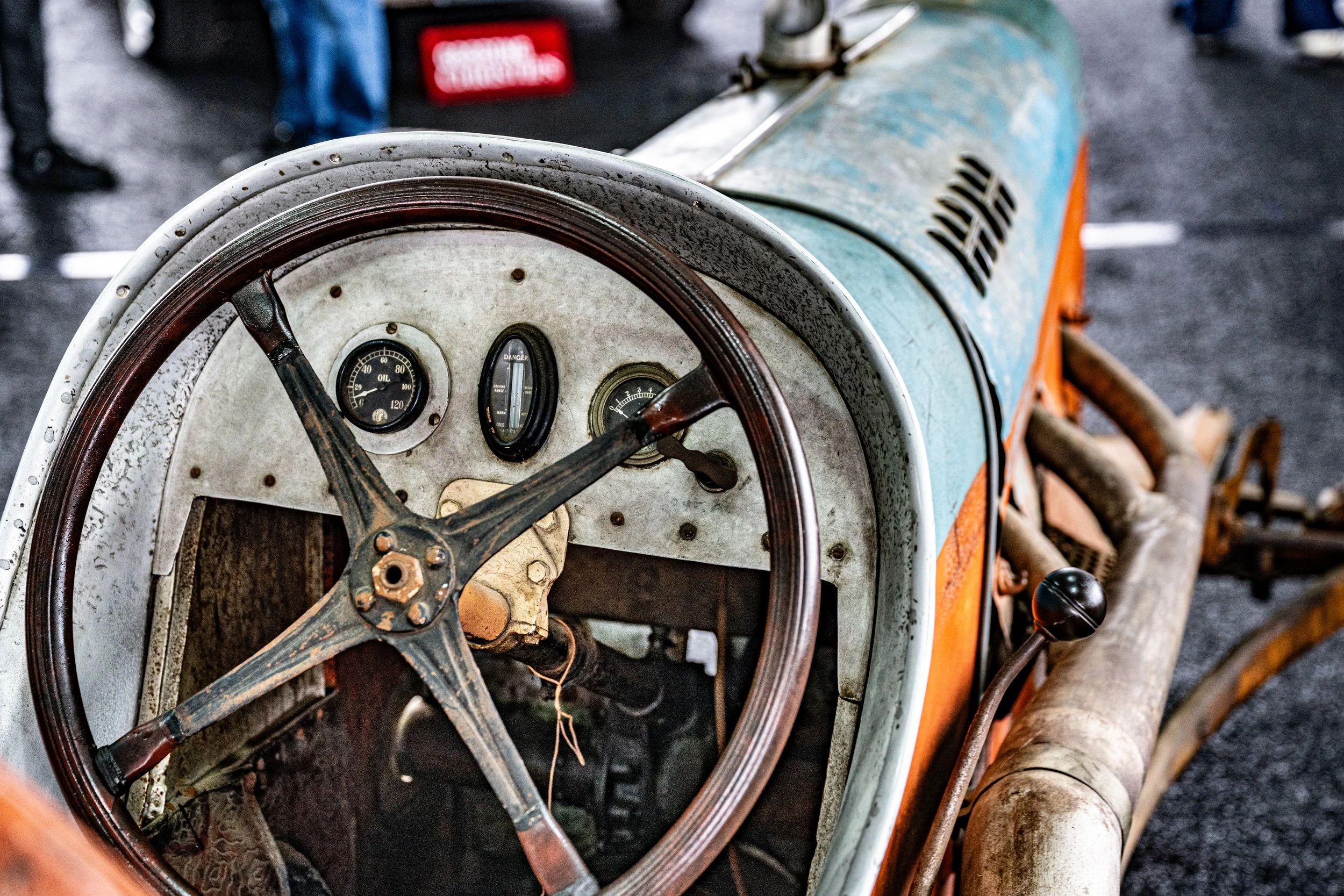
For decades, restoration meant making an old automobile look new again. Sometimes better than new. Eventually, collectors and historians began asking a different question, “What might be lost in the process?” Original paint carries history. So does worn leather. Tool marks. Factory imperfections. Competition scars.
Pebble Beach recognized that preservation could be as important as restoration. The most historically important automobile isn’t necessarily the shiniest one.
Sometimes the cracked leather tells the better story.
2026: THE 75TH COMPETITION
Which brings us back to the fairway. On August 16, 2026, 218 automobiles gathered at Pebble Beach for the 75th Concours d’Elegance, arriving from 30 U.S. states and 14 countries.
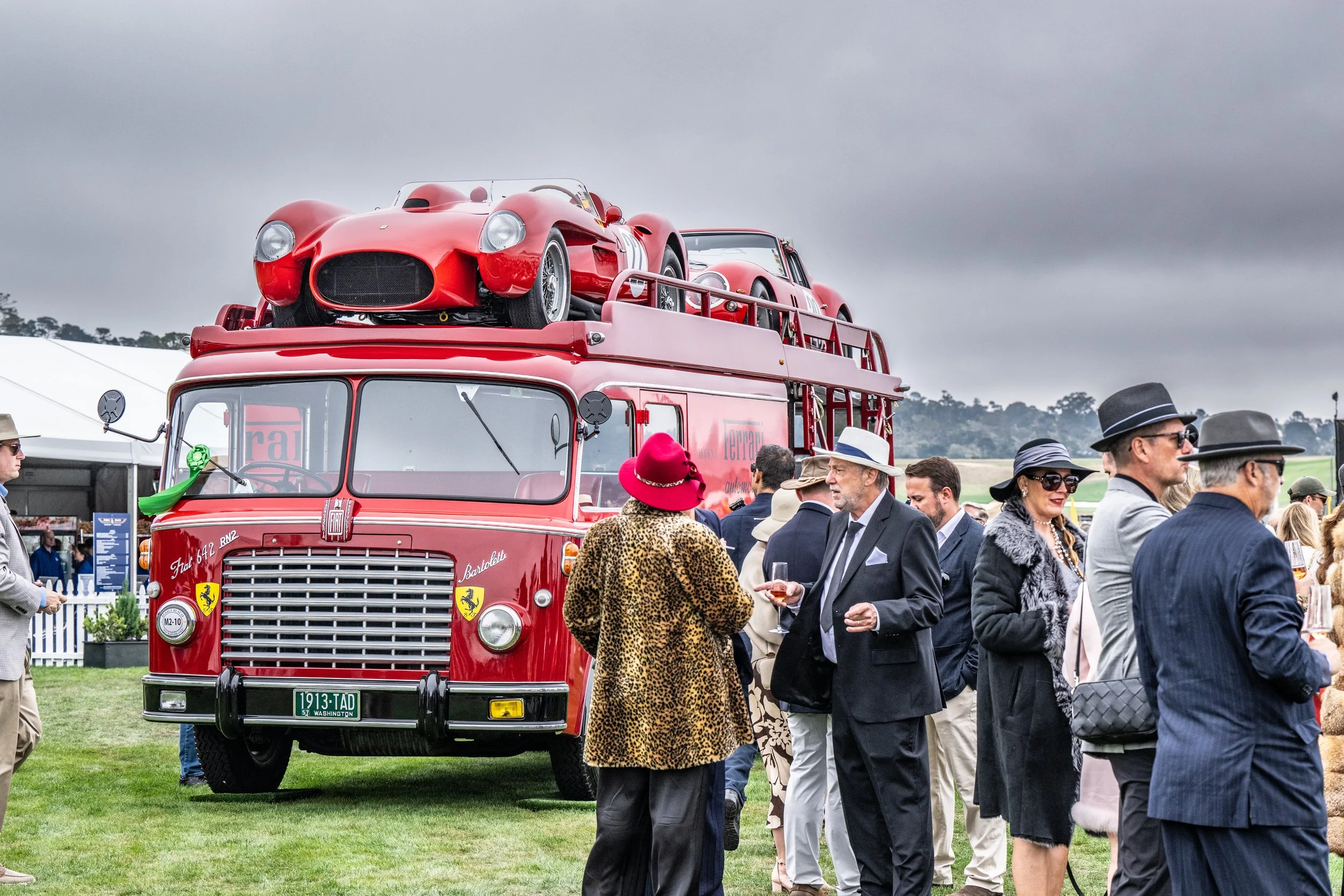
Ferrari served as the primary featured marque, appropriate given that the first Ferrari appeared at Pebble Beach in 1951. Vignale was the featured coach-builder, while special classes explored Pebble Beach Road Racing Greats, early American speedsters, classic streamliners, land-speed-record cars and Japanese motorsports.
The anniversary intentionally looked backward. Cars associated with the original Pebble Beach Road Races returned, along with significant groupings of automobiles the Concours had helped bring together over the decades.
The past wasn’t merely being commemorated. It was being assembled.
FRANKLY SCARLETT, IT’S A DUESENBERG
As Concours Sunday drew to a close, one car crossed the awards ramp last. A 1935 Duesenberg SSJ Special Speedster. One of only two built. Originally owned by Clark Gable.
Presented by collector Harry Yeaggy, the SSJ was named Best of Show, giving Duesenberg its eighth overall victory and reinforcing its position as Pebble Beach’s most successful American marque.
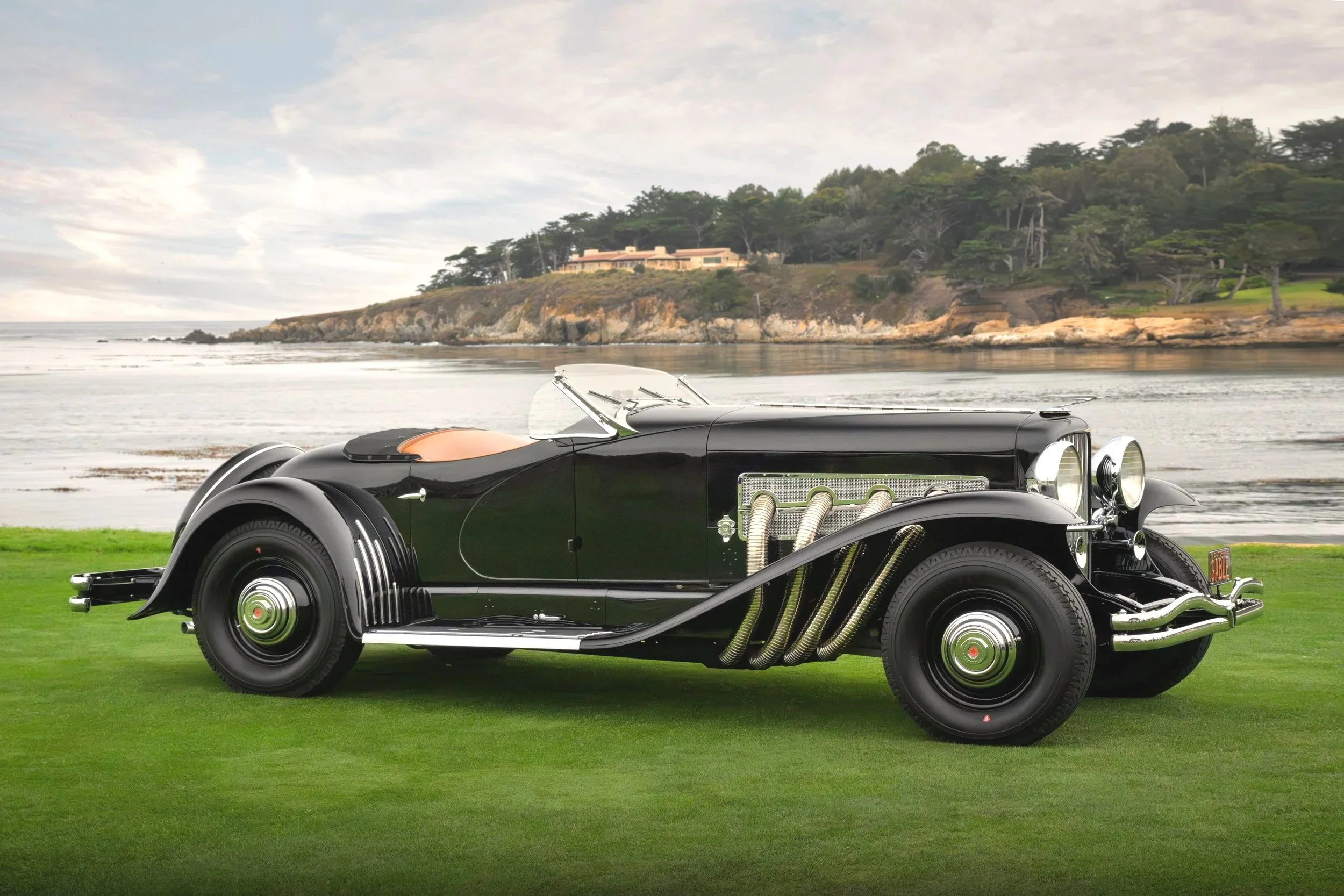
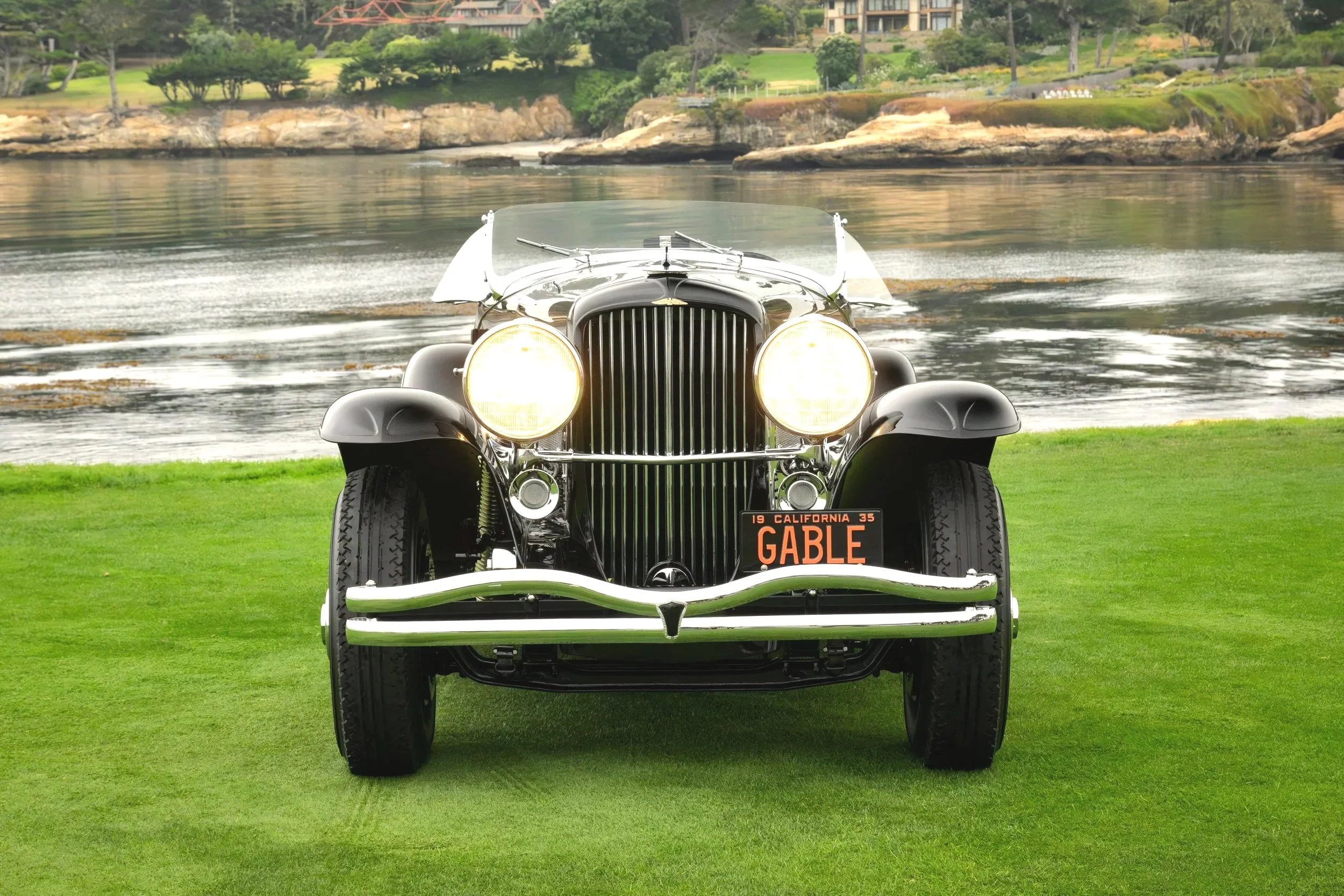
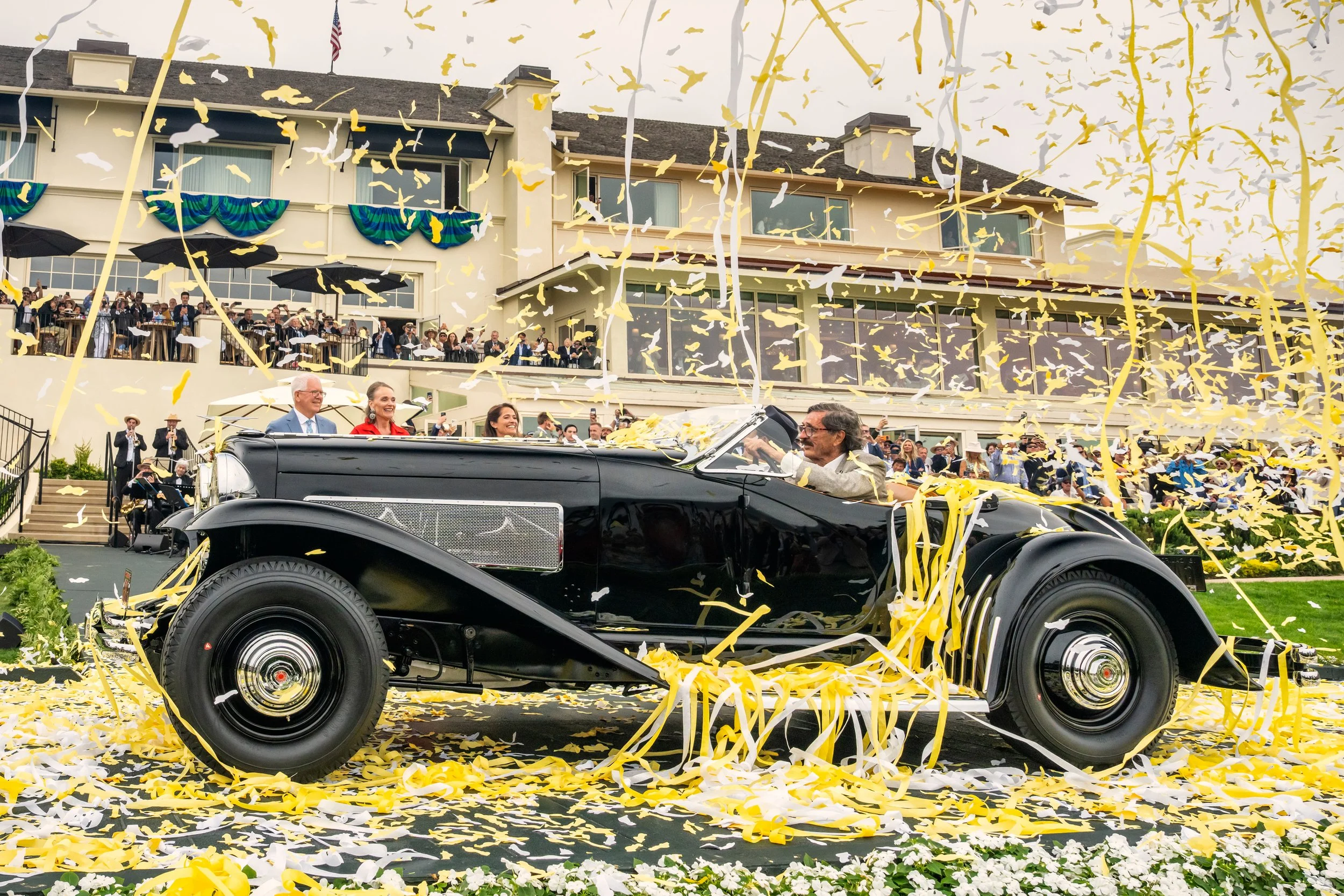
2026 Best In Show. 1935 Duesenberg SSJ Special Speedster, owned by Clark Gable. One of only 2 built. Photos By: Pebble Beach Concours.
There was something fitting about the selection. After 75 competitions increasingly populated by extraordinary European coachwork, the anniversary’s highest honor went to an American automobile, Powerful, glamorous, excessive and inseparable from the mythology of its era. It was difficult to imagine a more appropriate ending.
THE OTHER LEGACY
There is another number from the 75th anniversary that may ultimately matter more. Fifty million dollars.
With more than $4.3 million raised in 2026, total charitable giving from the Pebble Beach Concours surpassed $50 million, supporting organizations focused largely on the education, health and well-being of children in Monterey County.
It’s easy to become distracted by the values attached to the automobiles on the lawn. Many are worth millions. Some are simply priceless. Yet Pebble Beach has turned the celebration of extraordinarily valuable objects into something valuable beyond the objects themselves.
THE 18TH FAIRWAY
Seventy-five years after Sterling Edwards arrived primarily interested in racing, Pebble Beach has become something its founders could scarcely have imagined.
It influences restoration, collecting, values and scholarship. It has helped rescue forgotten marques, rediscover lost coach-builders, and establish entire categories of automobiles as historically significant. Winning a class at Pebble Beach can redefine a car. Winning Best of Show can define a collection.
Perhaps Pebble Beach’s greatest achievement is simpler. It has convinced generations that automobiles are worth preserving. Not merely because they are expensive or fast, and certainly not because they are practical. They are worth preserving because they tell us something about the people who designed them, built them, raced them, owned them and dreamed about them. They are mechanical records of ambition.
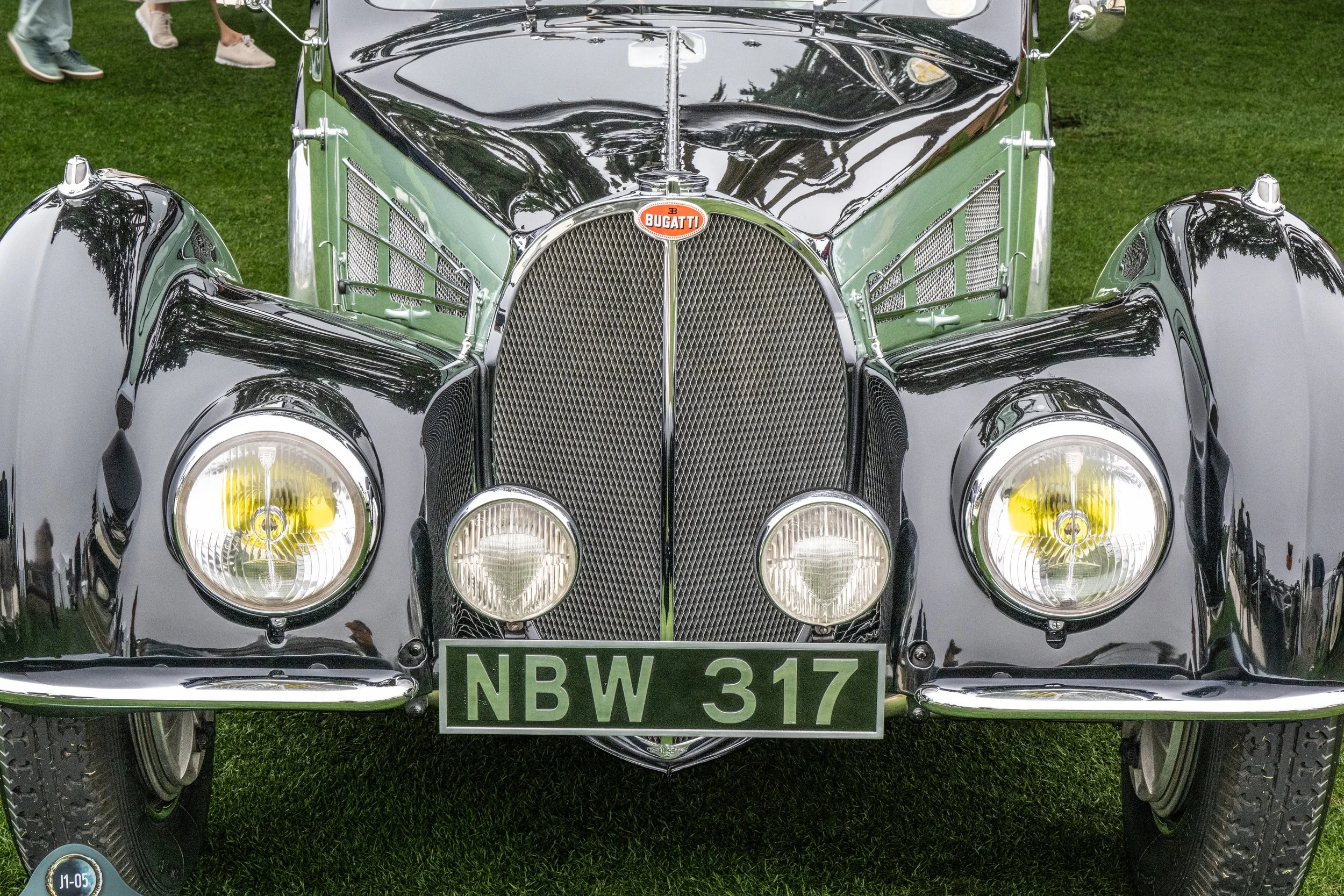
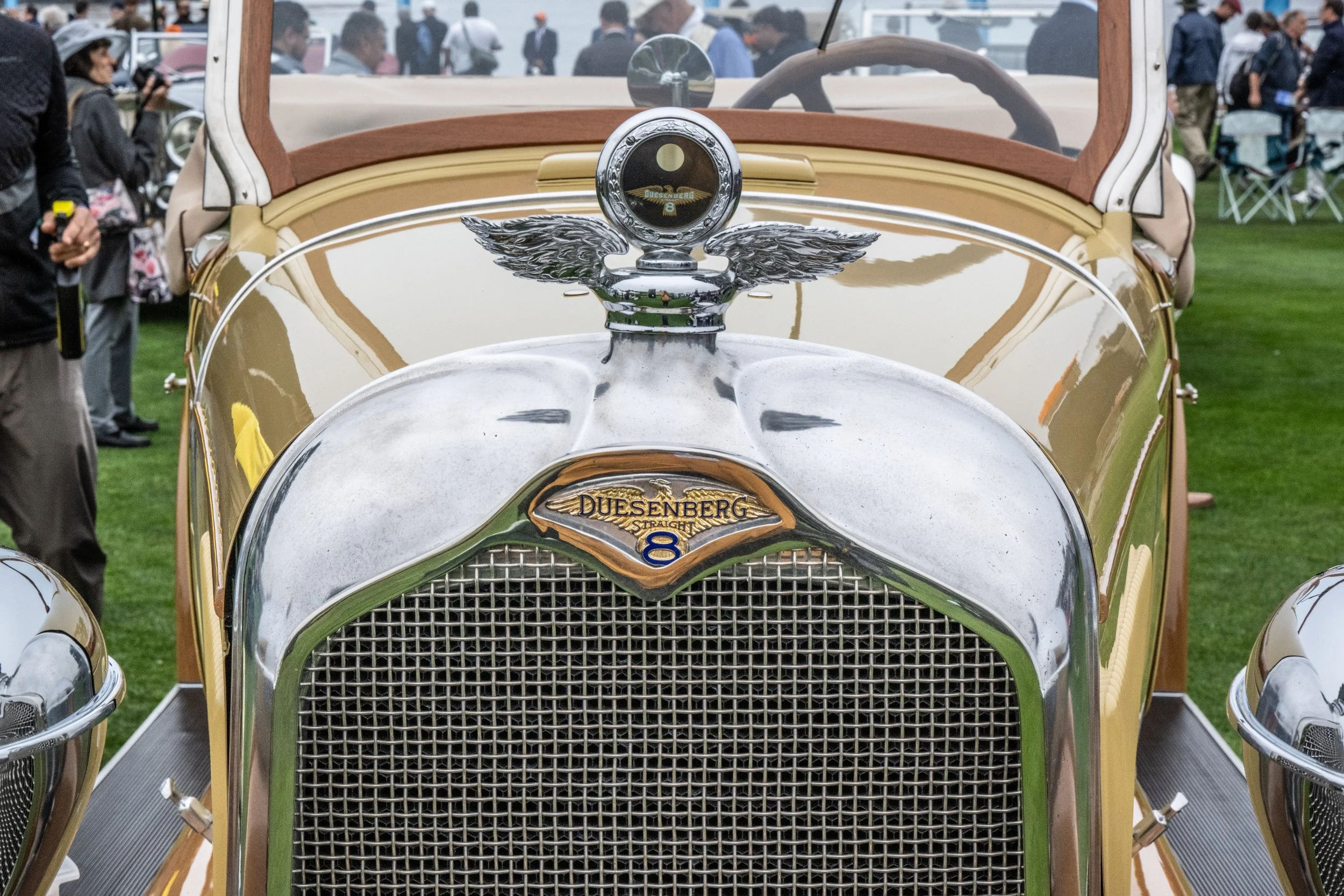
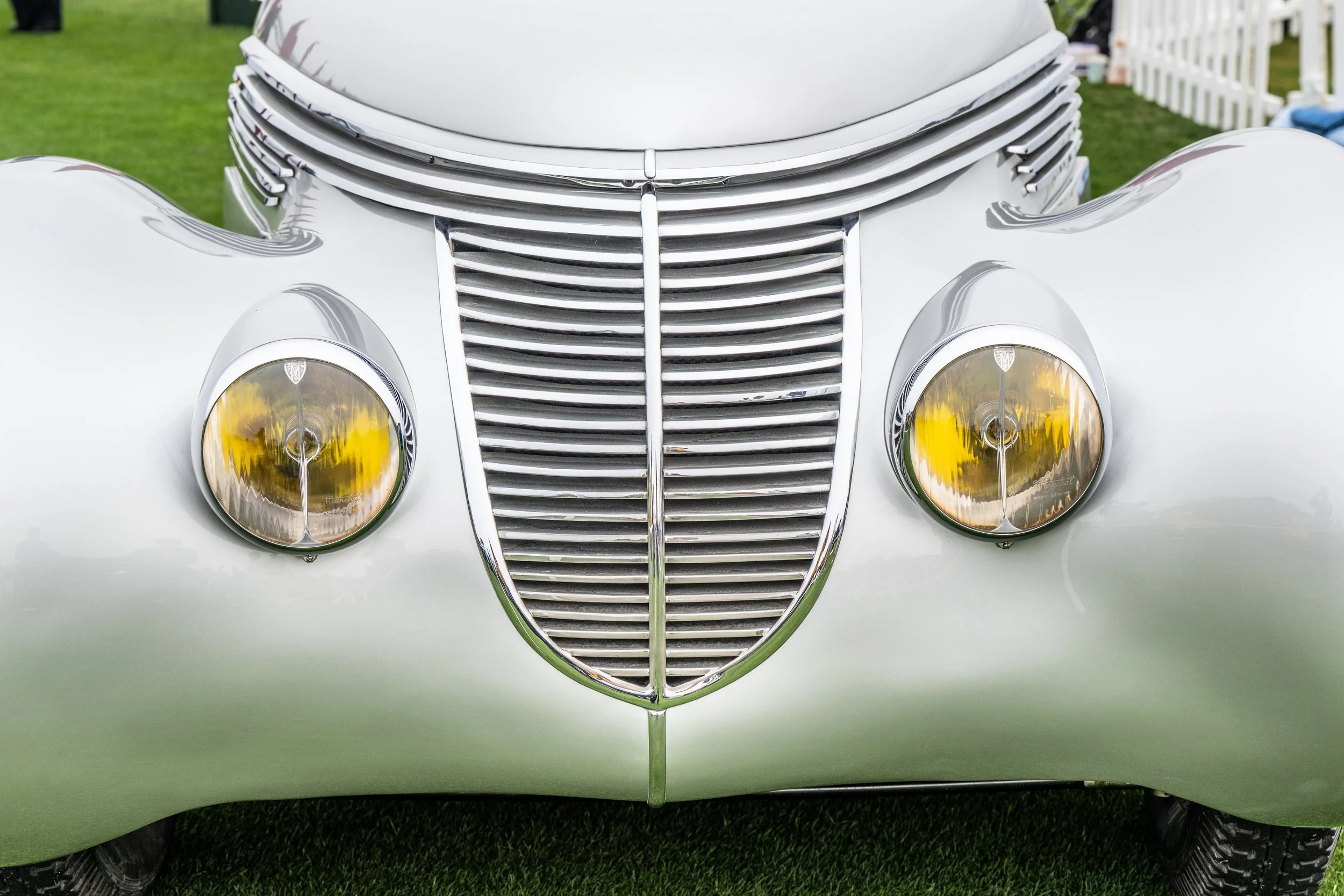
You see it in the sweep of a Figoni fender. The delicacy of a Vignale body. The purposeful simplicity of an early Ferrari racer. A Duesenberg built when America seemed determined to prove that enough horsepower and enough confidence could solve almost anything. Every August, many of the best find their way to the same narrow piece of California coastline.
Early Sunday morning at Dawn Patrol, before the crowds fully arrive, Pacific mist hangs over the field. The cars emerge through the gray, with chrome, paint and polished metal contrasted against ocean and sky. Then the sun rises. The judges begin their work. Champagne corks follow. Another chapter gets written.
Seventy-five years later, the cars have changed. The collectors have changed. The values have certainly changed. However, the destination of the 18th fairway remains.